
The Laser That’s Rewriting The Rules Of Skin Resurfacing (Without The Recovery Time)
changing the game
By Style Journos | 7th September 2026There’s a reason “downtime” has become the deciding factor in most people’s skin decisions. We want the glow, the smoothness, the reset, but few of us can (or are willing) to disappear from our responsibilities for two weeks to get it. What if we told you there’s a treatment on the market that can deliver that glow without an excessive recovery time? That treatment is LaseMD, and for Dr. Mitch Robinson, it’s one that has fast become a go-to in his clinic (and for good reason).
So, what exactly is LaseMD? We chat to Dr. Mitch Robinson from Derm Skin Specialists about the new treatment on the block, and why he calls it now his most-used tool in his clinic.
About the treatment: one laser, two intensities
What makes LaseMD unique, and why Dr. Mitch continues to reach for it in his treatment planning, is its range. The device is dialed in session by session, depending on what the skin actually needs. It’s also a non-ablative treatment, meaning it heats the skin beneath the surface without breaking or damaging the top layer. This is what allows LaseMD to deliver results without downtime, and it’s why it’s one of the most requested treatments in aesthetic clinics right now.
With two intensities on offer, each treatment can be completely tailored to you and your skin goals. “Patients used to have to choose,” says Dr. Mitch. “Either a gentle laser with minimal results, or a CO2 resurfacing that meant up to 2 weeks of redness, peeling, and hiding indoors. LaseMD changed that equation.”
A post shared by Brisbane Dermatologist | Derm Skin Specialists (@dermskinspecialists)
The Light Treatment
This option comes with virtually no visible downtime. Using LaseMD’s finer settings gently resurfaces the skin’s uppermost layers, encouraging cell turnover, softening early pigmentation, and refining texture and pore appearance. Dr. Mitch says patients see mild pinkness for a day or two with some peppering and minimal skin peeling, then obtain a subtle, lit-from-within glow. It’s become a go-to for pre-event skin prep and as a maintenance treatment for patients building toward longer-term results.
The Heavy Treatment
At its deepest settings, LaseMD moves into more aggressive fractional resurfacing, targeting deeper pigmentation, textural irregularities, acne scarring, and fine lines. Dr. Mitch has been among the first practitioners to trial LaseMD at this depth, and in his early cases has observed results that begin to approach what he’d expect from CO2 laser resurfacing, with a notably shorter recovery window. As one of the clinicians actively refining this heavier protocol, he’s now offering it more routinely to patients seeking stronger resurfacing without ablative downtime.
“In the patients I’ve treated at this setting, I’ve seen results that start to approach what I’d expect from CO2, with a fraction of the downtime and discomfort,” Dr. Robinson explains. “It’s clinical experience rather than a formal comparison, but it’s promising enough that I’m using it more often for patients who want stronger resurfacing without ablative recovery.”
What is LaseMD good for?
In Dr. Robinson’s practice, LaseMD is a foundational treatment, used regularly across a wide range of skin concerns, from improving tone, texture, and radiance to pigmentation, acne scarring, and sun damage. The flexibility to move between light maintenance sessions and heavier corrective sessions, often within the same patient’s long-term skin plan, is, according to Dr. Robinson, what sets LaseMD apart from single-purpose devices.
“It lets me treat conservatively when that’s what’s called for, and aggressively when a patient wants real transformation,” Dr. Mitch says. “Very few devices let you do both.”
The patient experience
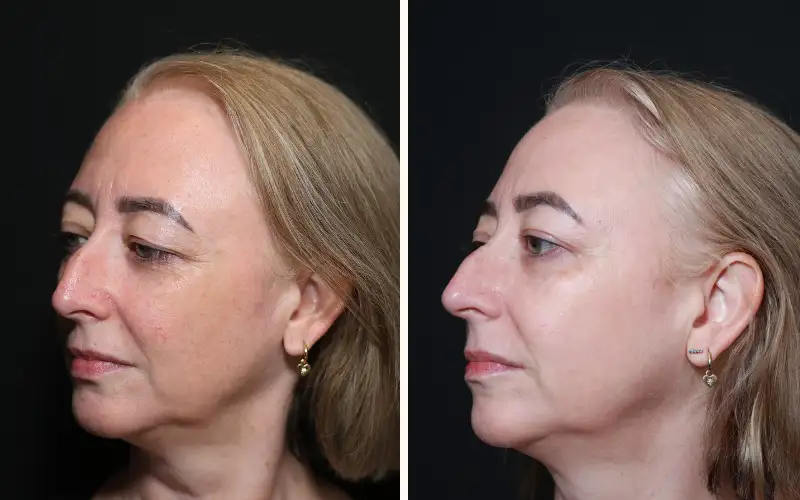
As far as patient experience goes for LaseMD, comfort is part of the appeal. Topical numbing is typically used ahead of treatment, and most patients describe the sensation as heat and light stinging rather than the significant pain associated with ablative resurfacing. Treatment time is short, often under 30 minutes, making it a more realistic treatment to fit into a busy existing schedule.
From here, the results build progressively: an initial glow within days of healing, then continued improvement in tone and texture over the following weeks as collagen remodeling continues, with heavier treatments requiring a short, manageable recovery window rather than the extended downtime of true CO2 resurfacing.
A post shared by Brisbane Dermatologist | Derm Skin Specialists (@dermskinspecialists)
For Dr. Robinson, LaseMD’s real value is far more than its cutting-edge technology; it’s the control it gives him to customise treatment to each patient’s skin, goals, and tolerance for downtime. If you want to learn more about what LaseMD can do for your skin, book a complimentary nurse-led consultation at Dr. Mitch Robinson’s Derm Skin Specialists clinic here.
Results with LaseMD, particularly at heavier settings, vary from patient to patient depending on skin type, condition, and individual healing. Dr. Robinson’s comparisons to CO2 resurfacing reflect his own clinical experience rather than formal comparative research, and outcomes should not be considered guaranteed or typical for all patients.
This article is sponsored by Derm Skin Specialists and proudly endorsed by style. We only promote brands and companies that we love and think our readers will love too!