Why A Sri Lankan Safari Deserves A Spot On Your Bucket List & How It Compares To Africa
Animal crossing
By Natalie McGowan | 19th March 2026We were barely 10 minutes into our Sri Lankan safari when we’d already gotten our money’s worth.
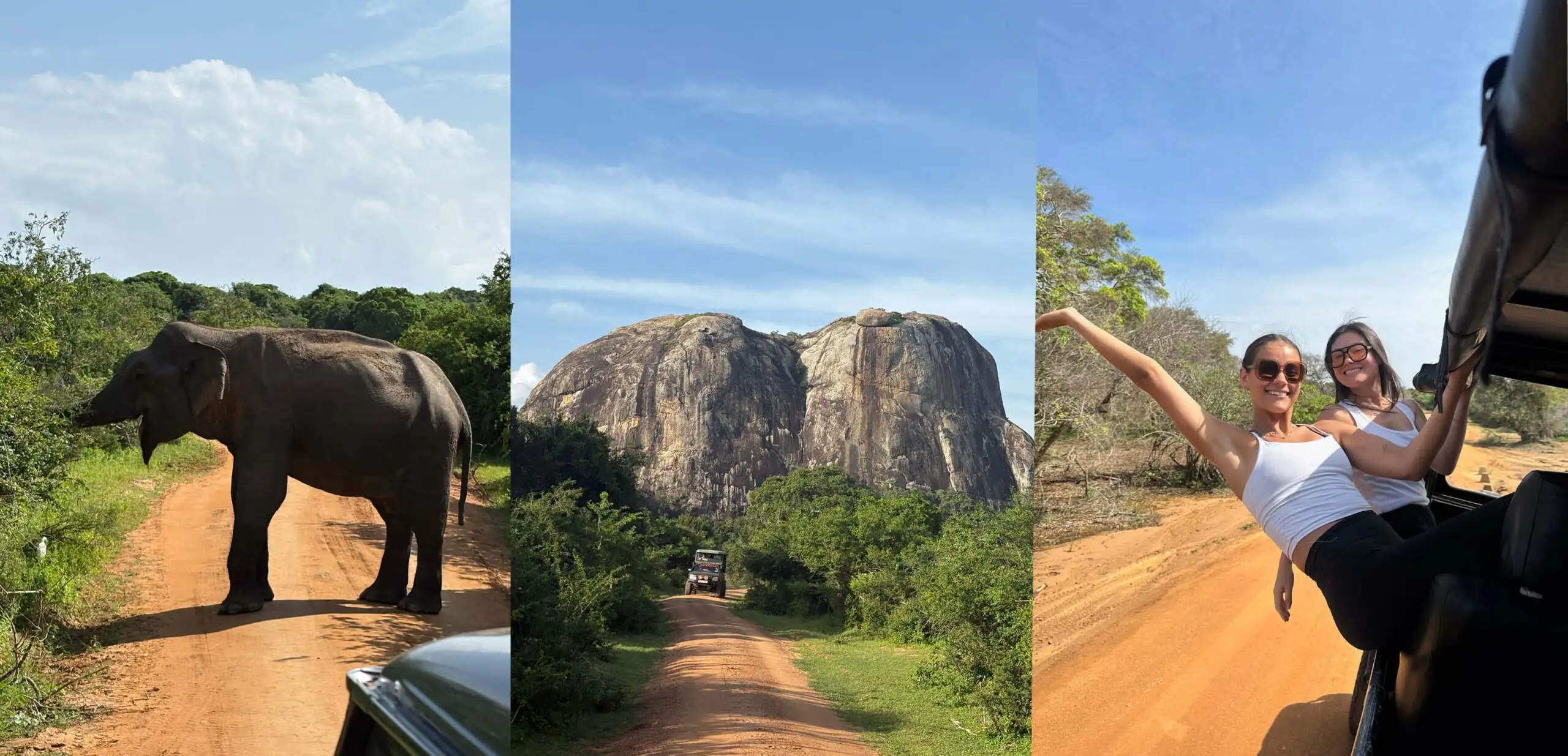
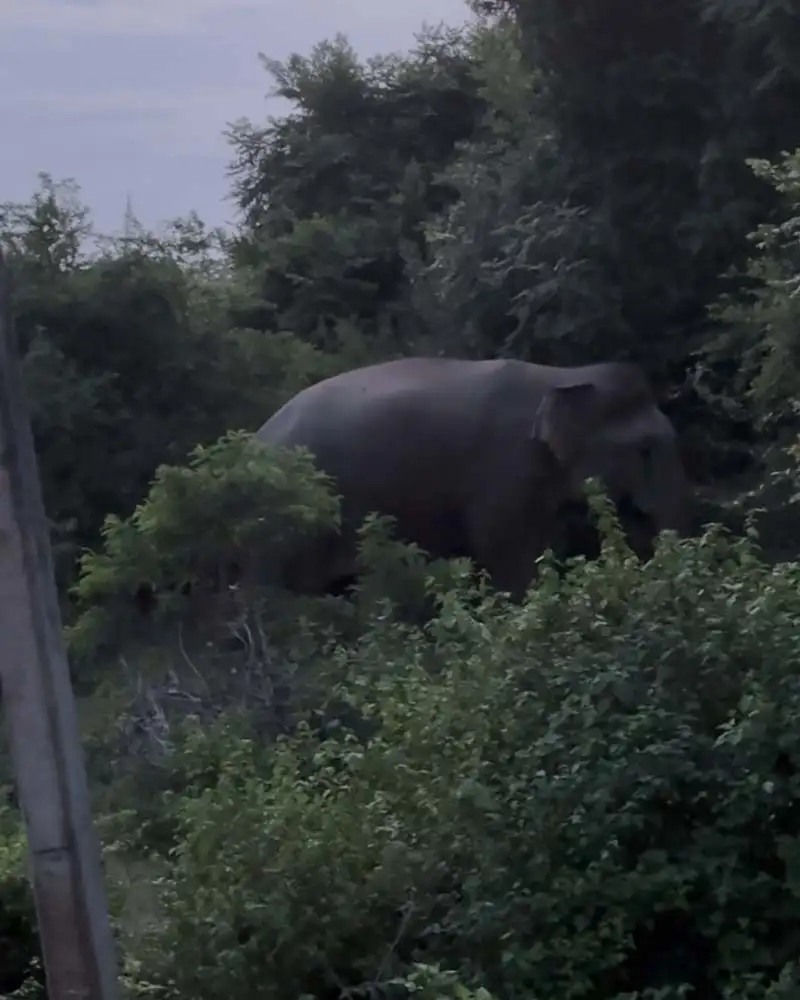
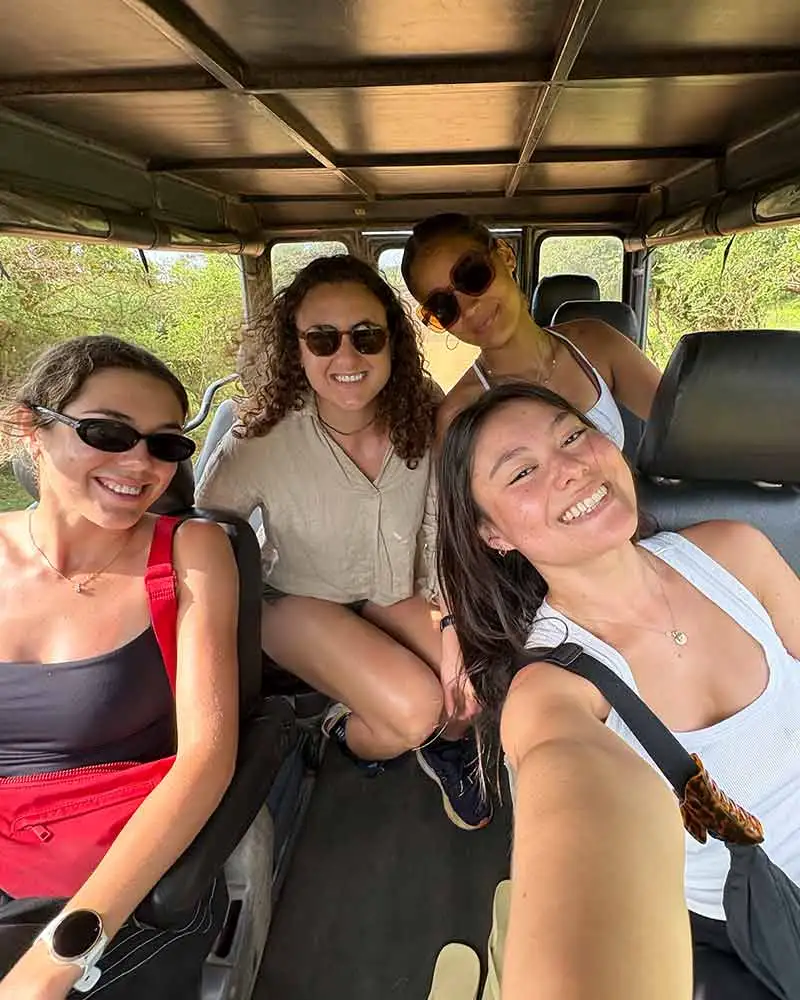
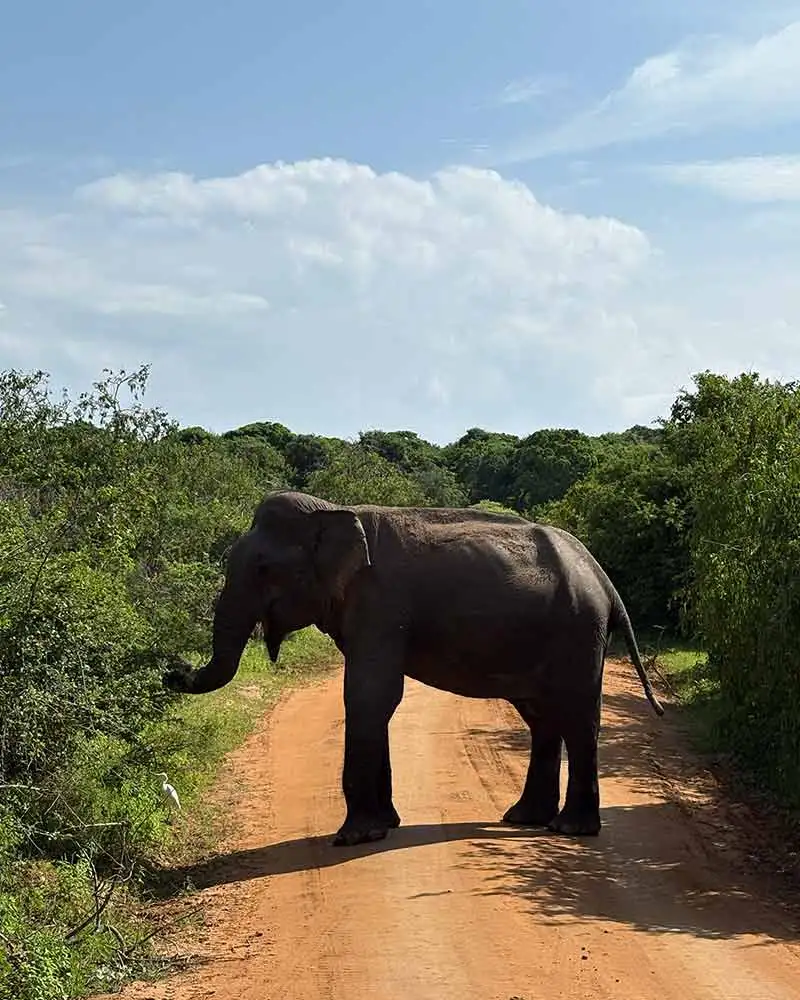
After a brutal 5am wake-up call, we piled into a Jeep and took off towards Yala National Park. The sun was just starting to come up as we rolled into the national park’s front gates, and after some brief, mild confusion about why we were slowing down so soon after entering, our guide gestured for us to be quiet (a huge feat for these four chatty girls!) and pointed to the bushes by the side of the road. Then we saw it: an elephant, slowly plodding by on a morning stroll.
For those tossing up on whether to fork out the money on a safari, I can tell you it’s absolutely worth it. But you don’t need to travel all the way to Kenya or Tanzania to experience the magic of seeing wild animals in their natural habitat. Sri Lanka’s safaris are often lesser-known, but they can be just as special – and significantly cheaper – and I’m here to tell you all about it.
Where to do a safari in Sri Lanka
You may be thinking, “Sri Lanka? For a safari?”, and it’s true that before visiting, I had largely associated the country with beaches, temples, and tea plantations – not safaris. However, after doing some research, I was surprised to find that there are 26 national parks and 61 wildlife sanctuaries, and that Sri Lanka is ranked among the world’s top five biodiversity hotspots.
If a safari is what you want, a safari is what you will get in Sri Lanka! There are plenty of spots to choose from, each offering something slightly varied. The most visited include Udawalawe, famous for its large elephant population; Minneriya, known for the world’s largest seasonal congregation of wild Asian elephants; Wilpattu, your best bet for spotting a sloth bear; Bundala, a birdwatcher’s paradise with over 200 species; and Yala (more on this below).
What is Yala National Park?
Located on the south-east coast, Yala backs onto the Indian Ocean and covers roughly 100,000 hectares of forest, dry scrub, grassland, and watering holes. It’s divided into five blocks, but most safari-goers explore Block 1, which alone spans about 14,000 hectares and is the closest to the main town of Tissamaharama, where most tour companies are based. Conveniently, it’s also considered the best block for animal sightings thanks to its abundance of fresh water.
What animals can you see at Yala National Park?
There’s a huge variety of wildlife in Yala.
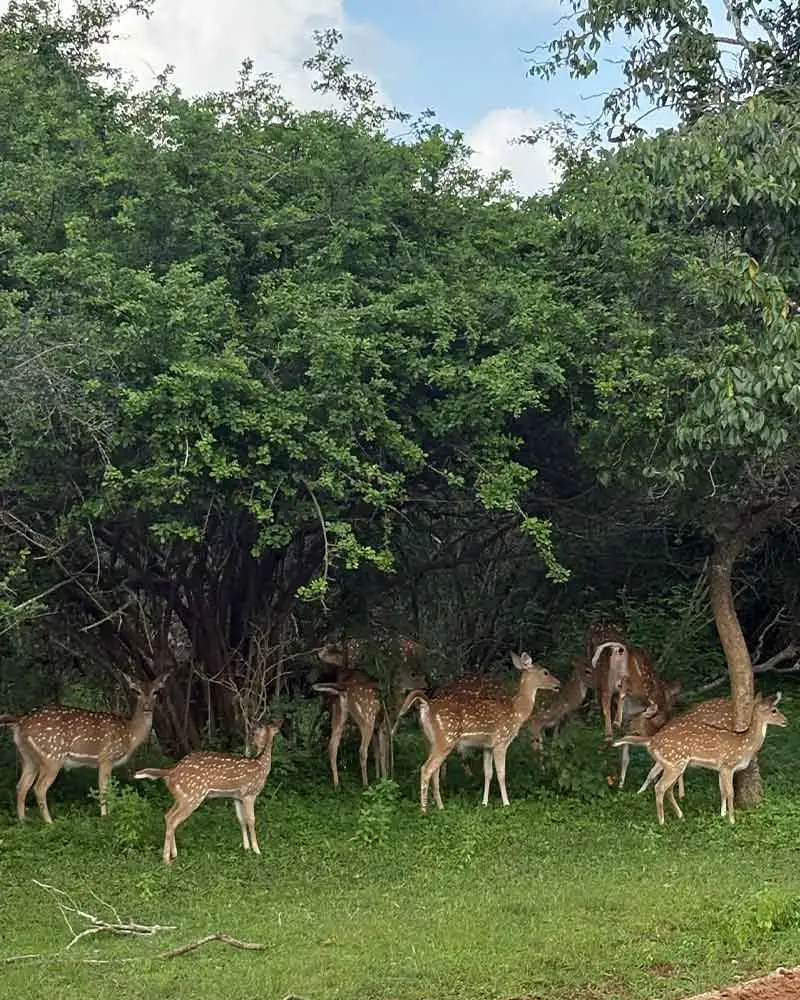
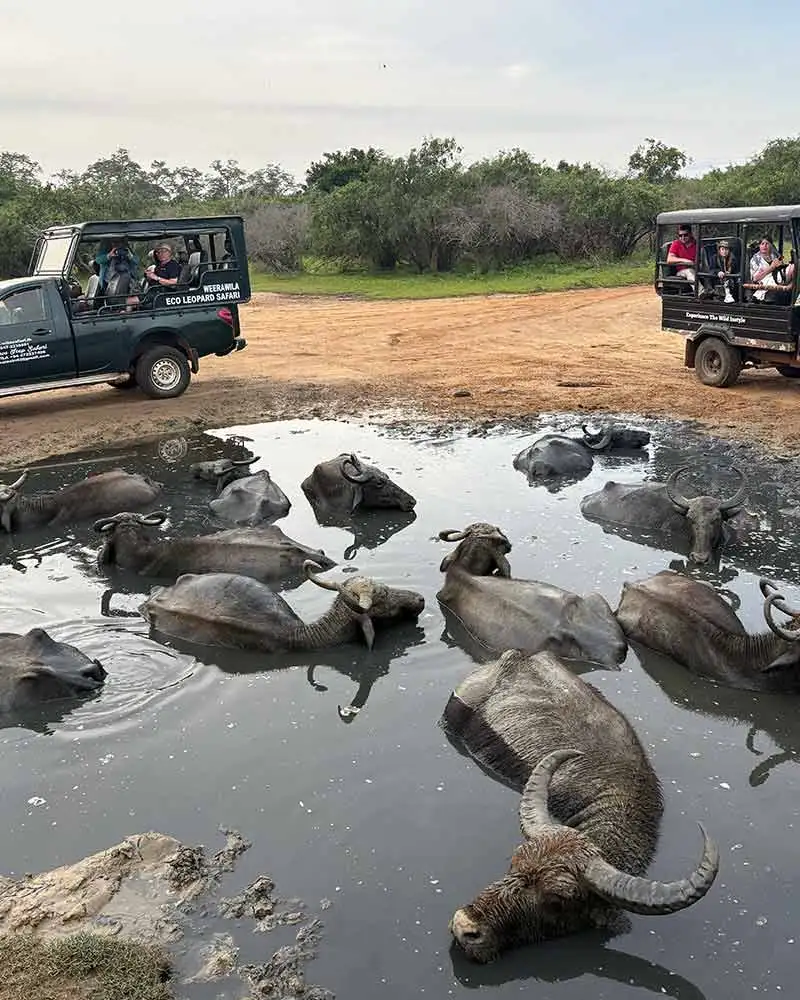
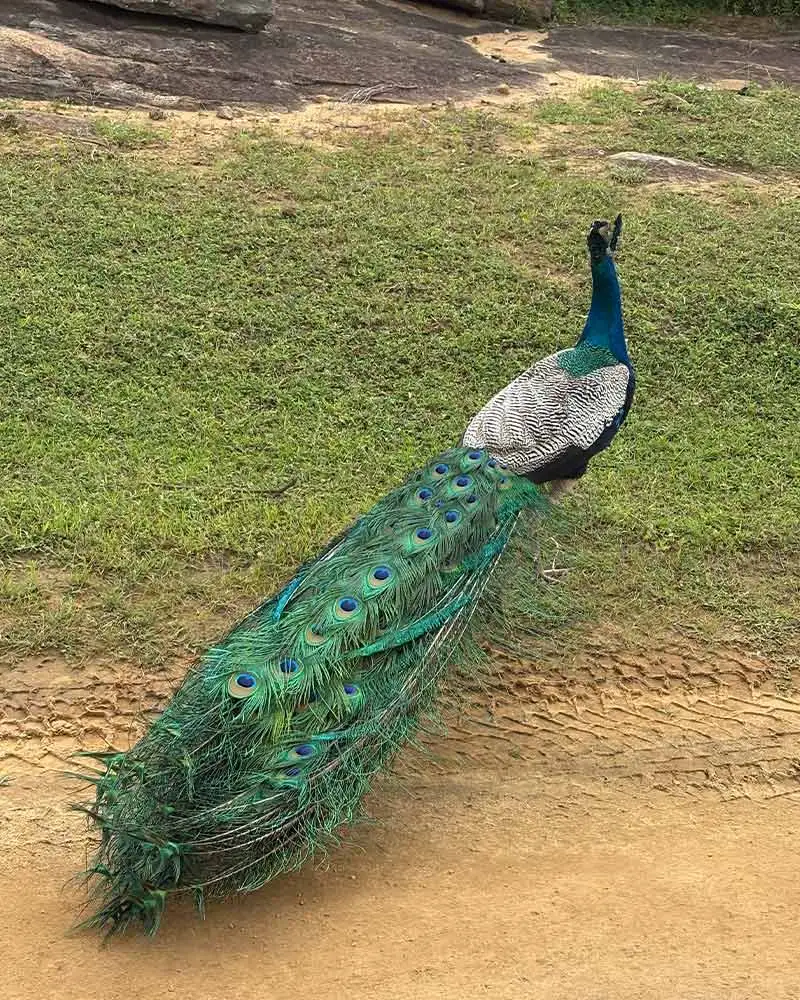
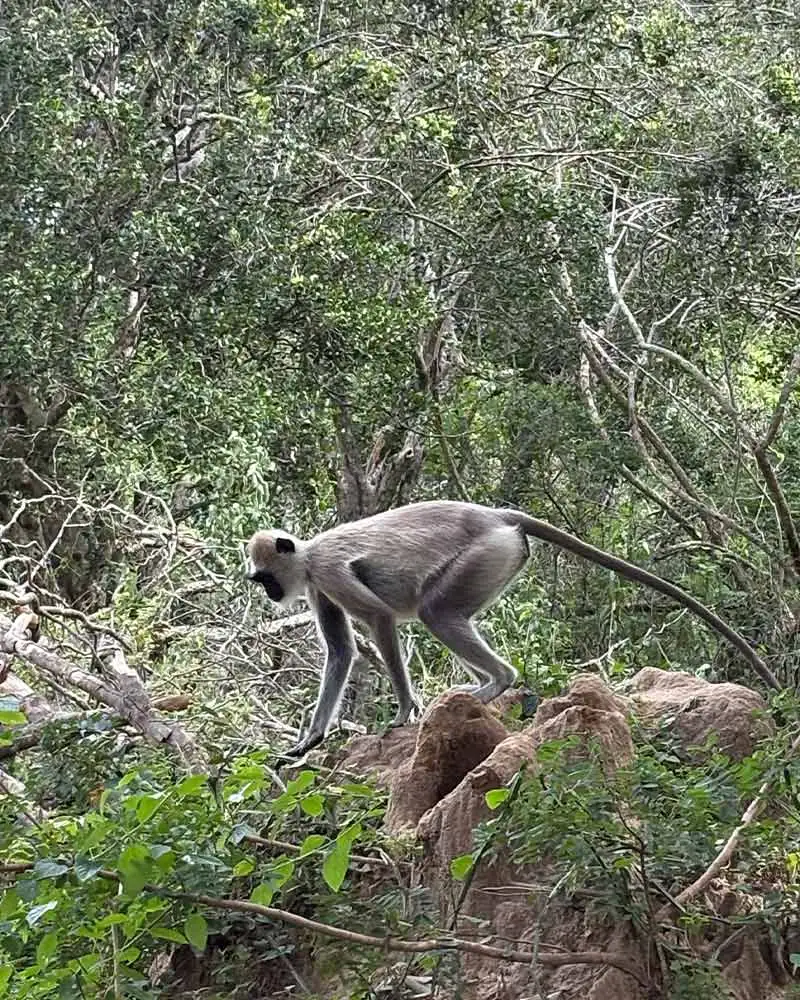
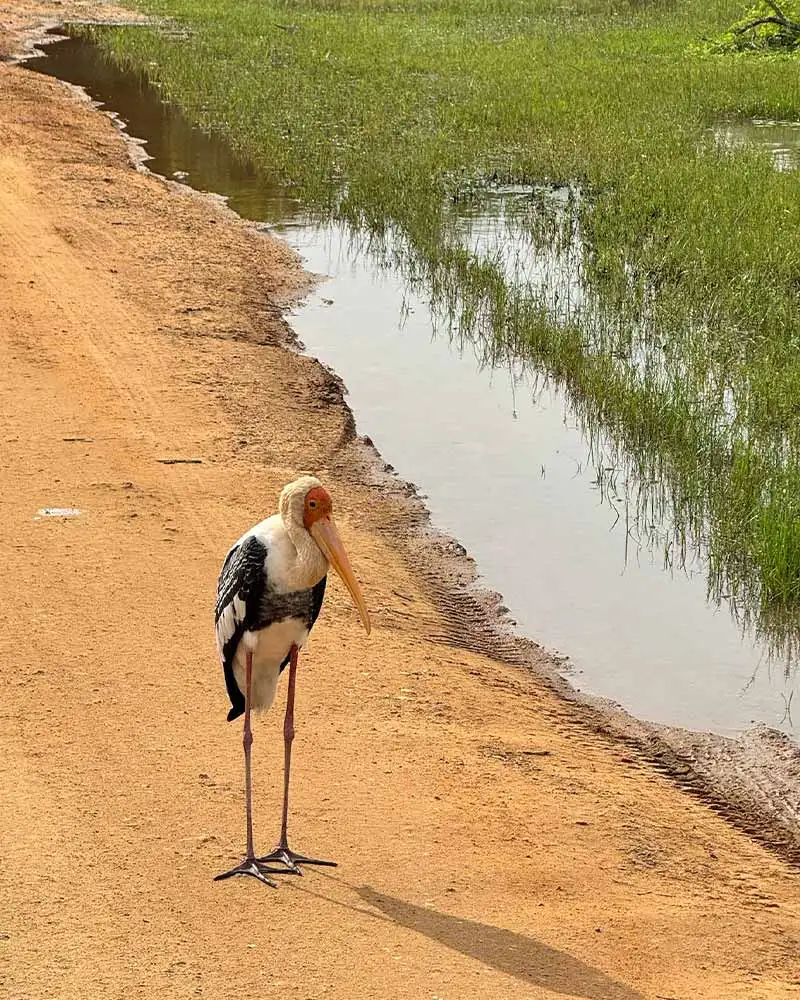
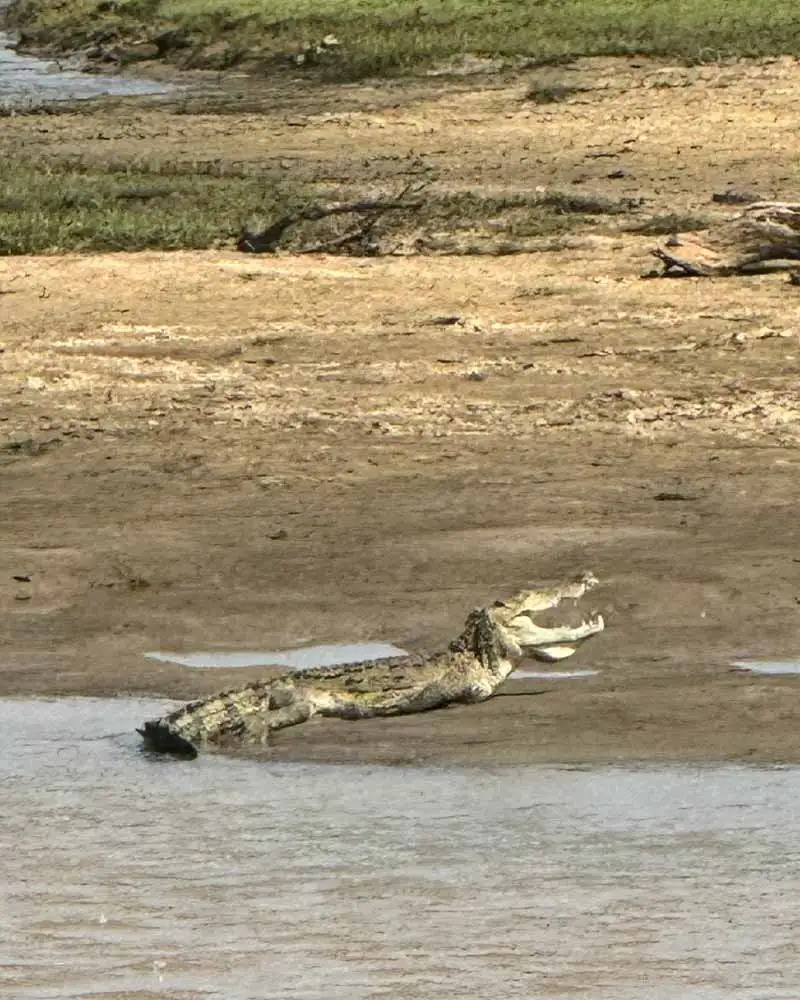
It’s quite likely you’ll encounter water buffalo, peacocks, eagles, storks, crocodiles, monkeys, and herds of deer, amongst many other things, including sloth bears, which are harder to spot due to their nocturnal habits.
The two animals most visitors are hoping to spot, however, are leopards and elephants.
Our guide, a very sweet man named Sissira, told us that in the two days prior, he hadn’t seen either. So when we spotted an elephant within the first 10 minutes, we knew we were already incredibly lucky.
That said, if I can offer up one piece of advice, it’s to manage your expectations. There are approximately 350 elephants and somewhere between 40 and 100 leopards across the entire park. Block 1 alone is so vast that it’s entirely possible to complete a safari without seeing either. Leopards are particularly elusive as they tend to sleep through the heat of the day, emerging mainly when they’re thirsty and heading towards watering holes. But, if you’re happy to just go along for the ride without getting your hopes up, you’ll have just as much fun identifying exotic birds, observing crocodiles sunbathing by the water, and watching the monkeys hang out – I promise.
My safari experience
It was late when we arrived at our accommodation the night prior, but it was a very warm welcome from our hosts.
The property we were staying at is made up of rustic cottages tucked into the countryside, complete with a pool and a charming restaurant. The accommodation is about 30 minutes from the entrance to Yala, but the comfortable rooms, affordable price, and trademark Sri Lankan hospitality made it well worth it. We organised a full-day safari for the next morning and trotted off to bed. The cost of the full-day safari was only around $460 AUD split four ways, inclusive of the guide and the car, bottles of water, breakfast, lunch, and some snacks.
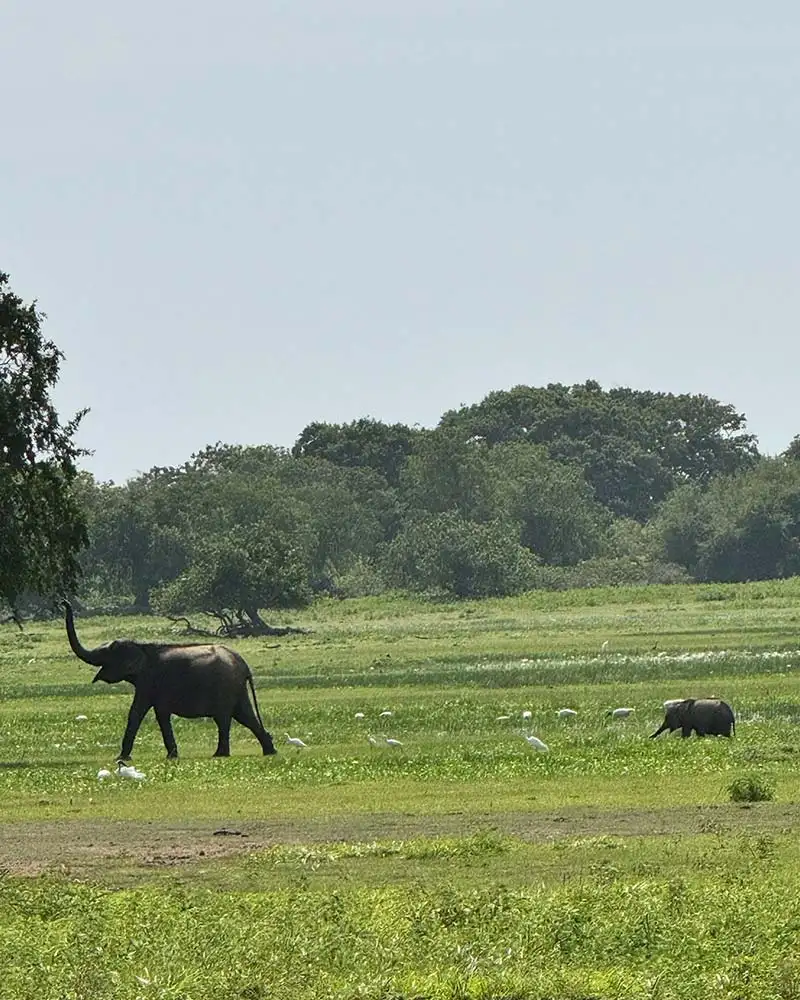
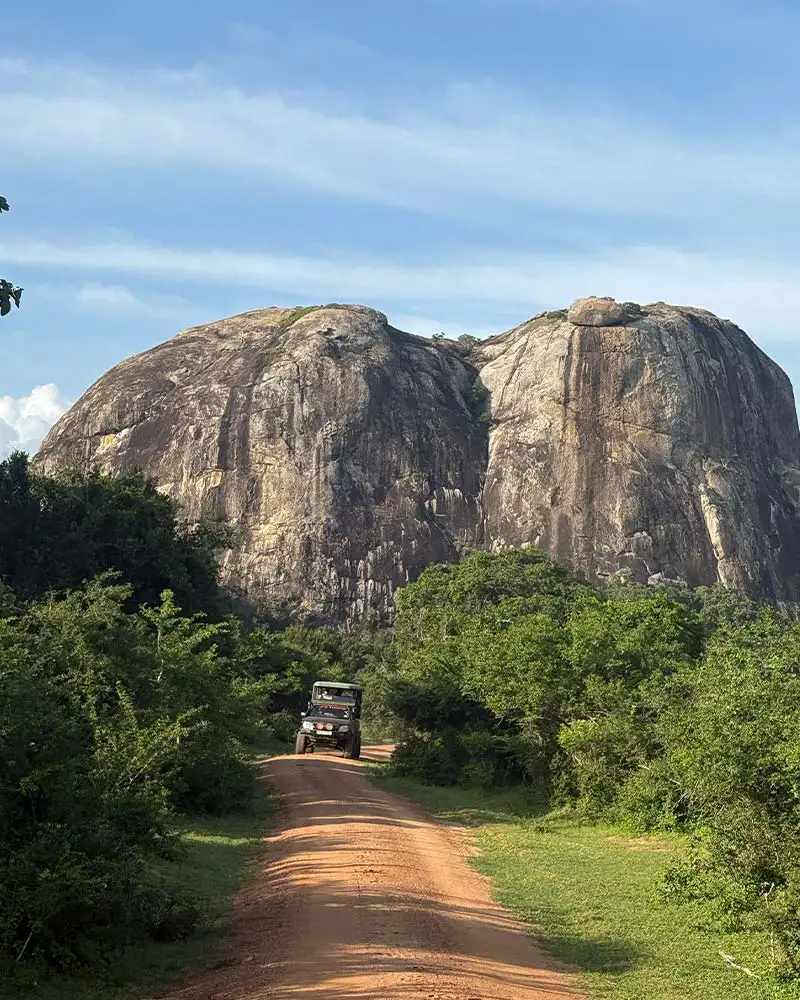
After the aforementioned 5am elephant sighting, spirits were high as we drove deeper into the park alongside countless other Jeeps full of excited tourists, eating the breakfast Sissira had packed as we went. I’d been warned the roads get busy, and it makes sense – it’s essentially one narrow dirt road in, one narrow dirt road out, with about 200 Jeeps all vying to see the same thing. But after about an hour, the sun was shining and we were the only Jeep around, navigating the dirt roads and spotting peacocks, water buffaloes, monkeys, crocs, deer, and (debatably) a sloth bear. The park is so expansive that, for the most part, we could’ve been fooled into thinking we had the whole place to ourselves.
A fun and mildly irritating game to play on safari: is it an elephant or a deceptively large water buffalo? Spoiler alert: it’s almost always the latter.
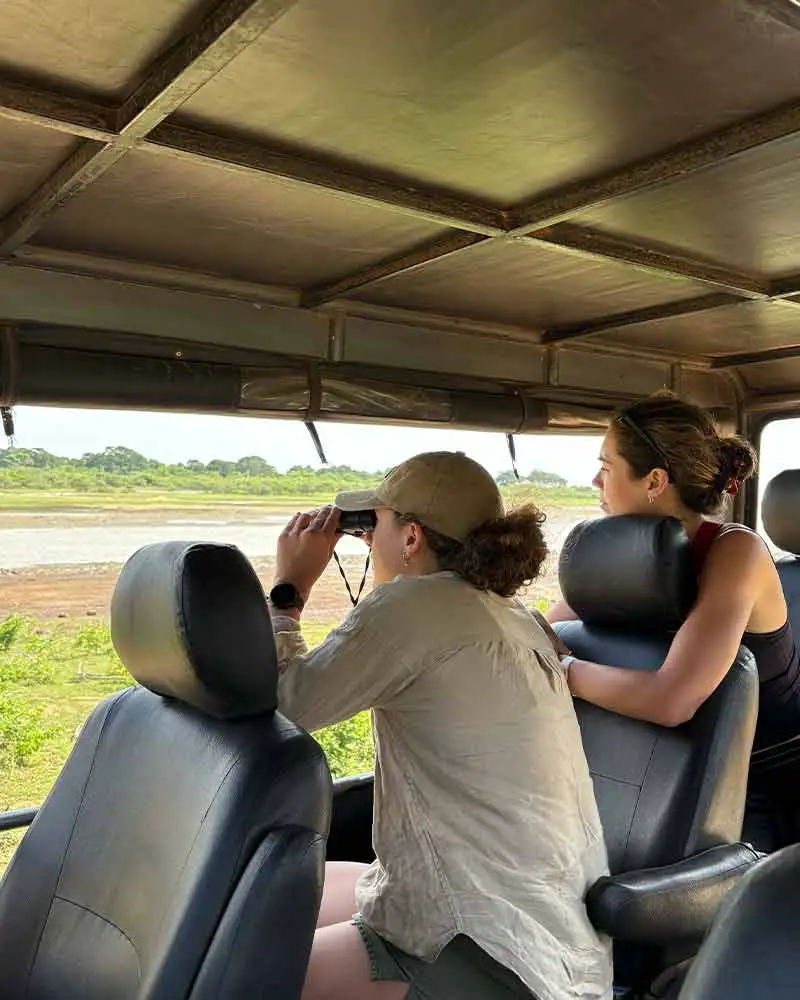
Eventually, we came across a backlog of Jeeps on one of the roads, and upon seeing the slew of phones out and hearing the whispers between fellow guides, Sissira wedged us into a prime viewing spot and handed us the binoculars, pointing to a tree where a leopard was climbing down for a drink at a nearby watering hole. After that, we went on the lookout for more elephants and eventually came across a baby elephant with its mum, walking in the distance.
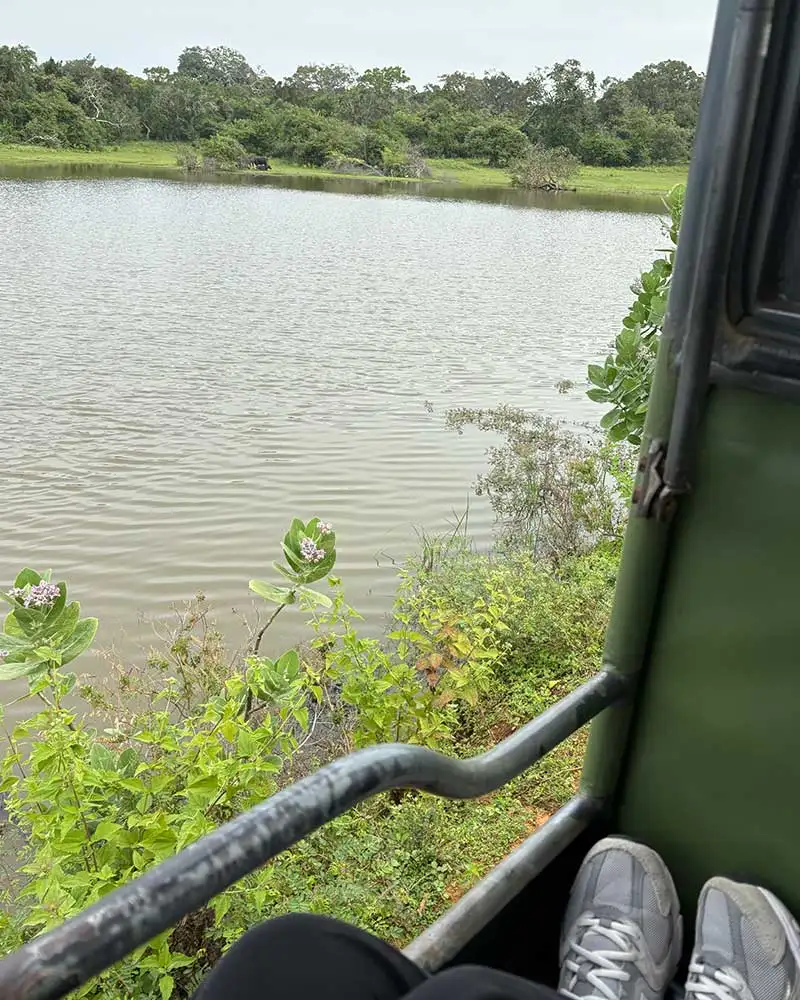
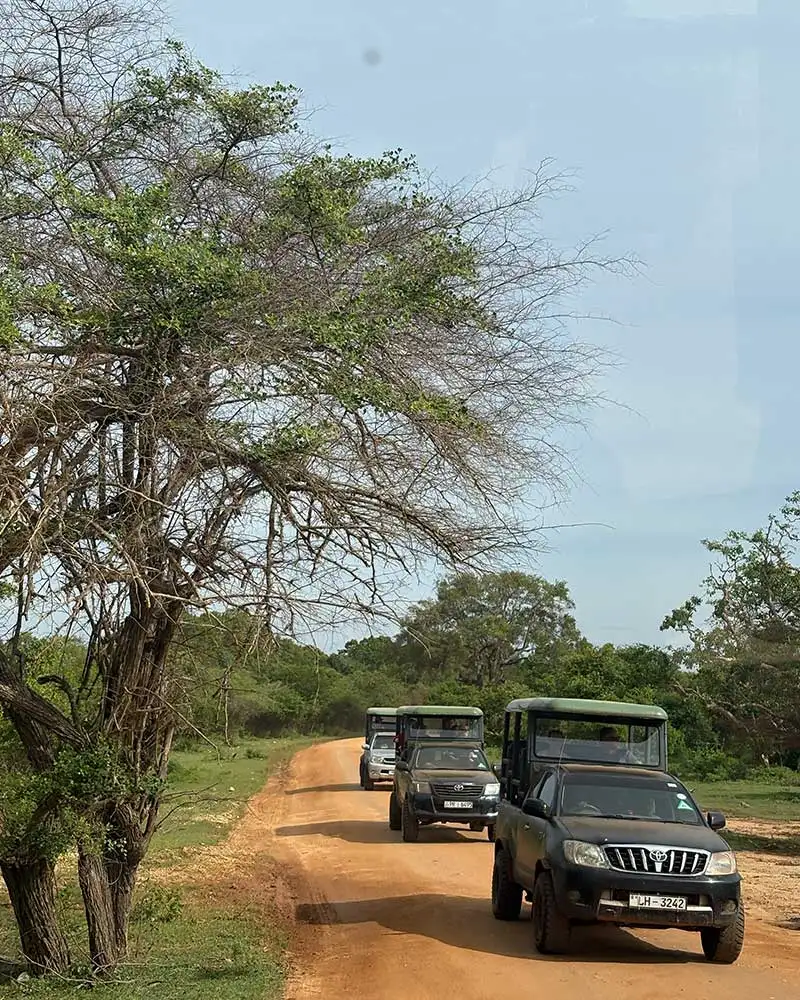
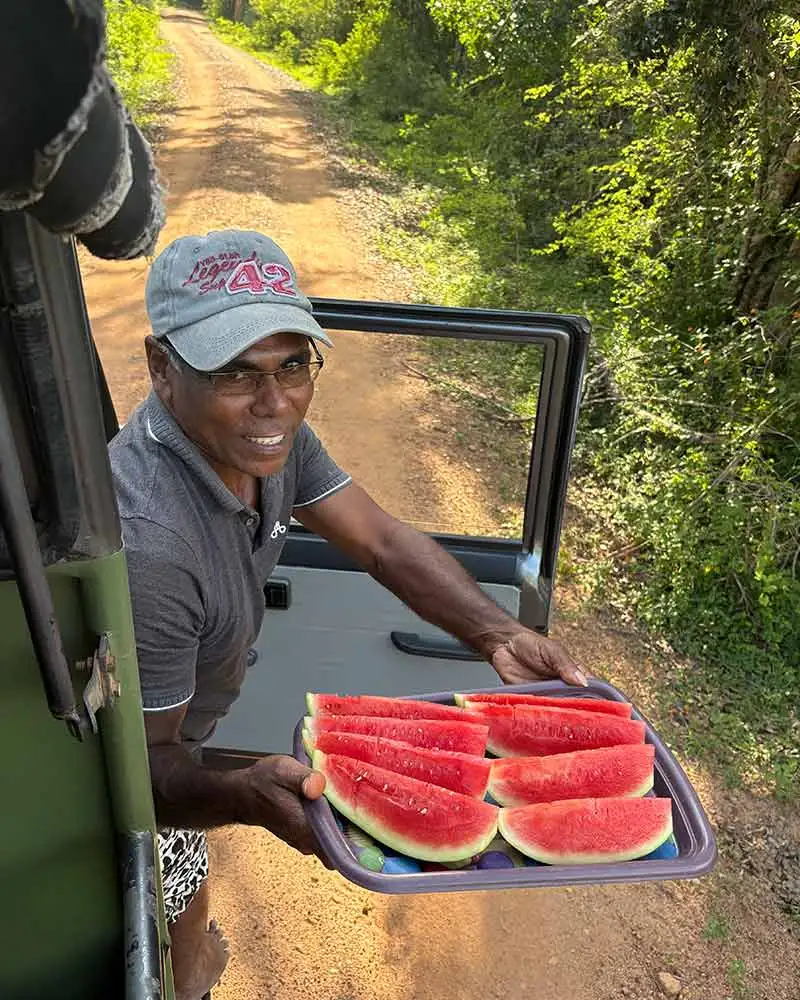
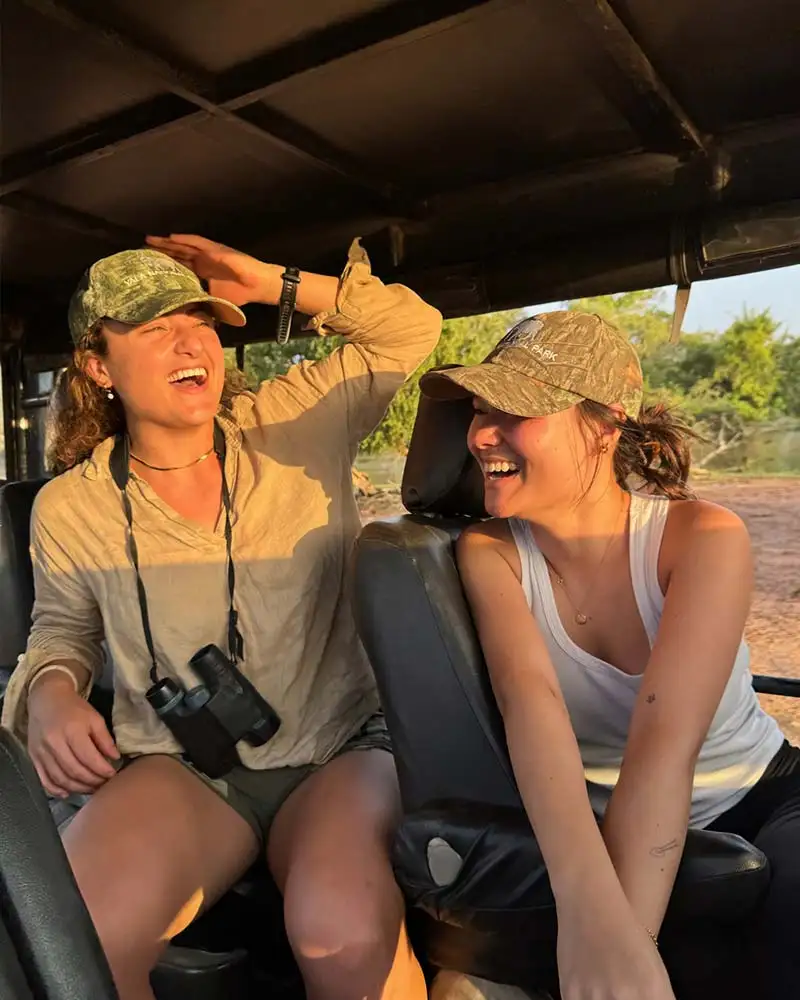
Soon it was time for the mandatory two-hour lunch break, where all groups exit the park. Half-day tourers headed back to their accommodation, while the rest of us were taken to a rest area with bathrooms, a gift shop, a café, and somewhere to sit. Sissira had packed a mouthwatering spread of Sri Lankan curries, rice, and fruit that went down an absolute treat, and afterwards, with time to kill, we did what any good tourist would do and bought matching caps from the gift shop, then played card games until it was time to head back in.
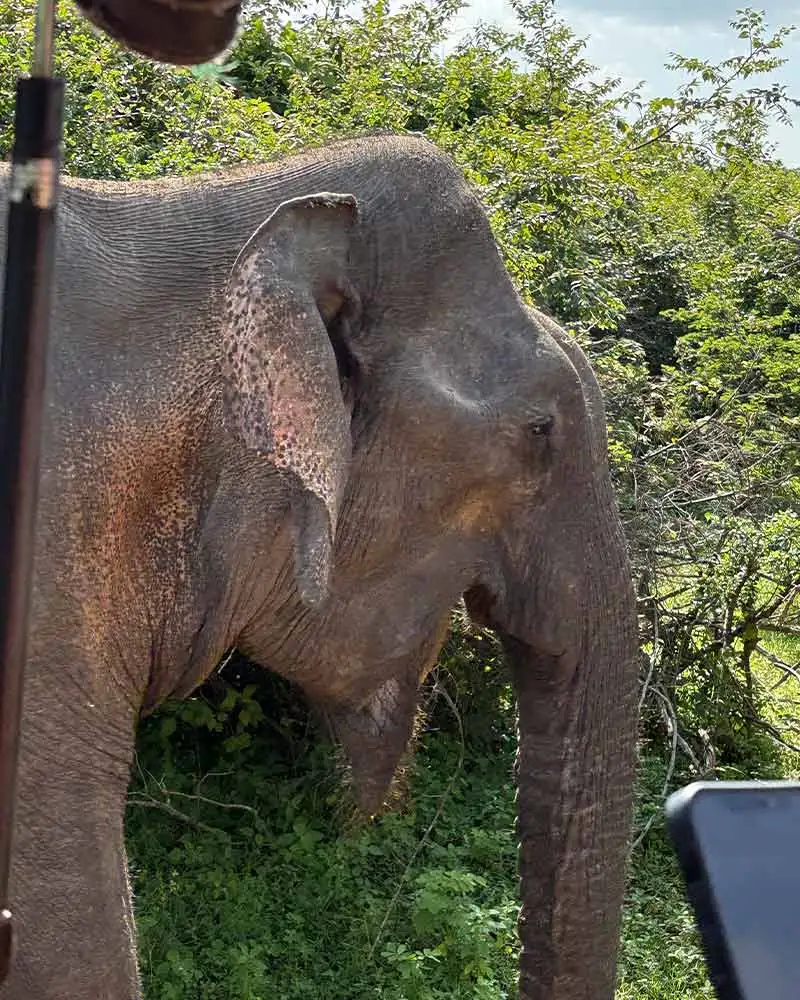
Back in the park for round two, we were determined for more sightings, and almost immediately, by ourselves on one of the roads, we stopped in our tracks. An elephant – Sissira estimated he was about 17 years old – smack bang in the middle of the road, eating from a tree. We stopped and observed him for a few minutes before he turned to face us and walked right by our Jeep – so close we could’ve reached out and touched him (which, of course, we didn’t. Respect the wildlife!). It was surreal.
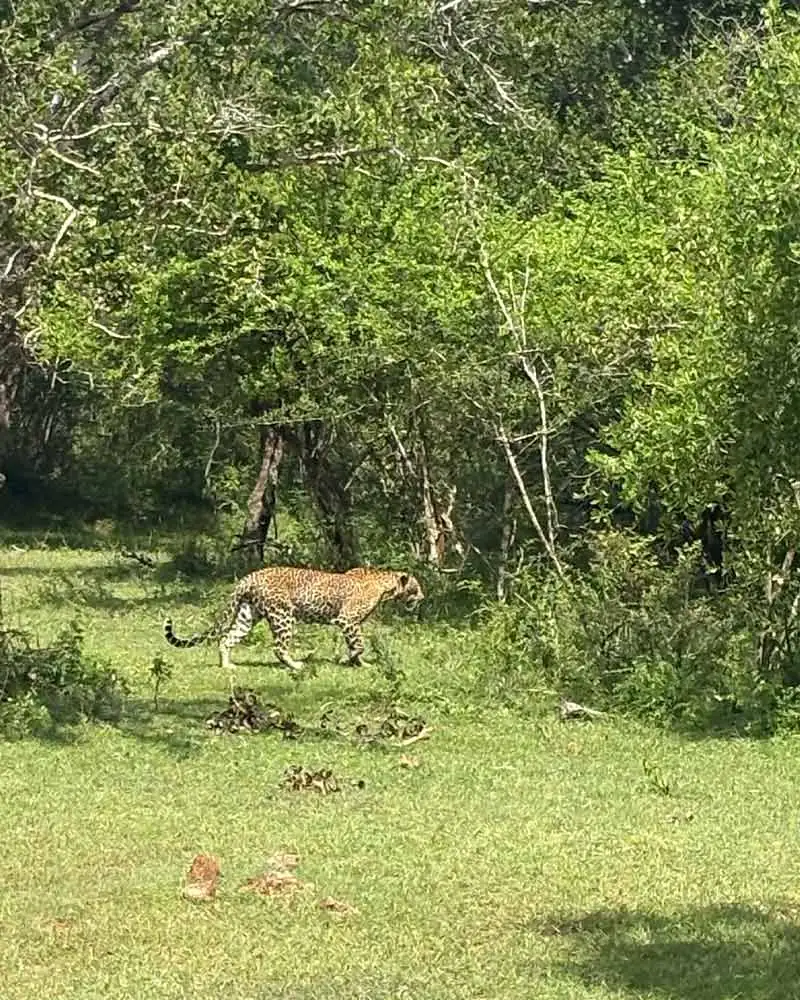
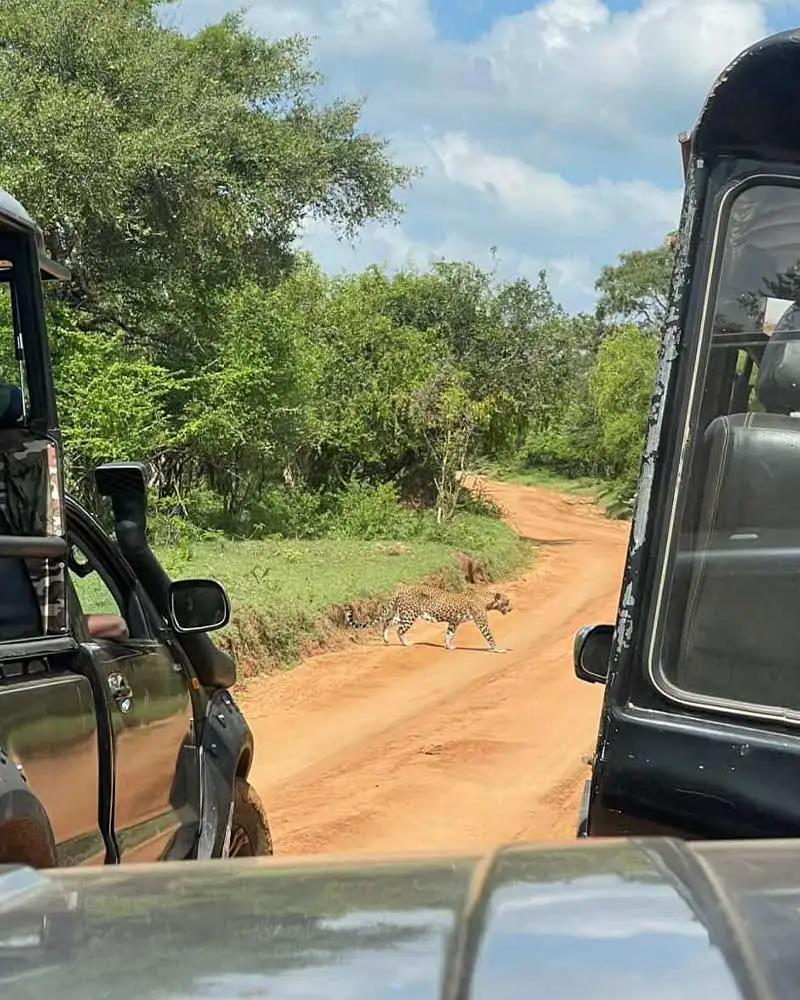
Sissira mentioned you can often tell when a leopard is nearby by the screams of deer, which act as a warning call that a predator is close. It’s a reminder of just how attuned these guides are to the land, noticing things that would’ve gone completely over our heads. That sixth sense paid off one final time when we followed the sounds to find a leopard, strolling right across the road in front of us.
Final thoughts
Most of us have seen elephants or leopards in a zoo, or watched them in a Planet Earth episode. But there is genuinely nothing that compares to seeing them in the wild – no barriers, just you in a Jeep on a dusty road in the Sri Lankan scrub, watching these creatures in their natural habitat.
A couple of things worth knowing before you go: the area closest to the entrance gets very crowded with Jeeps, so if you book a shorter tour, your driver will probably be stuck on the main roads with everyone else, and you’ll spend three hours breathing in dust and wondering where all the animals are. Splash out for the full day, get further into the park, book a reputable guide, and you’re much more likely to leave with a leopard or elephant sighting.
So, if you’re considering a safari but balking at the cost of Africa, Sri Lanka is the answer. It’s cheaper, it’s stunning, and it will absolutely deliver.