Return

Yayoi Kusama’s Extraordinary Legacy Lives On

an infinite artistic legacy

By Kiri Johnston | 27th August 2026

The pioneering Japanese artist transformed hallucinations, repetition and psychological struggle into a visual language recognised across the globe.

Yayoi Kusama, the visionary Japanese artist whose work reshaped contemporary art, has passed away in Tokyo at the age of 97.

Her studio announced the news on 27 August, confirming that Kusama passed away in hospital on 14 August 2026. She continued painting until her final days, bringing an extraordinary career spanning more than seven decades to a close.

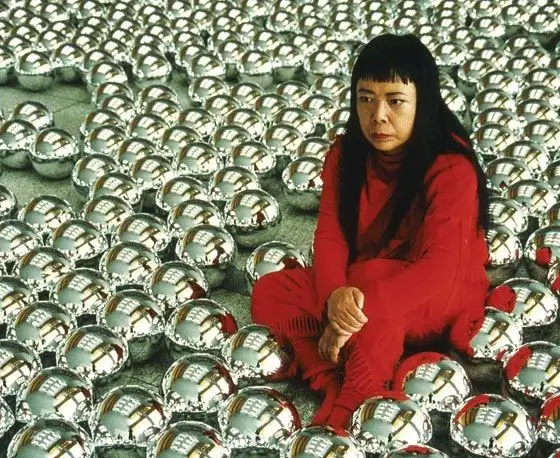
Yayoi Kusama with Narcissus Garden, 1999. Photographer uncredited. Courtesy Yayoi Kusama Studio. © YAYOI KUSAMA.

How hallucinations informed Yayoi Kusama’s art

Born in Matsumoto, Japan, in 1929, Kusama began experiencing vivid hallucinations as a child. She recalled fields of flowers appearing to speak to her and patterns multiplying across rooms, objects and her own body. Drawing became a way to record what she saw and manage the fear these experiences caused.

Those visions became central to her work. Polka dots, repeating nets and mirrored environments allowed Kusama to recreate the feeling of being surrounded, consumed or dissolved into infinity. She later described this process as “self-obliteration”: the individual disappearing into an endless field of repetition.

After leaving Japan for the United States in 1957, Kusama relocated to New York in 1958 and became part of the city’s avant-garde art scene, working across painting, sculpture, installation, performance, film, fiction and poetry. Her experimental practice developed alongside the beginnings of Minimalism and Pop Art, although the Japanese woman working among predominantly male contemporaries did not always receive equal recognition.

Her work during this period was fearless. Kusama covered canvases in obsessive nets, created soft sculptures formed from repeated phallic shapes and staged public performances that confronted sexuality, war and social convention.

Kusama returned to Japan in 1973 as her mental health declined. In 1977, she voluntarily admitted herself to a psychiatric hospital in Tokyo, where she continued to live while travelling to a nearby studio to work. She remained prolific across painting, sculpture, installation, literature and poetry.

Art was never separate from Kusama’s mental health; it was how she lived with it. Repetition became both her subject and her method, turning deeply personal psychological experiences into something audiences around the world could enter.

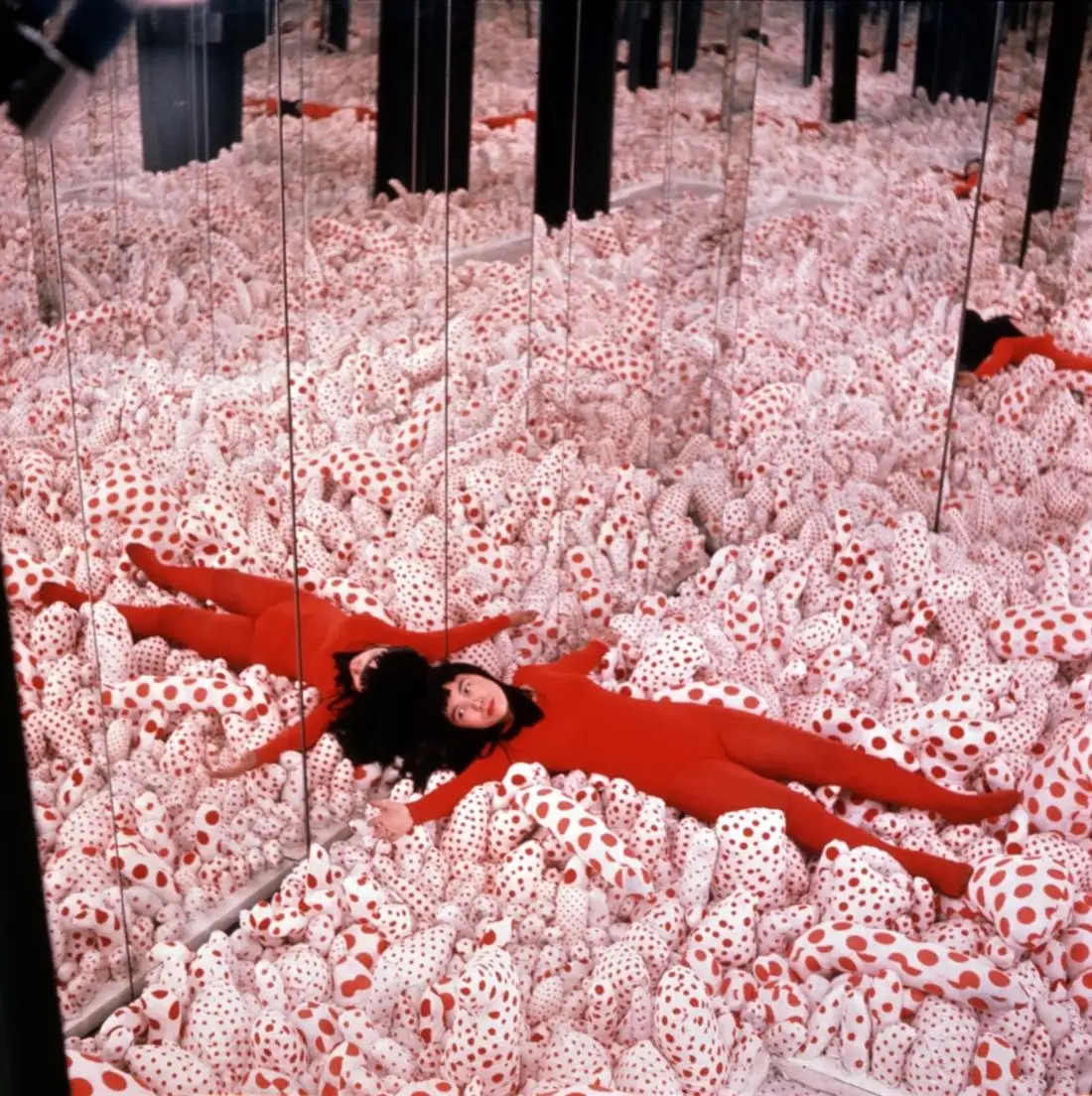
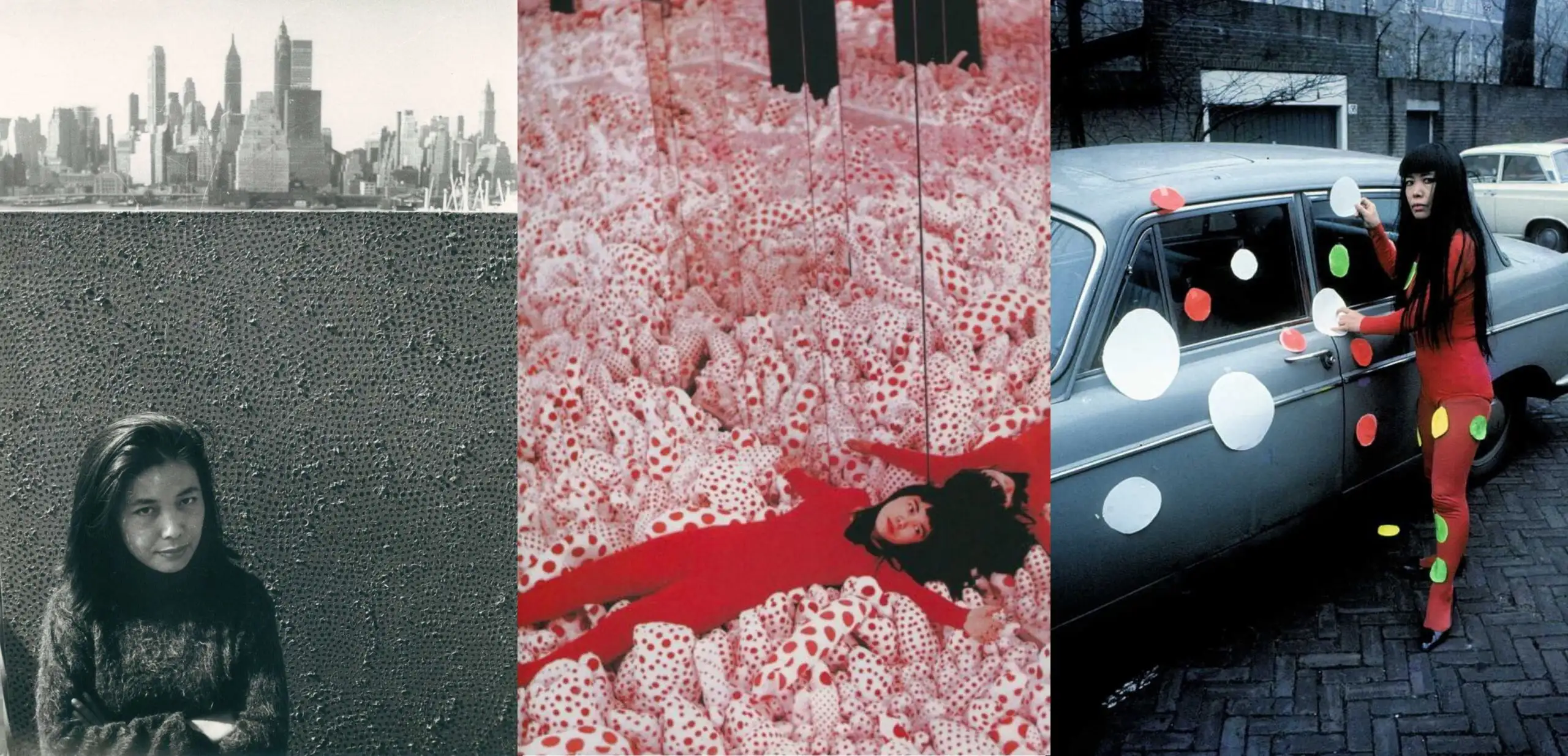
Yayoi Kusama, Infinity Mirror Room—Phalli’s Field, 1965. Photograph by Eikoh Hosoe. Courtesy Ota Fine Arts, Victoria Miro and David Zwirner. © YAYOI KUSAMA.

Inside Kusama’s Infinity Mirror Rooms

Kusama presented her first mirrored environment, Infinity Mirror Room—Phalli’s Field, in 1965. Filled with repeated soft sculptures and reflected through mirrored walls, the installation created the illusion of an endless field and established an approach that would become central to her work.

Her Infinity Mirror Rooms would eventually become some of the world’s most recognisable artworks, while her pumpkins, polka dots and vast Infinity Net paintings brought her visual language far beyond traditional gallery spaces.

Fashion also introduced Kusama’s work to new audiences. Her landmark 2012 collaboration with Louis Vuitton, initiated under Marc Jacobs, brought her signature polka dots to clothing, accessories and some of the house’s most recognisable bags. Kusama reunited with Louis Vuitton for a second major collaboration in 2023.

Yet Kusama’s legacy reaches well beyond the images most often associated with her. Her enormous popularity occasionally threatened to reduce a complex body of work to its most photographed symbols. Behind the mirrored rooms and brightly coloured pumpkins was an artist confronting psychological distress, sexuality, obsession, mortality and the uncertain boundary between the self and the surrounding world.

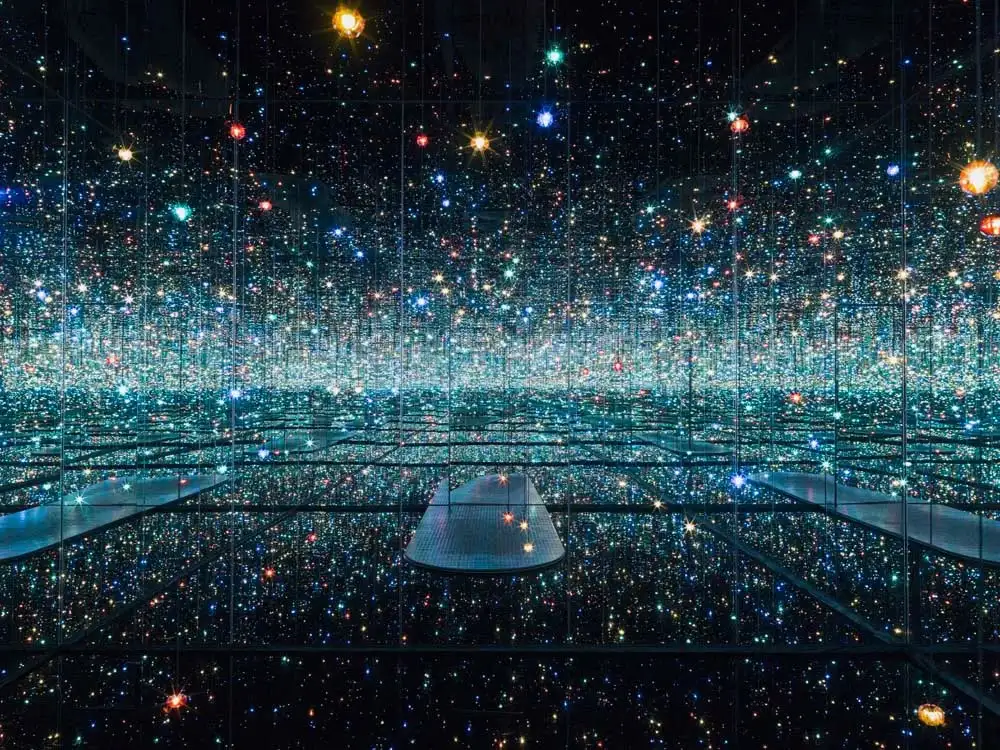
Yayoi Kusama, Infinity Mirrored Room—The Souls of Millions of Light Years Away, 2013. Photograph by Maris Hutchinson/EPW Studio. Courtesy David Zwirner and Yayoi Kusama Studio Inc. © YAYOI KUSAMA.

Yayoi Kusama’s enduring artistic legacy

A major retrospective opening at Amsterdam’s Stedelijk Museum on 11 September will bring together paintings, sculptures, installations, collages, photographs and archival material from across her career. The exhibition will also include historic works never previously shown in Europe and new pieces created specifically for the presentation.

Among them is the 2025 installation Infinity Mirrored Room—The Hope of the Polka Dots Buried in Infinity Will Eternally Cover the Universe, continuing an exploration that remained with Kusama throughout her life.

In a statement, her company said she continued to paint until her final days and pledged to carry her wishes forward through art, bringing “hope and strength for the future to people around the world.”

Few artists have invited audiences so completely into their inner world. Kusama turned the most difficult parts of her psychological experience into environments that could be entered, felt and shared, and changed the possibilities of immersive art in the process.

Imagery: Yayoi Kusama, Polka Dots Car, the Netherlands, 1967. Photograph by Harrie Verstappen. Courtesy 0-INSTITUTE. © YAYOI KUSAMA / Yayoi Kusama, Infinity Mirror Room—Phalli’s Field, 1965, installation view from Floor Show, Castellane Gallery, New York. Photograph by Eikoh Hosoe. Courtesy Ota Fine Arts, Victoria Miro and David Zwirner. © YAYOI KUSAMA. / Yayoi Kusama standing with her work against the Manhattan skyline, New York, 1961. Courtesy YAYOI KUSAMA Inc. © YAYOI KUSAMA. Photographer uncredited.

By Kiri Johnston As Editor and Creative Director of style, Kiri Johnston leads the publication’s editorial and creative direction across print, digital and social. With more than a decade of experience, including five years working in the UK, her work is driven by curiosity and a sharp eye for what’s next, spanning fashion, art, design, travel and culture, and the people shaping each.
Load More