Inside QAGOMA’s Must-See Interactive Exhibit By Olafur Eliasson
See it to believe it
By Tahlia Leathart | 4th December 2025This summer, Queensland’s Gallery of Modern Art (QAGOMA) invites us to experience the world in a whole new light (pun intended) with ‘Olafur Eliasson: Presence’ – an immersive light-and-motion exhibition designed to mesmerise, now open to visit.
After touring some of the world’s hottest artistic hubs (London, New York and Paris, to name a few), Danish–Icelandic artist Olafur Eliasson returns to Brisbane for his first major Australian exhibition in more than a decade – so yes, it’s a big deal.
In true Olafur fashion, expect an installation that blends the natural world with technology, using light, reflection and movement to shift the way we perceive space – brought to life especially for QAGOMA in close collaboration with his studio.
Let your curiosity take the lead as you spend the better part of a day wandering between awe-inspiring lightscapes, mesmerising optical illusions, and even an interactive Lego table to keep you happily occupied. Simply put, each installation offers a moment of curiosity, pause, and dare we say it, presence, and it ain’t one to miss, Brisbanites!
So go on, escape the everyday and step inside this mind-bending exhibition from 6 December through to 12 July 2026.
Unique to GOMA
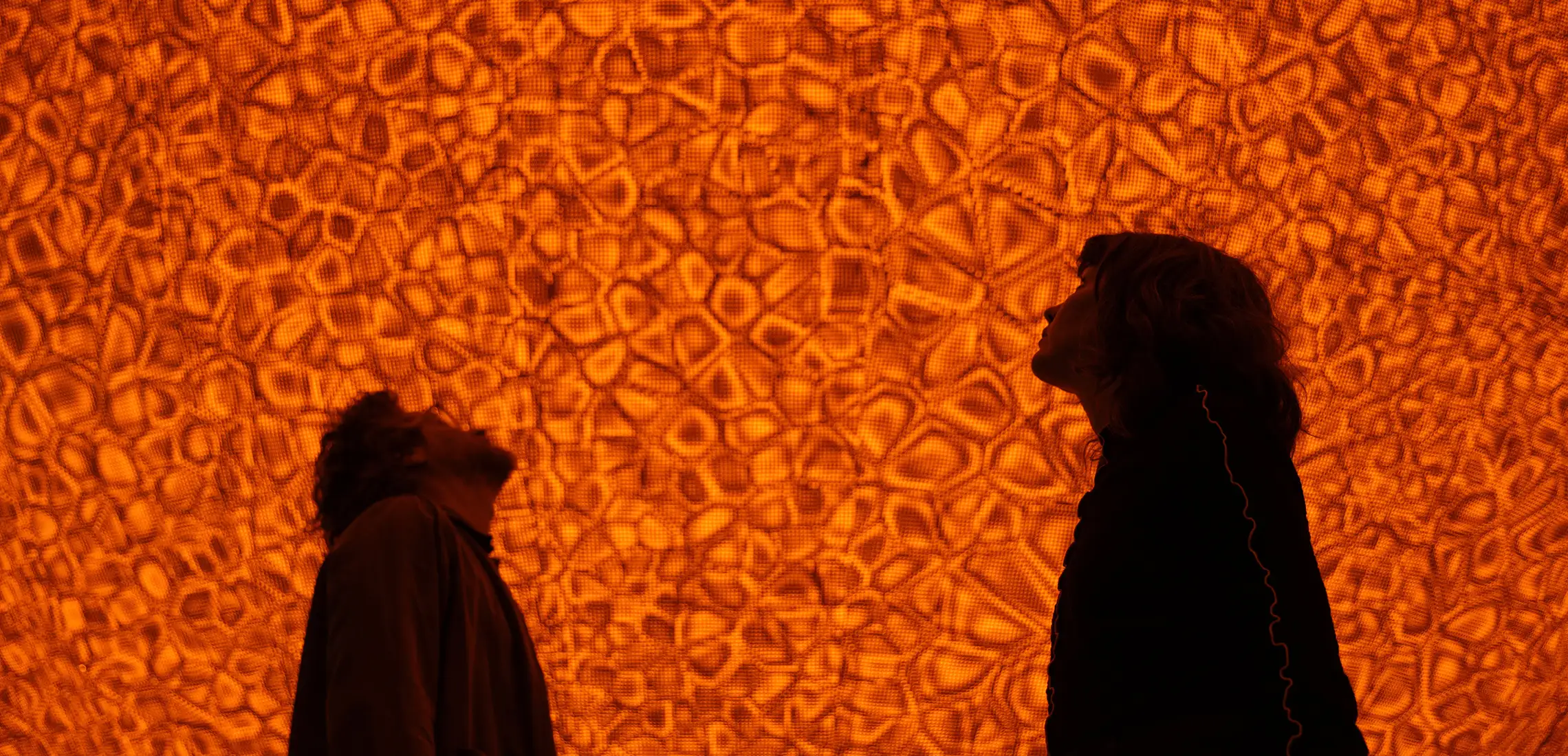
Three new commissions have been created uniquely for our very own GOMA and its expansive architecture. First things first, the title work, ‘Presence’ (2025), brings a radiant sun-like form into the gallery, stretching more than six metres toward the ceiling and using mirrors to expand the space with a dazzling sequence of repeating reflections.
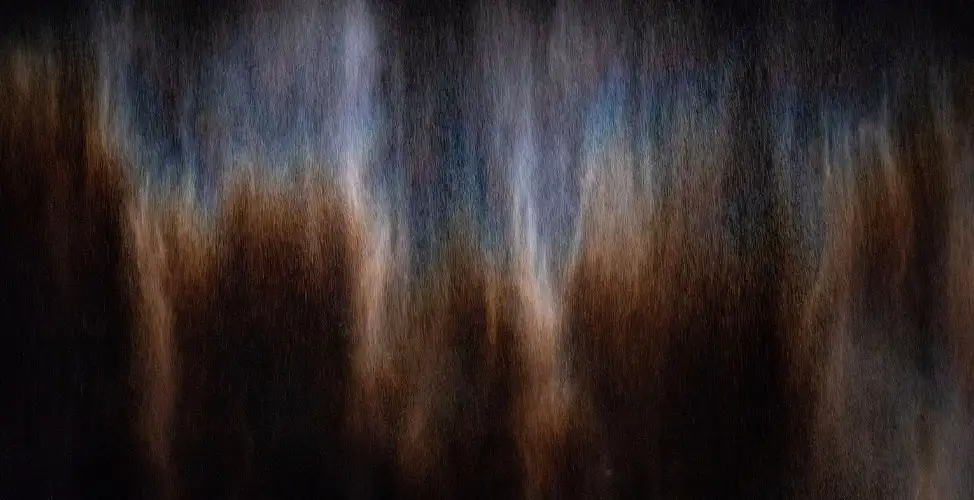
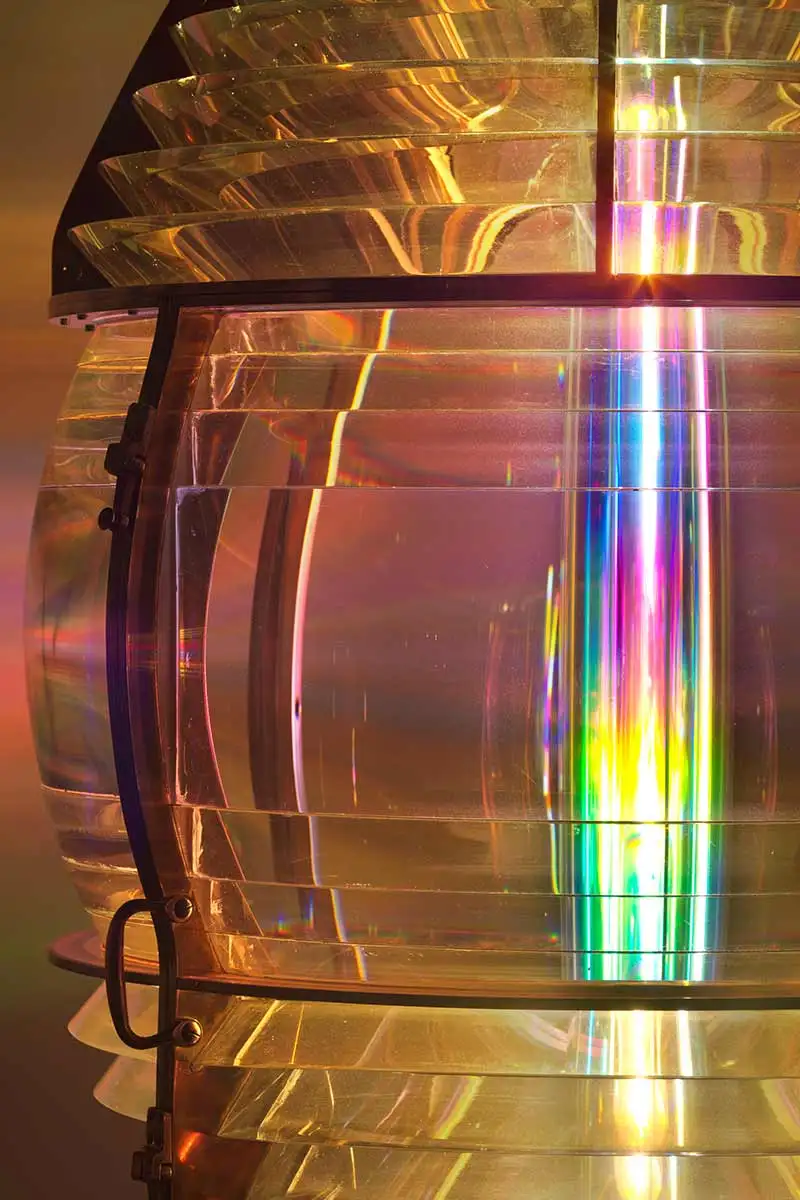
Also included in the exhibit will be works from Olafur’s archives, including his most iconic work, ‘Beauty’ (1993), a piece that brings a rainbow into a darkened room and shimmers close enough to touch (pictured below).
Inside the installation
Behind the scenes, the exhibition is the culmination of more than a year of meticulous planning. Olafur’s installations are technically complex, often needing precisely calibrated lighting and custom-designed components. Some works even need alignment and lighting accuracy down to the millimetre.
It’s an exhibit that naturally aligns with Brisbane’s evolving creative landscape, where the environment and experiential art have become increasingly central to the city’s artistic identity. For anyone planning their visit, QAGOMA’s Head of International Art, Geraldine, offers one simple suggestion: take your time. Move slowly. Allow your eyes to adjust and let your attention wander. We spoke to Geraldine about her ongoing collaborations with Olafur, the development of this head-turning exhibit, and the ins and outs of installing it in Queensland’s premier art gallery.
Q&A
What was the vision behind ‘Olafur Eliasson: Presence’, and how did it evolve from your collaboration with Eliasson and his Berlin studio?
This year’s ‘Olafur Eliasson: Presence’ emerged from QAGOMA’s 2019 exhibition ‘Water’, which featured Olafur’s work ‘Riverbed’ (2014). Our Director, Chris Saines, and I could see the potential for an exciting future exhibition.
‘Water’ closed early because of COVID, but in that strange flow of time, Olafur and I enjoyed speaking about art and life; these conversations created a special base for the exhibition to grow from. As we looked to more intensively develop ‘Presence’, it was really special to then be invited to travel to Berlin and work with Studio Olafur Eliasson, and see how this might enable new approaches to exhibition-making. Olafur and his team have a genuine interest in hospitality, nurture, and care – and these ideas were at the centre of our first formal meetings about the exhibition.
The exhibition includes three major new site-specific commissions. How did these works respond to GOMA’s architecture, and what role did the gallery space play in shaping them?
Three new works have been made especially for Brisbane, including the exhibition’s title work, which brings a luminous sun into the gallery. It is amazing to watch Olafur, his studio, and our teams work together to develop and test ideas, then work out how to best locate these within GOMA’s expansive gallery spaces.
‘Presence’ (2025) appears to move and shift with energy. Olafur uses yellow monofrequency lights and layers of pattern to create a ‘moiré effect’ activated by our motion. Mirrors then expand the gallery beyond what seems possible, creating the impression of a complete sphere from only one-eighth of its full volume.
What is the meaning behind the theme of this exhibit, “Presence”, and how is it central to Eliasson’s practice?
‘Presence’ is a word which invites us to be fully alive and in the moment, to be ‘present’ with ourselves and others around us also. We are thrilled to be showing one of Olafur’s earliest works, ‘Beauty’ (1993). Making this work, Olafur realised the vital role of perception as the audience experienced the artwork. Without us – without our eyes, our touch, our movement and perception of light – the artwork, just like a rainbow, doesn’t fully exist. He has explored this idea further in many different artworks since.
The three major new works made for Brisbane do this in exciting new ways. They are difficult to describe or capture in one image; you need to be with them, to be present, in order to experience them. Seeing each other ‘being present’ and discovering the works is important as well. Olafur calls this a form of ‘we-ness’ that an artwork can create. The exhibition will have a lot to offer us as individuals, but also collectively as a community. I think this is a really important aspect of what we aspire to offer, opening more space for joy and interconnection.
Iconic pieces like ‘Beauty’ (1993) and ‘Riverbed’ (2014) appear alongside new 2025 pieces. How does the exhibition trace Eliasson’s evolution as an artist?
Olafur made ‘Beauty’ while he was still at art school; it has become one of his most iconic artworks. To contrast with the large-scale experiential works in the exhibition, and give a deeper sense of Olafur’s evolution as an artist, we have a really powerful group of his Icelandic landscape photographs, as well as key smaller works. One of my favourite rooms in the exhibition includes Olafur’s photographic series Glacier melt 1999/2009, which initially catalogued glaciers across Iceland, then revisited them 20 years later. As temperatures rise, the glaciers are clearly in retreat.
In this same room, we have ‘Model for your circular city’, a table with a huge array of models and geometric forms and tests produced by Studio Olafur Eliasson, sometimes to create sculptures, in other instances to model buildings or pavilions. Together, they create a kind of city of potential and creativity.
After seeing these works, our visitors will step out to GOMA’s central Long Gallery to sit together at the long tables of white Lego, which make up ‘The cubic structural evolution project’ 2004. We’ve now had generations of visitors take up the opportunity to work together on this artwork to contribute to a constantly evolving city of the future.
This is a large-scale, multi-sensory show spanning more than 20 works. What were the biggest curatorial or logistical challenges in bringing it to life?
Olafur has an expansive artistic practice that explores so many different ideas. One of the continuing challenges I faced in developing the exhibition was communicating to my colleagues what we were actually proposing to do – the three major new experiential artworks are all very optically and technically complex. Just understanding the physical parts and how they occupy space doesn’t fully explain the physics of what you will see or perceive. And as one’s movement through the work will change this, there is a lot to understand.
Our plans were dynamic as well! This is one of the great joys and challenges of supporting the creation of new work. Olafur speaks about “holding space open for the art”– we need to let the artwork become its best self in a way, something that I hope we can also offer to each other.
Light, perception and viewpoint run through the exhibition. How do you see these themes speaking to contemporary issues such as environment, community or wellbeing?
In ‘Presence’, Eliasson reminds us that our understanding of who we are and the world around us is based not only on where we stand and where we are from culturally, but on the fundamental process of perception itself. He encourages us to move between perspectives and to watch each other with care and tenderness as we do so. In bringing us together and making us aware of the fragility and wonder of this earth, he raises awareness of the challenges we face, but also sparks energy in us to work together creatively and make change.
Works like ‘The cubic structural evolution project’ invite direct participation. How important was interactivity and play in shaping the visitor experience for this show?
I think we are able to surprise ourselves when we play. We might be challenged, we might achieve things we didn’t expect to, we might find ourselves laughing or even dancing. One of the new works created for the exhibition, ‘Your vulnerability from two perspectives‘ (2025), uses polarising filters to present us with a certain perspective, which then changes entirely as we walk further into the space and see more of the work. Black becomes white, what first appeared in vivid colour becomes clear, or appears to us in a different spectrum of rainbow hues.
Olafur invites us to playfully shift the way we make sense of what we experience. We will each perceive the artworks differently, even when we are standing side by side. In other works, one of us might see a rainbow while the other may feel the mist catching the light. Someone may see the sun, another may see a star.
We live in times of social polarisation and information silos, and I hope the experience of play at the heart of the exhibition will enable us to overcome these divisions and create a different space of possibility that we can carry with us.
Imagery: Supplied