Why Doing Nothing Might Be the Most Productive Thing You Do All Week
the productive power of switching off
By Tracy Sinclair | 1st May 2026There’s a particular kind of exhaustion that comes from juggling all the things – business, family, friendships, life admin, and the constant low-level hum of what have I forgotten?
For me, that feeling recently peaked mid-office move. If you’ve ever relocated a business, you’ll know it’s less “fresh start” and more what on earth are we going to do with all of this sh*t? It’s cables and computers everywhere, brutal culling, and a running mental checklist that never quite switches off.
So, when the opportunity came up to spend two hours switching off and floating my troubles away, I didn’t hesitate.
The importance of slowing down (every now and then)
Like many women, my default answer to “How are you?” is some version of “Busy… a lot on.” It’s the standard answer we give when someone asks how we’re going. Not because we’re being dismissive, but because the full answer would take 45 minutes and possibly require a glass of wine. Between running a business, being a wife, a mum, a grandmother, and attempting to maintain some semblance of a social life, slowing down isn’t exactly making it on the to-do list.
Lately, I’ve been making a more conscious effort to look after myself – changing eating habits, and adding a bit of strength training into the mix. Nothing extreme, but enough to shift how I think about recovery and stress. In this day and age, they’re no longer “nice to have”; they’re essential.
Welcome to the ultimate wind-down
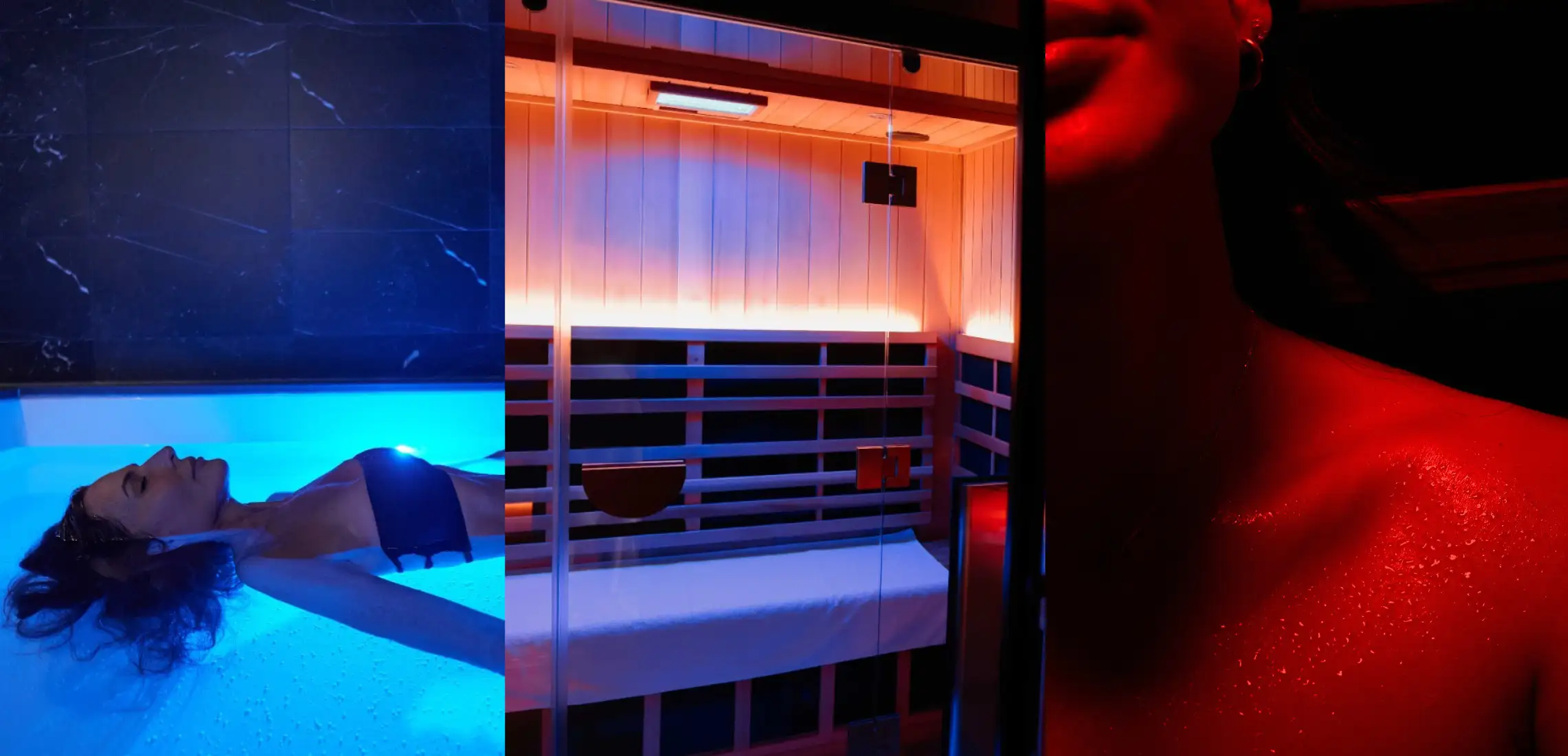
After hearing the buzz online, I thought I’d try my luck at slowing the pace with a Flauna Package at City Cave – which, I found out, is the magic combination of sauna sesh and float tank experience. It begins with a 45-minute infrared sauna, and I’ll admit, I went in expecting to mentally reorganise my to-do list. Instead, something unexpected happened. I stopped thinking.
We have a traditional sauna where I live, but infrared is different. Rather than just heating the air around you, it uses light to warm your body from the inside out, which means you get a deeper, more comfortable sweat at a lower temperature. The heat was gentle but immersive – a slow, steady warmth that seeped into my muscles rather than overwhelming me. For the first time in a while, it’s quiet, still. Though there’s a dock for your phone if you want to listen to music or a podcast, I was in the zone, and I had a great sweat going on.
Somewhere around the halfway mark, my shoulders dropped. My breathing slowed. The constant background noise in my mind softened to something more manageable. By the end, I felt looser, calmer, and, if I’m honest, slightly smug about the fact that I’d done absolutely nothing for 45 minutes.
Just keep floating
Then came the float therapy. If you’ve never floated before, the concept can sound a little abstract. But, to my surprise, the experience itself is rather intuitive. The room is completely private, centred around a spacious open pool filled with magnesium-rich water that makes you instantly, effortlessly buoyant. No enclosed pods, no sense of confinement – just soft lighting (or you can turn the lights off), warm water, and a quiet invitation to let go.
The first few minutes are an adjustment. You shift slightly, find your balance, and notice the silence. And then, almost without realising it, something clicks. You stop holding yourself up. Physically, yes – but mentally too.
There are no notifications, no conversations, no decisions waiting for you. Just the sensation of weightlessness and a nervous system that finally gets the message: you’re allowed to rest. For someone who is constantly “on,” this is where the real shift happens. The tension you didn’t fully register – in your back, your neck, your thoughts – begins to dissolve.
And while it feels indulgent, the benefits go well beyond the surface. Float therapy is often associated with reduced cortisol levels, improved muscle recovery, and a deeper sense of relaxation. The magnesium in the water supports muscle repair and nervous system regulation – a welcome addition for anyone trying to stay active while managing the realities of a busy life.
So, did it work?
Say what you will, by the time I stepped out, I felt clearer, calmer, and noticeably lighter. Not in a “life is suddenly perfect” way – but in a I can handle things again kind of way. Which, realistically, is what most of us are looking for.
What stayed with me most, though, was how simple it all was. No complicated routines. No pressure to optimise or achieve. Just space to pause, to breathe, and to recalibrate. And for busy women, that pause isn’t indulgent, it’s essential – and it’s something we all could do with a little bit more of in our lives.
Let me tell you this: sometimes the most productive thing you can do is absolutely nothing for a little while.
If you’re as intrigued as I was, City Cave offers a range of wellness experiences for recovery, rejuvenation and stress relief. Book your Flauna Package now and experience the slow for yourself.
Imagery: @city.cave