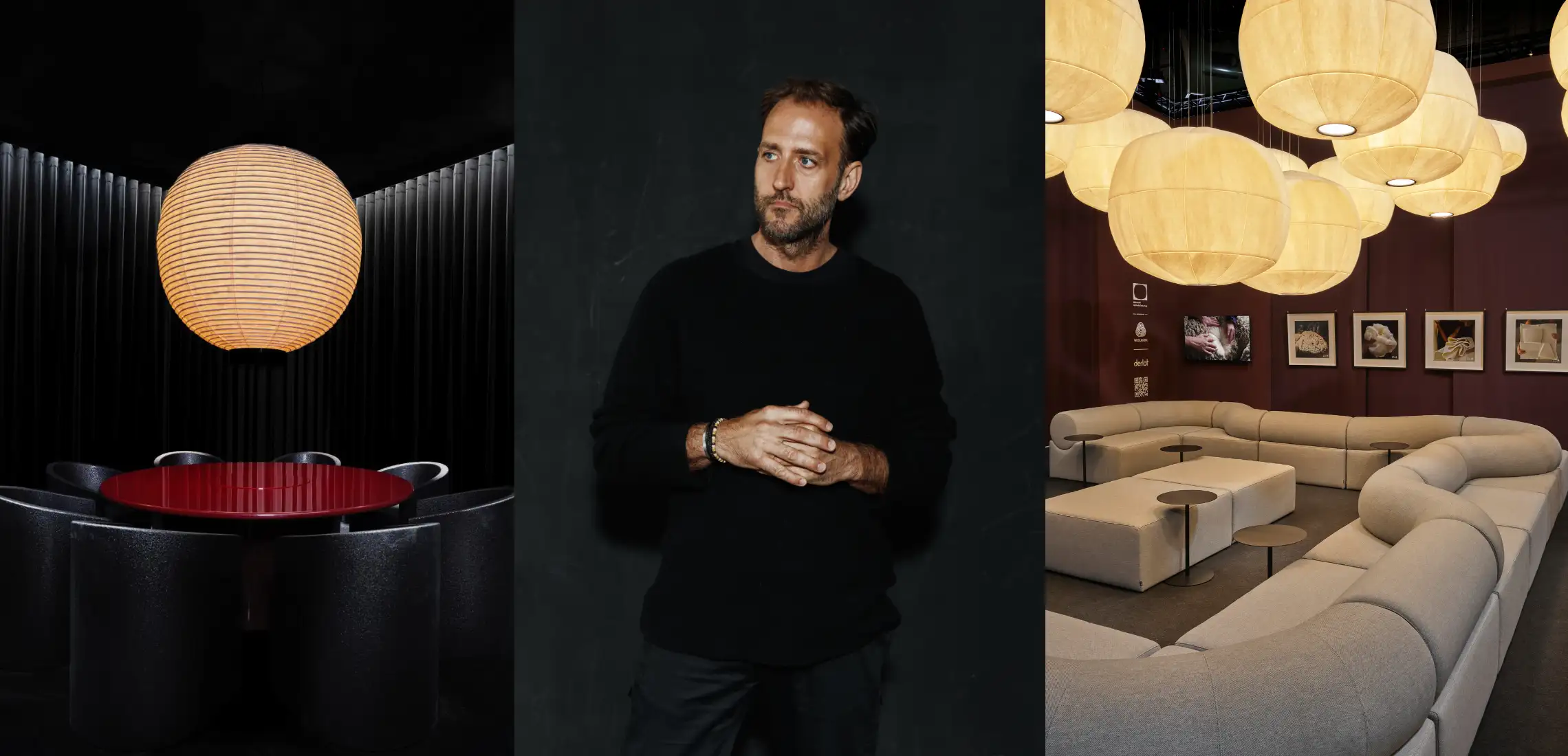
The Brisbane Designer Shaping Some Of The World’s Most-Travelled-To Spaces
design to scale
By Natalie McGowan | 24th July 2026From a studio in Brisbane, Alexander Lotersztain of Derlot has built a design practice with global reach, spanning airports, restaurants, offices, universities, and public spaces all around the world.
Observation, as Alexander Lotersztain will tell you, is the key to good design. Sitting at an airport gate waiting to board a flight, Alexander experienced this first-hand.
“I see this girl looking for a power point, just on a mission to find one, but she couldn’t,” he recalls. “Eventually, she sat next to the vending machine, unplugged it, and plugged in her laptop.” Most people would probably notice it and move on. Alexander, however, had recently received an open brief from Dallas Fort Worth Airport – one of the world’s busiest aviation hubs – and was in the process of developing the Gateway collection: seating designed specifically for high-traffic transit environments, with configurable layouts that can be tailored to different spaces. Following that airport encounter, integrated power outlets in every seat became a key feature of the design.
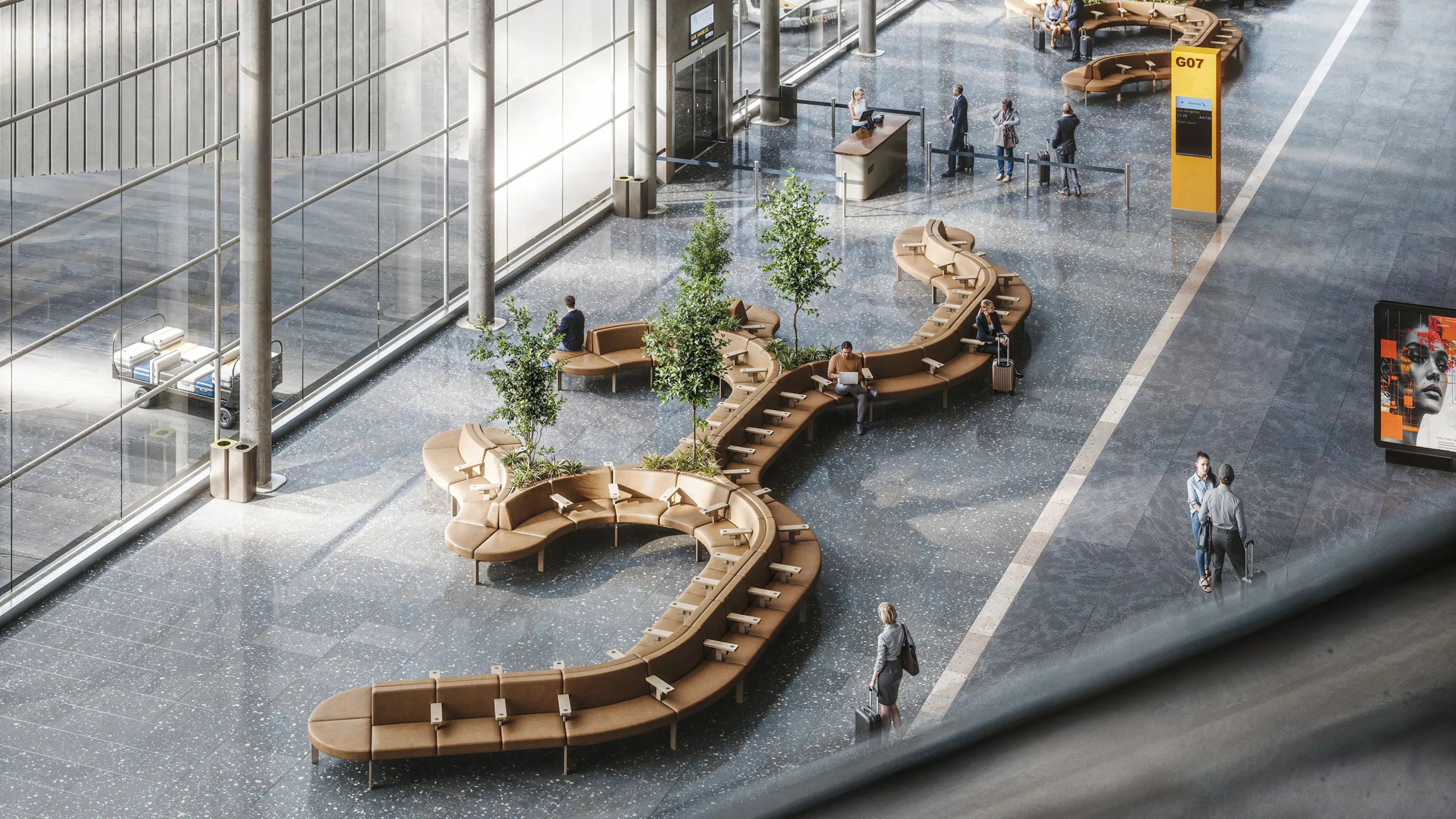
The Gateway collection
The collection has since been installed in airports around the world, including Dallas, Adelaide, and Cairns, while several other aviation-focused collections by Derlot have also been informed by observing the distinct characters that populate airports – from backpackers camped at departure gates to business travellers catching the red-eye home.
While his foray into the aviation sector is a natural fit for someone who has spent much of his life seeing the world, travel’s influence extends far beyond his recent airport work, having shaped the way Alexander observes, thinks, and designs across every aspect of his practice.
Born in Buenos Aires to Polish parents, Alexander recalls spending much of his childhood on the move, frequently going on family holidays and visiting museums and art galleries on weekends. When Alexander and his twin sister were five, the family relocated to a fishing village in Brazil as his parents grew increasingly concerned about the escalating Falklands War, before eventually returning to Argentina once the conflict had ended.
At 18, he moved to Brisbane to study industrial design at Griffith University before heading overseas to immerse himself in different cultures and design languages. In Tokyo, he worked under Kenji Ekuan, the visionary designer best known for creating the iconic Kikkoman soy sauce bottle. “It was an amazing experience, but very hardcore. I was the only foreigner in an office of 42 Japanese designers,” he recalls.

Image of +81, photographed by Florian Groehn
A move to IDEÉ under the tutelage of Teruo Kurosaki followed, before stints in Milan and Barcelona exposed him to two of the world’s design capitals. The experiences were all vastly different, but together formed a work ethic and global ideology that underpins his work to this day: design should be thoughtful, functional, and engaging. “I hate the idea of creating products that are loud,” he says. “It has to serve a function. It has to have some boldness to it, to attract you. But it shouldn’t take over a space.”
By 2006, Alexander had returned to Brisbane, equipped with an impressive resume, determination, and the belief that the disconnect between Australia and the rest of the world wasn’t a disadvantage; rather, an opportunity. “The tyranny of distance of being in Australia forces you to think more laterally. And if you’re thinking that way and you’re entrepreneurial enough, there are heaps of opportunities.”
“When we do these types of projects… I want them to be award- winning, otherwise I’m not interested.”
One of Alexander’s earliest and most formative projects under Derlot was Limes Hotel, Australia’s first Design Hotels member when it opened in 2008. Alexander designed everything bar the architecture: the interiors, wayfinding, luggage tags, logo, and even the music selection. “It was an amazing experience that helped me understand the power of design from a holistic point of view,” he says. The furniture he created for the project caught the attention of a distributor, providing the catalyst for what would become Derlot’s furniture business. Today, their pieces can be found everywhere from Dartmouth College and the Embassy of Australia in Washington D.C. to Powerhouse Brisbane, Coca-Cola’s Australian headquarters, the Canada Goose store in Shanghai, Queensland’s new Glasshouse Theatre, and the Queensland Art Gallery.
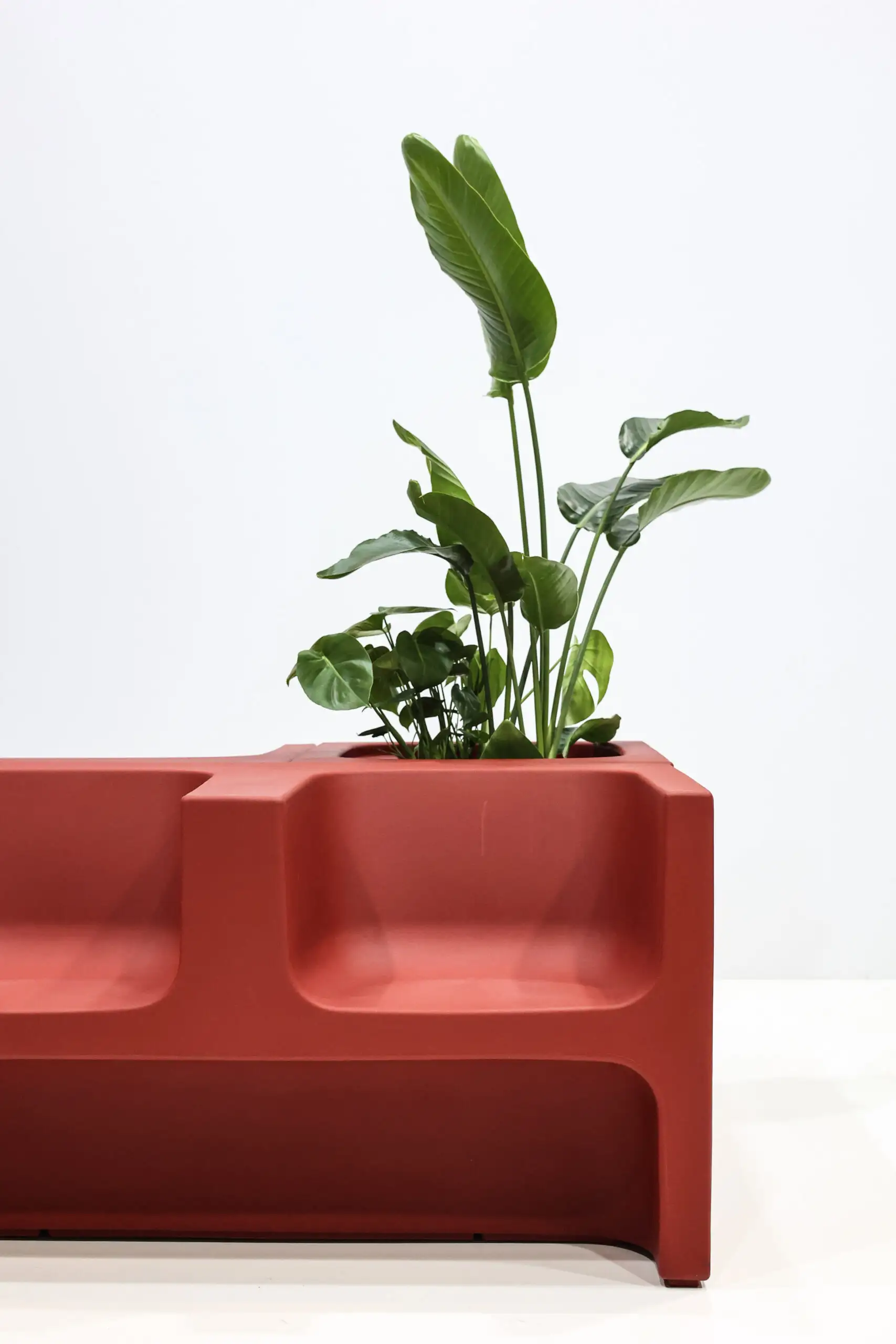
The Trio collection showcased at the 2026 Passenger Terminal Exhibition, London.
Innovation is at the heart of his work, exemplified through collections like Trio, a roto-moulded triple seater made from 85 per cent recycled post-industrial plastic. Operating on a circular model, Derlot takes the furniture back every five years, grinds it down, and remanufactures it into new pieces. Furniture now accounts for around 85 per cent of Derlot’s revenue, but that same holistic, multidisciplinary approach he learned from Limes Hotel remains intact. Alongside product design, he continues to work across everything from branding to interior design.
Among his recent projects are West End’s Japanese omakase restaurant +81 and the adjoining Aizome Bar, where his time spent in Japan and penchant for immersive, experiential design shine through, from the intimate atmosphere to the $30,000 screen featuring a digital geisha artwork by Rodrigo Rabaco that greets guests on the way to the bathroom. “I just want to create something that is memorable,” he says. “And when we do these types of projects, which is not our main bread and butter, I want them to be award-winning, otherwise I’m not interested.” It’s a mindset that Alexander likens to playing jazz, favouring restraint and precision over spectacle. “When you play rock and roll, no one knows if you miss a beat. But when you play jazz, and you miss something, everyone notices.”
Imagery: Florian Groehn / Jonathan VDK / 1571 Euroluce Rakumba Lighting 2025