The Best Of Spring/Summer ’27 Menswear From Milan & Paris Fashion Week, Reported by Seth Khouri
From Milan to Paris
By Seth Khouri | 1st July 2026Battling the European heatwave and the lack of air conditioning, designers flocked to Milan and Paris to showcase their latest Spring/Summer offerings. Across both cities, the conditions outside inevitably seeped into the rhythm of the shows themselves, sharpening the focus on ease, breathability and restraint as recurring design considerations. What followed was a week where heat was not just backdrop but constant reference point, shaping how silhouettes moved, how fabrics sat against the body, and how each house chose to frame its version of summer dressing.
Ralph Lauren
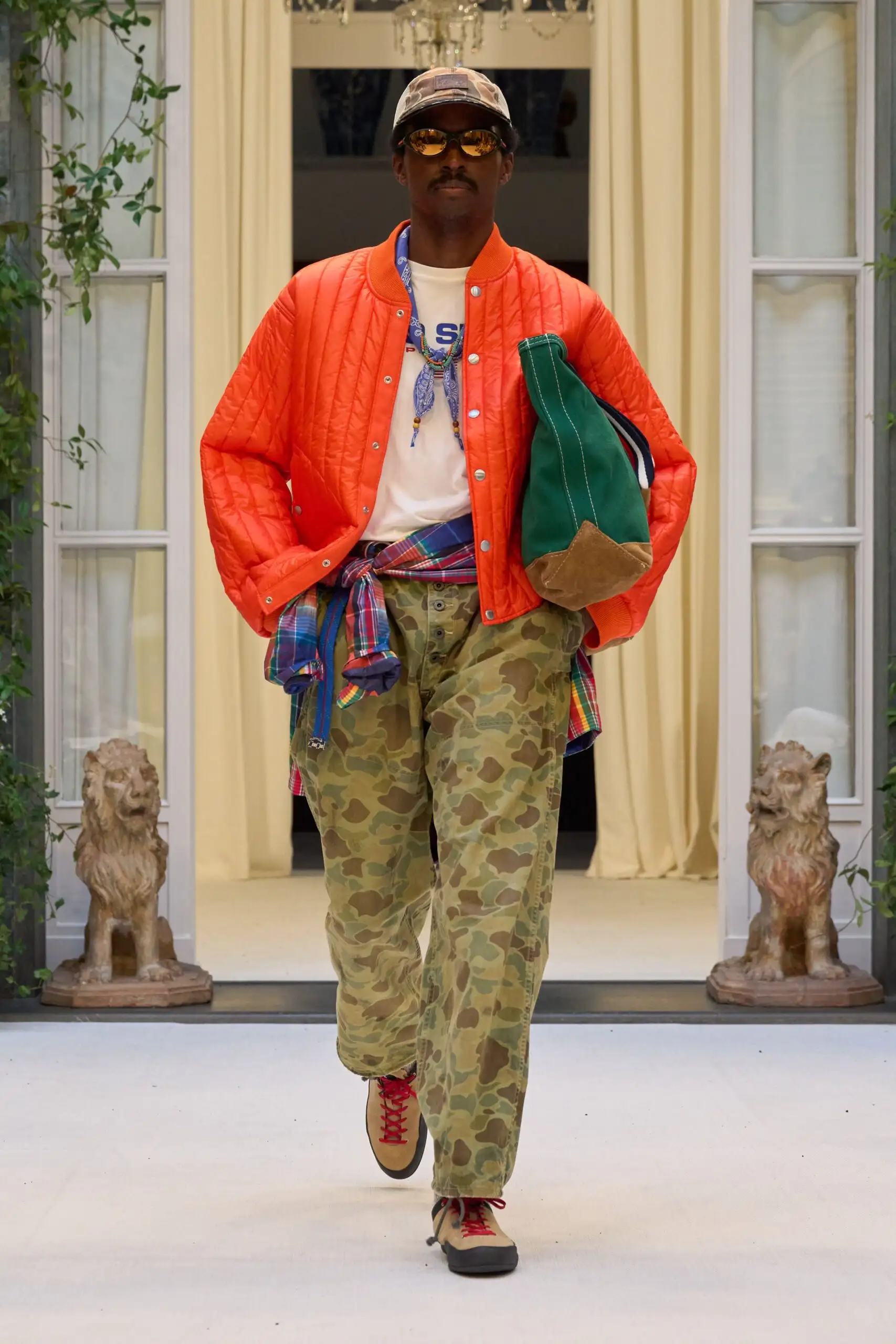
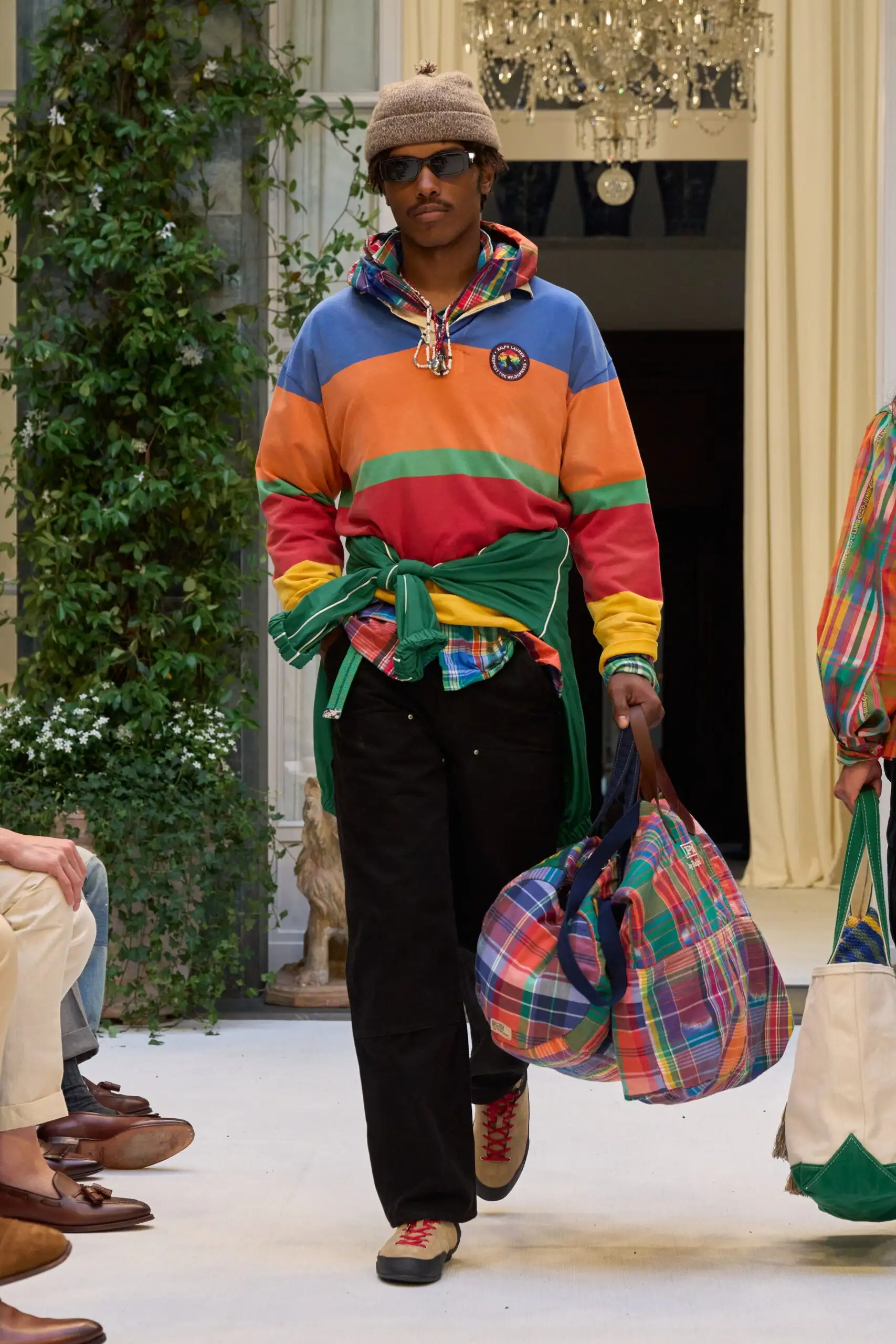
The week opened with the mighty Ralph Lauren showcasing his second collection since returning to the menswear schedule. Here, Ralph presented a two-in-one proposition, pairing Purple Label—his more formal line—with Polo, the wardrobe of the contemporary man. Purple arrived first. A procession of polished suiting and sharp tailoring was softened through pairings with fisherman sandals, linen shirting and boat shoes. Notably, the introduction of Japanese-inspired hakama trousers offered another dimension to an otherwise classically tailored offering. Then came Polo. Rugby jerseys, knits tied around waists, camouflage trousers, loosely buttoned plaid flannels, rowing blazers and casual caps formed the backbone of the collection, illustrating the everyday uniform of the Polo wearer. It was through this dialogue between the two lines that Ralph demonstrated just how naturally the Purple and Polo man coexist.
Dolce & Gabbana
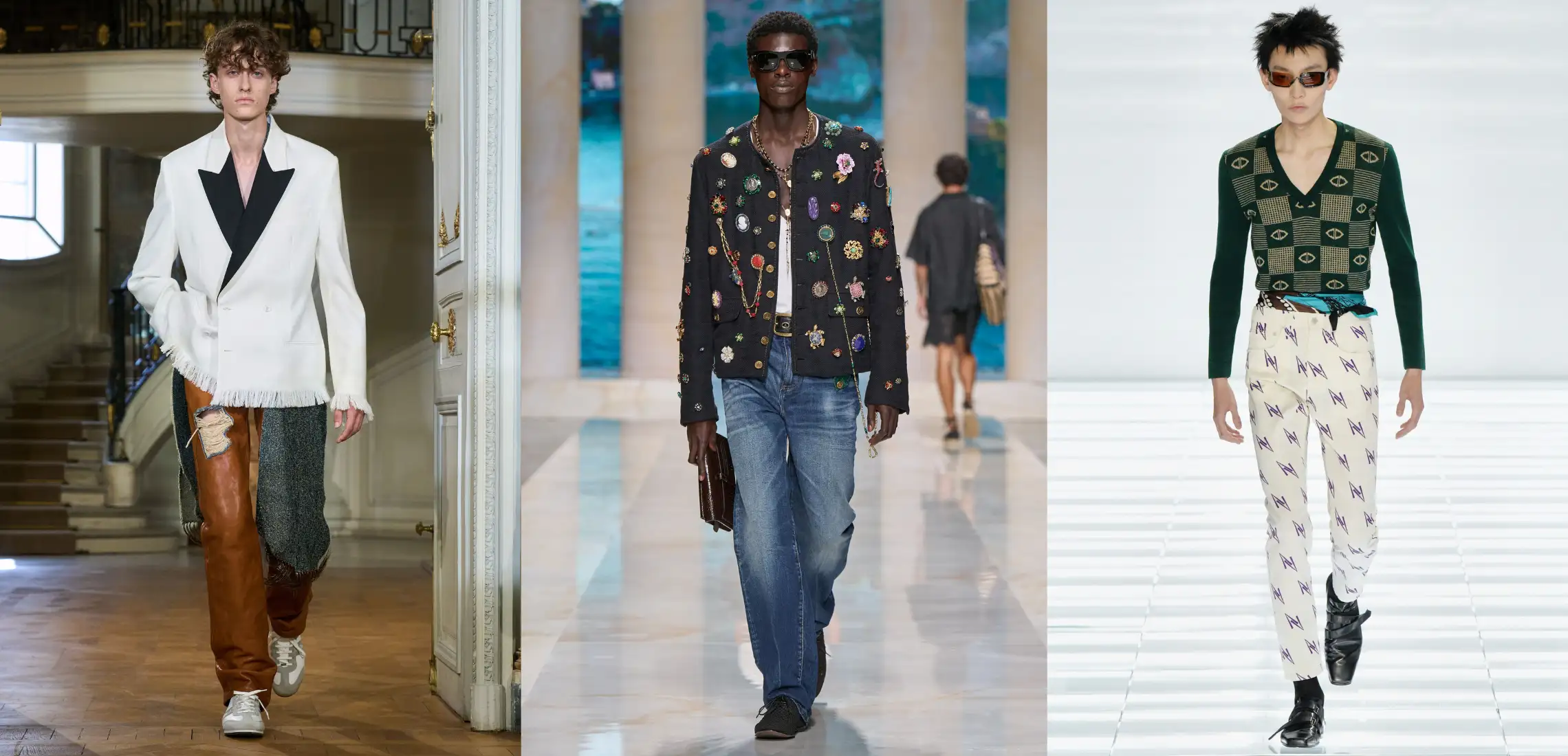
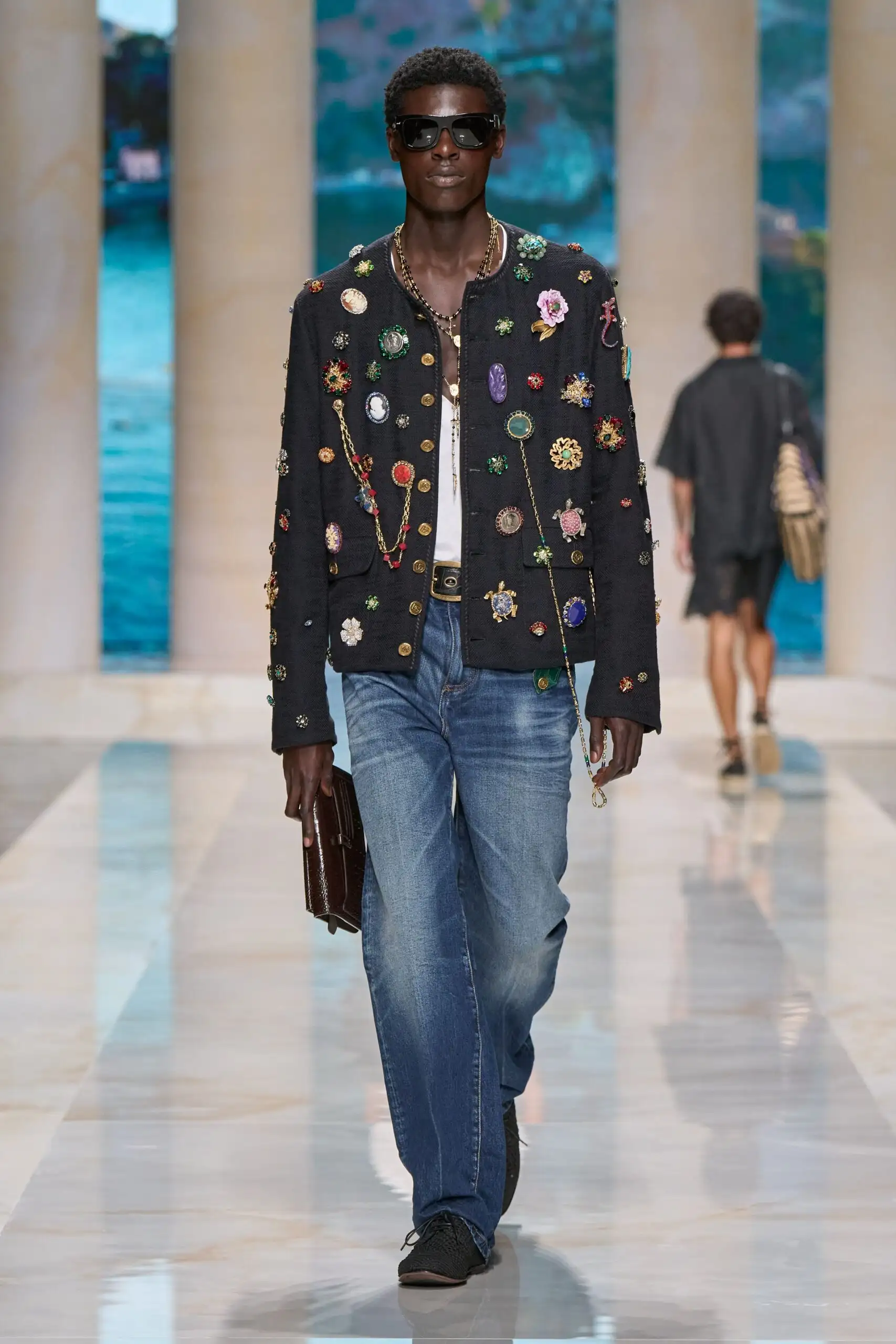
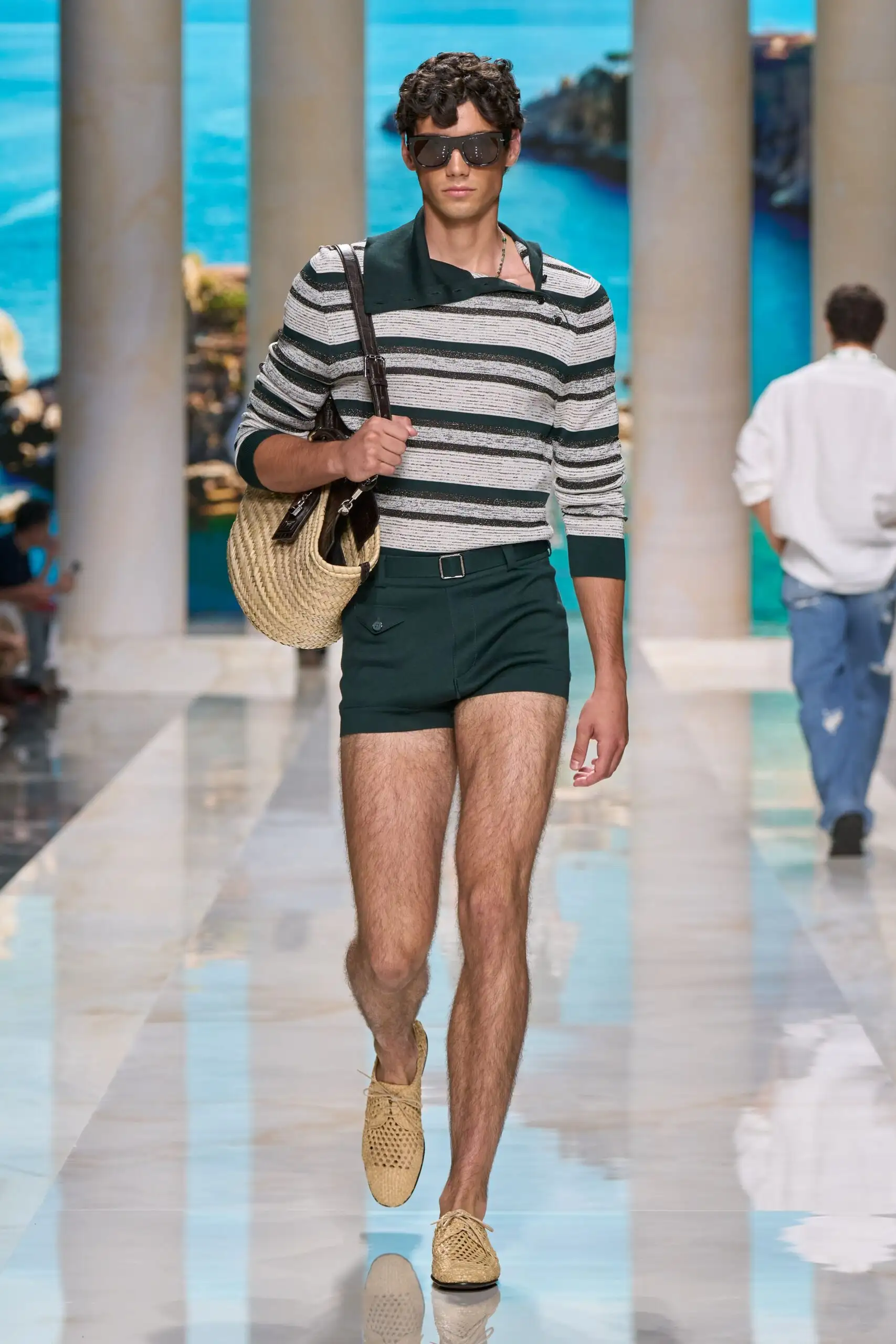
We then moved to Dolce & Gabbana, who presented one of their most Sicilian offerings yet. It is a place the duo never truly leaves behind, anchoring each collection season after season. Here, however, the house stripped away much of its usual excess. Their signatures remained—sharp tailoring and exaggerated proportion—but were rendered with a newfound ease. Structured jackets gave way to billowing interpretations, while oversized shirting and fluid trousers introduced a distinctly holiday sensibility. Adornment emerged as a recurring motif. Jackets and straight-leg denim were punctuated with brooches and appliqué, while elsewhere shirts and trousers were printed with postcard graphics. For Domenico Dolce and Stefano Gabbana, the brand continues to sit comfortably on the coastline of an endless Sicilian summer.
Prada
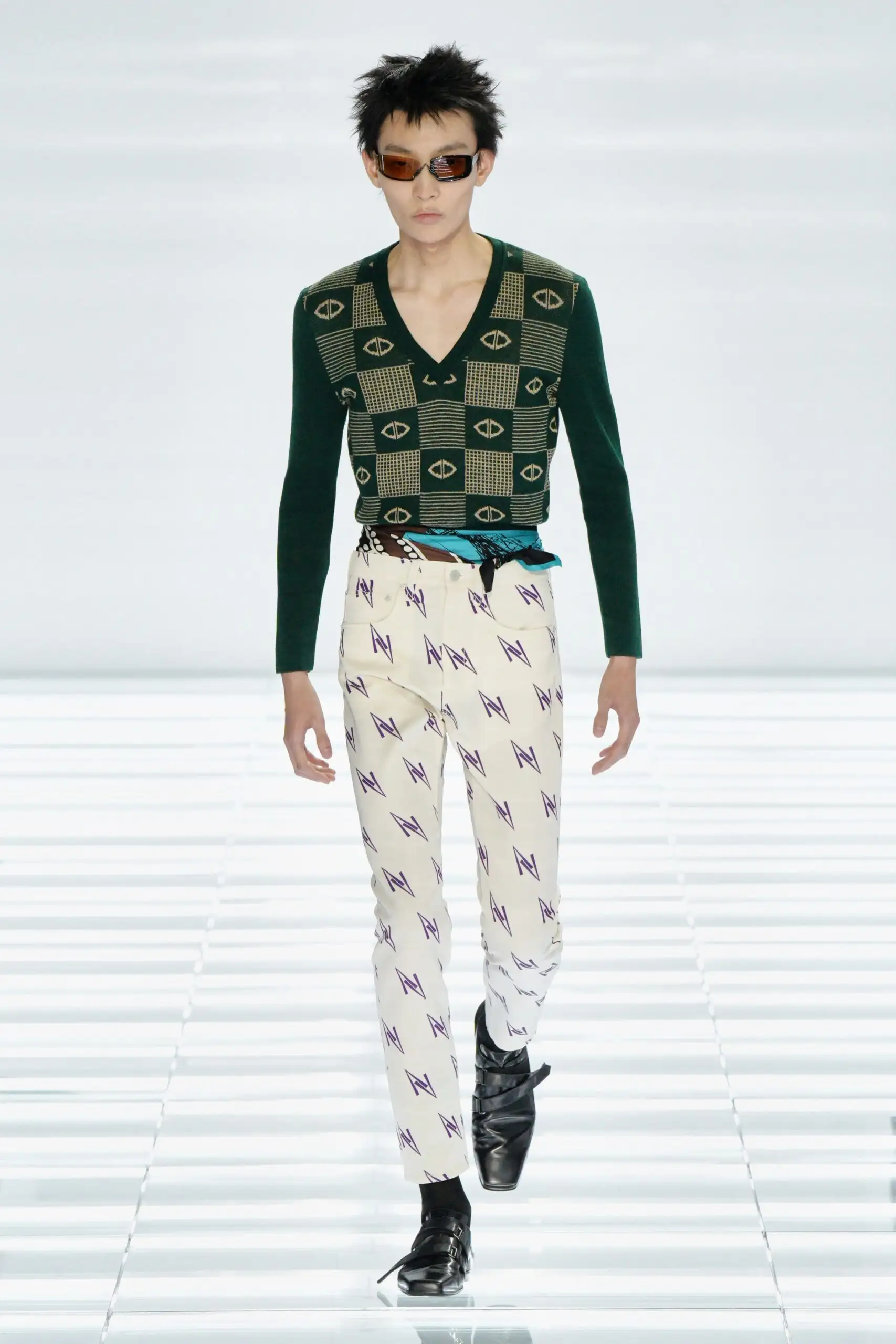
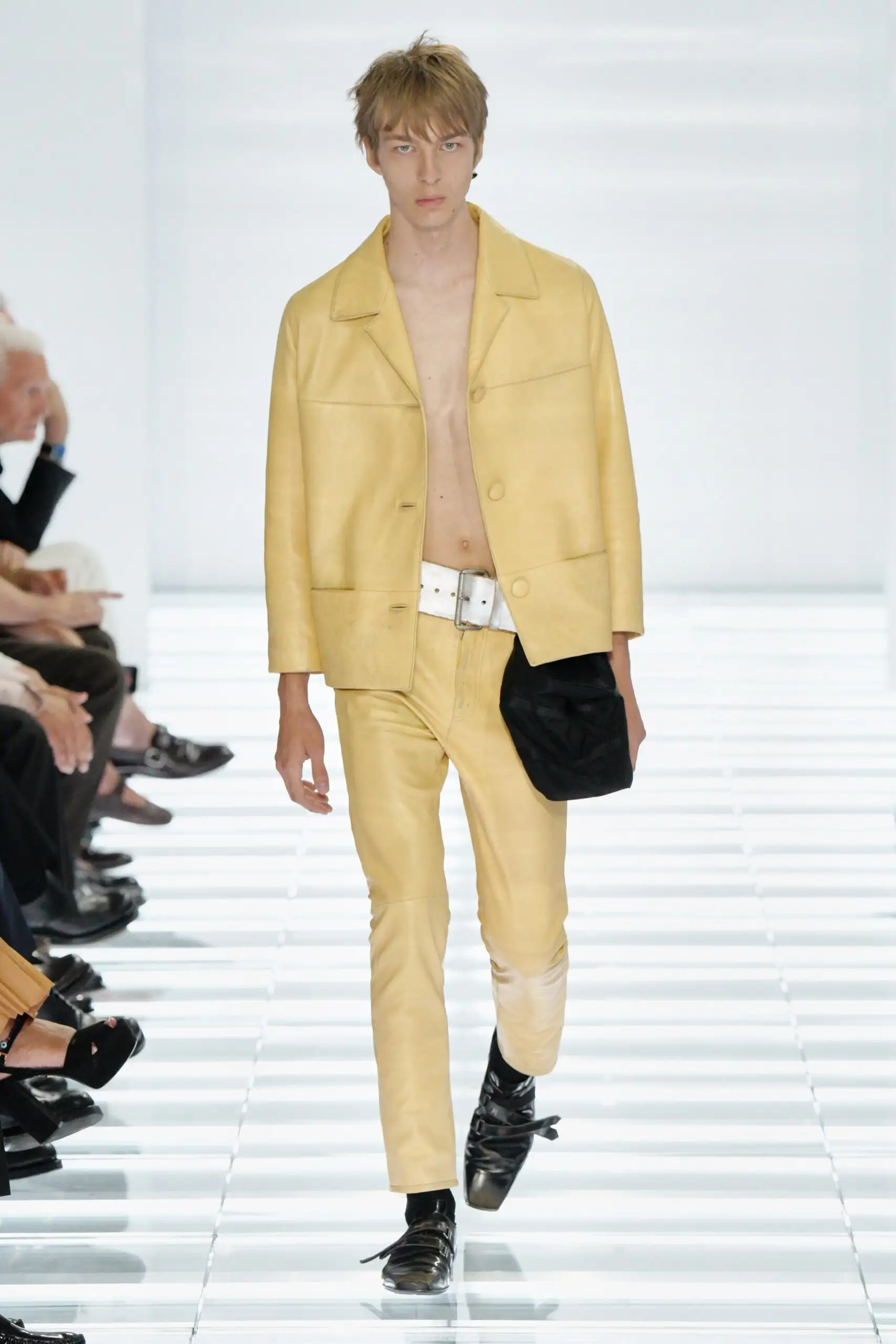
If Ralph Lauren and Dolce & Gabbana proposed the wardrobe of a man on holiday, Prada dismantled any sense of predictability in silhouette. Trousers narrowed to near skin-tight proportions, while leather jackets were cropped to sit high above the waist. Accessories carried equal conviction. Asymmetrical eyewear suggested the anonymity of an undercover operative, while tactical utility belts suspended leather bags that swung with each stride. For both Miuccia Prada and Raf Simons, a return to denim marked unfamiliar territory. “I never wore jeans in my life,” Prada remarked, while Simons echoed the sentiment: “I had not worn jeans for about 20 years, I think.” Denim subsequently appeared throughout the
collection in hot pink, white, brown and yellow, signalling not nostalgia, but a willingness to reconsider a garment neither designer had ever truly embraced.
Giorgio Armani
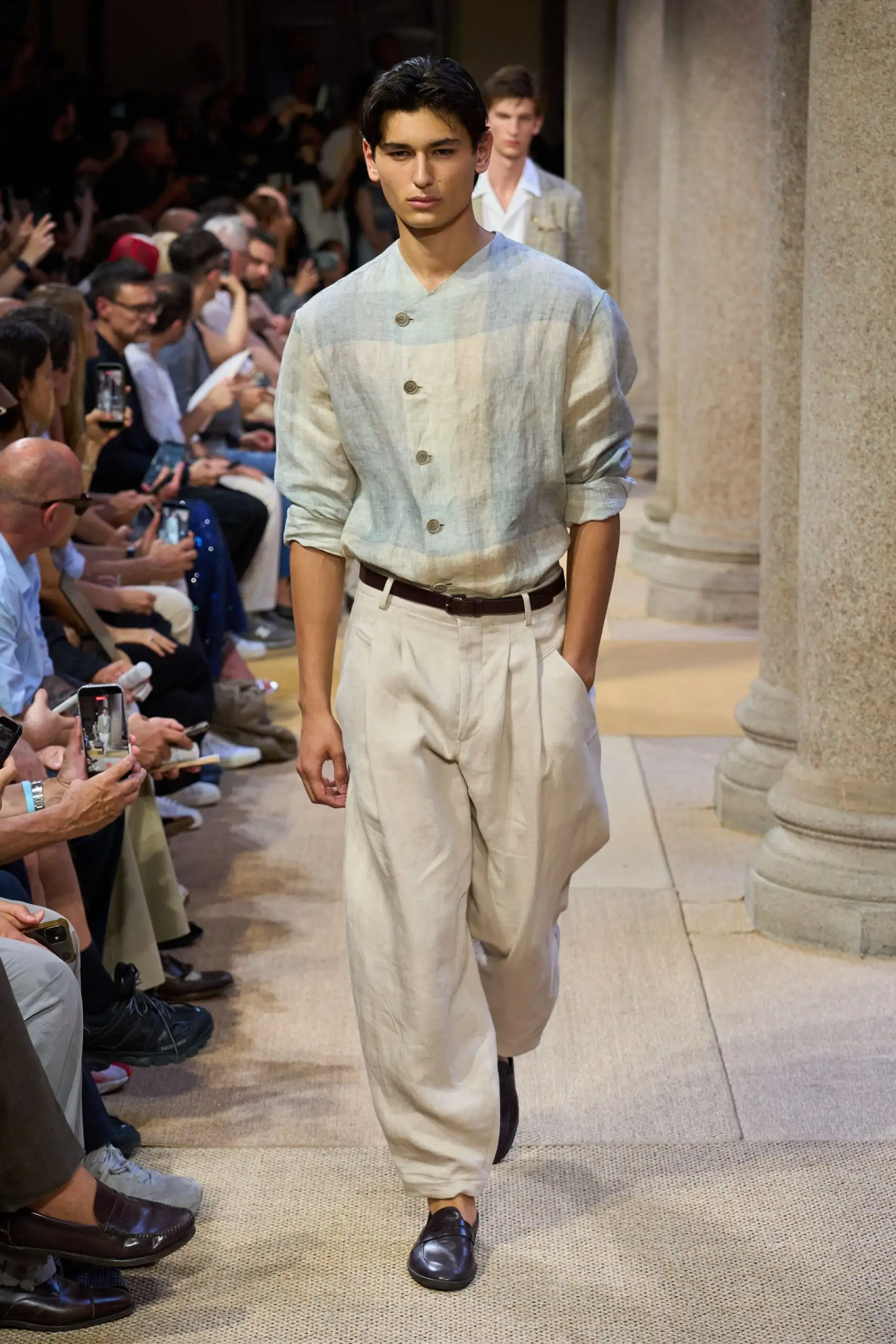
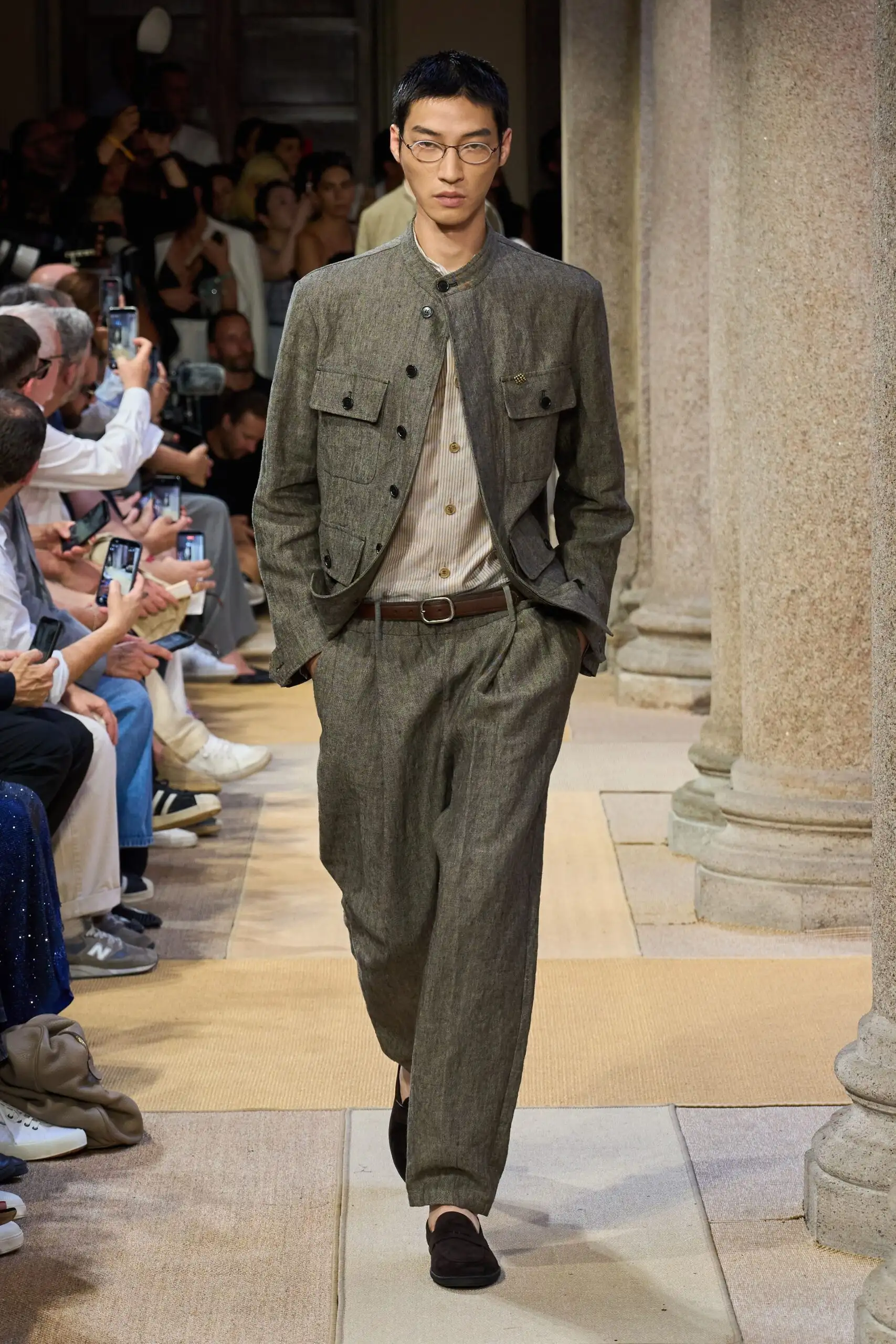
Giorgio Armani closed the week in triumphant fashion, presenting a one-hundred-and-sixty-look collection that united Leo Dell’Orco’s Spring Summer menswear offering with Silvana Armani’s Resort collection. A prevailing sense of ease ran throughout. Where Prada embraced narrowed proportions, Armani leaned fully into the comfort of a relaxed wardrobe. Silhouettes were loosened and unfastened, allowing the garments to move with an effortless fluidity. Even tailoring—Armani’s enduring hallmark—was softened, favouring drape over structure. The palette followed suit. Earth tones anchored the collection, with moss, sand, terracotta and taupe encouraging the eye to linger rather than race. Resort later introduced a deeper register, where midnight blue met restrained jolts of purple and baby pink. Altogether, the collection suggested not a reinvention, but a quiet refinement: Armani at ease with itself, confident enough to let restraint speak louder than excess.
Saint Laurent
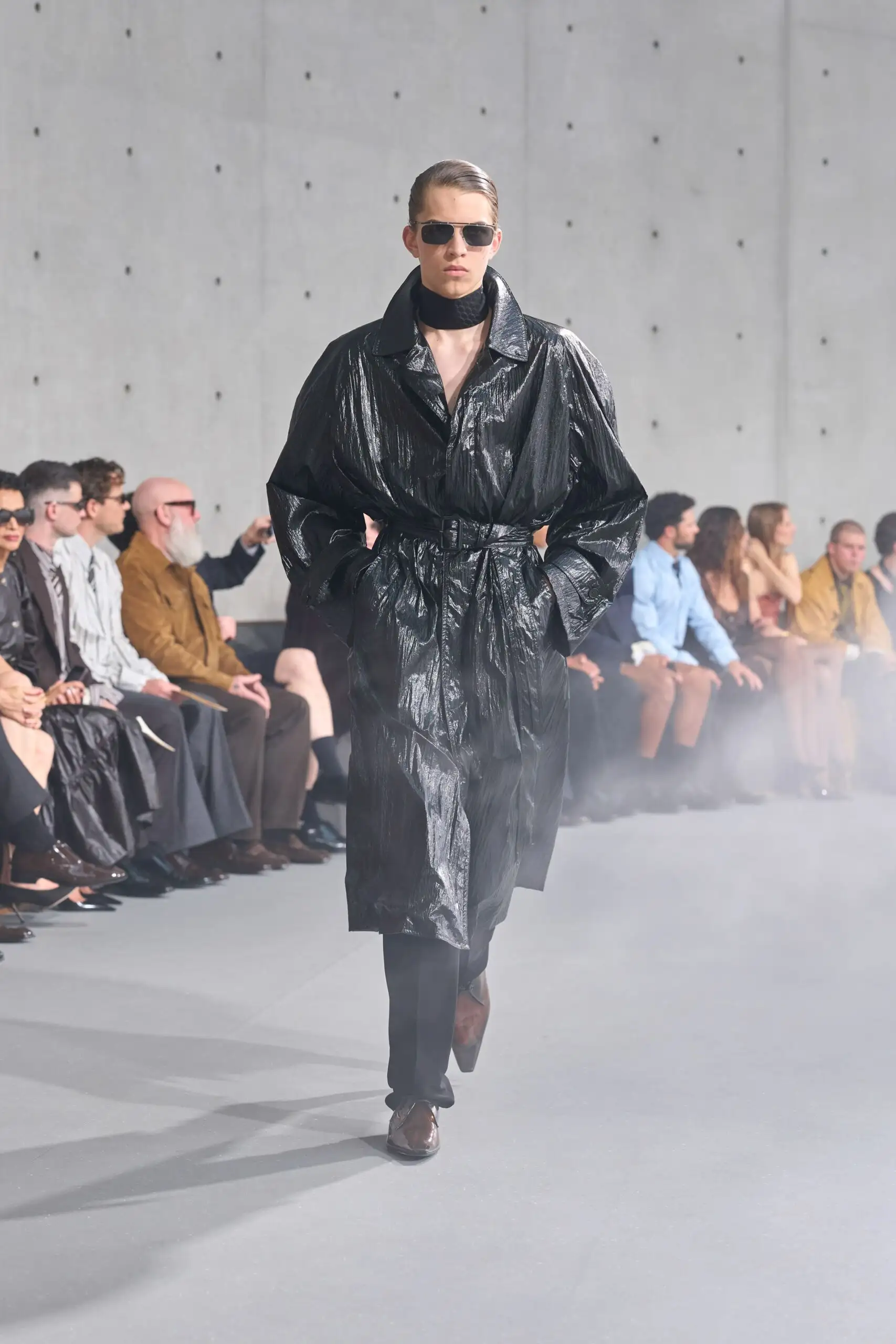
We then moved to Paris, where there was no escape from the heat for Saint Laurent. Held at the Bourse de Commerce, models emerged through clouds of fog, lending the collection a quiet sense of mystique that contrasted the sweltering afternoon outside. Anthony Vaccarello continued his exploration of precise tailoring, though this season the offering occupied a space between the ease of a summer wardrobe and the discipline of winter dressing. High-waisted pleated trousers sat belted beneath cinched nylon parkas, while deep V-neck sleeveless vests introduced a measured sense of provocation. Elsewhere, crisp shirting and softened tailoring reinforced the collection’s restrained confidence. Most striking was the introduction of translucent PVC derby shoes, worn beneath a teal two-piece suit, subtly disrupting an otherwise composed and traditional silhouette.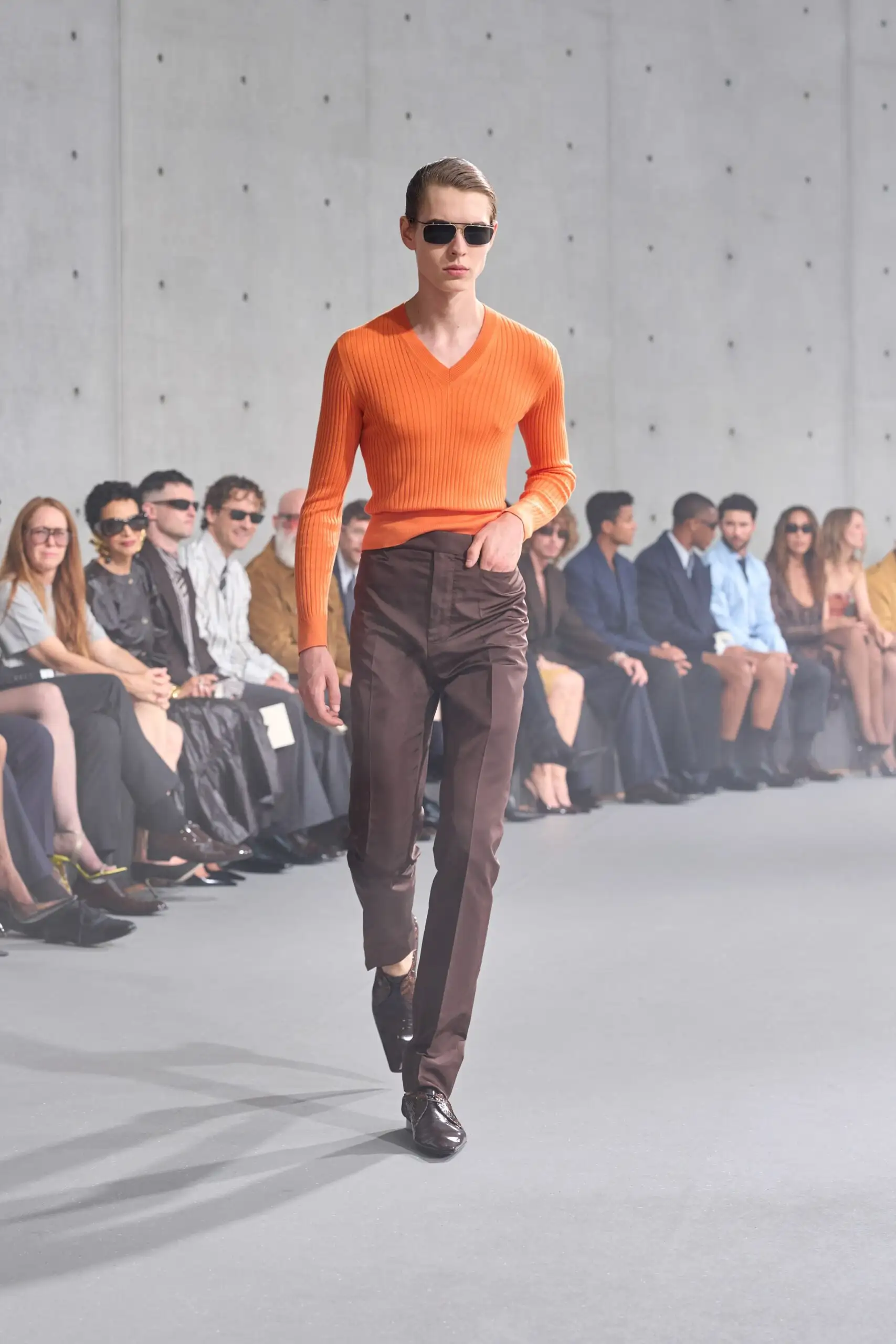
Dior
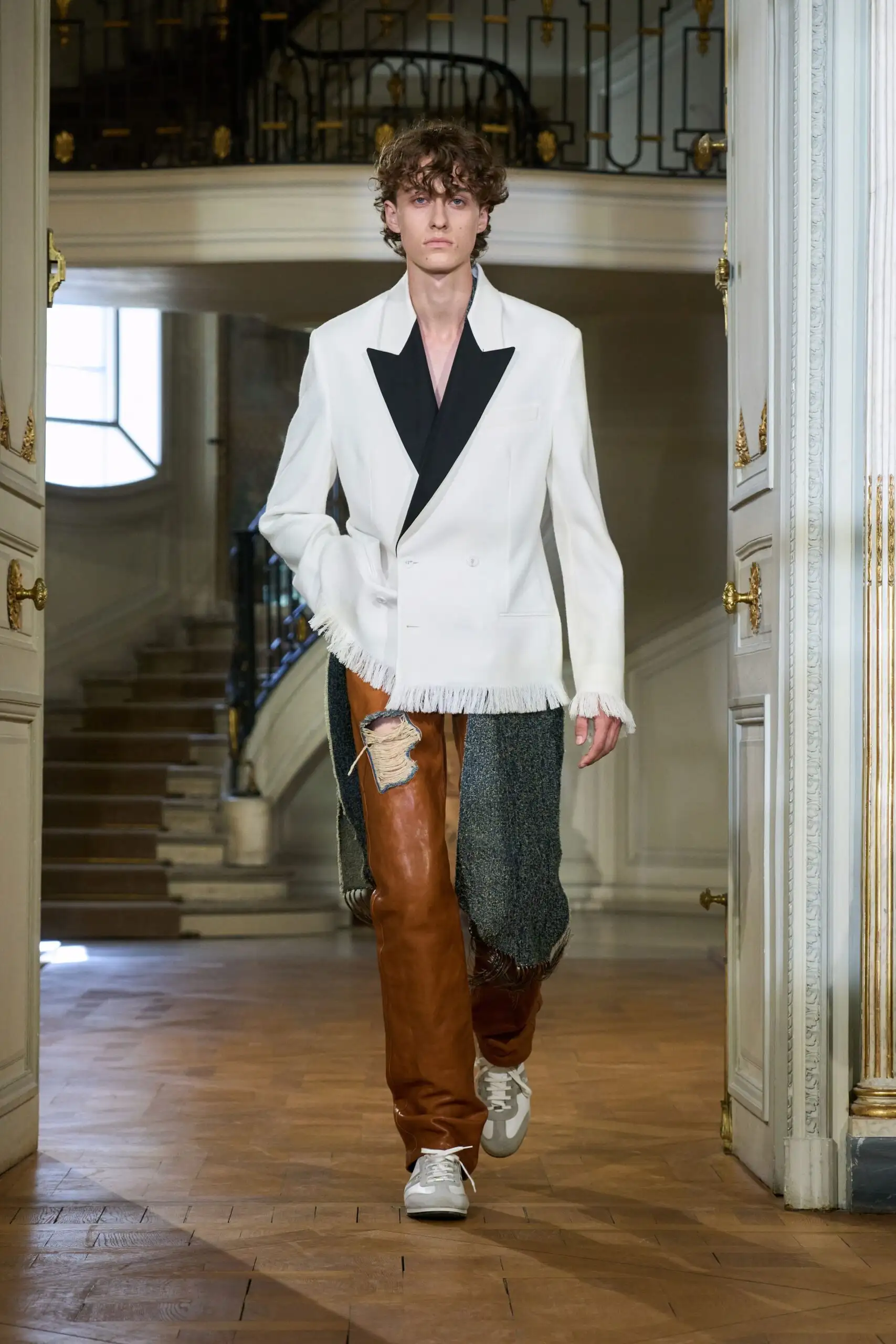
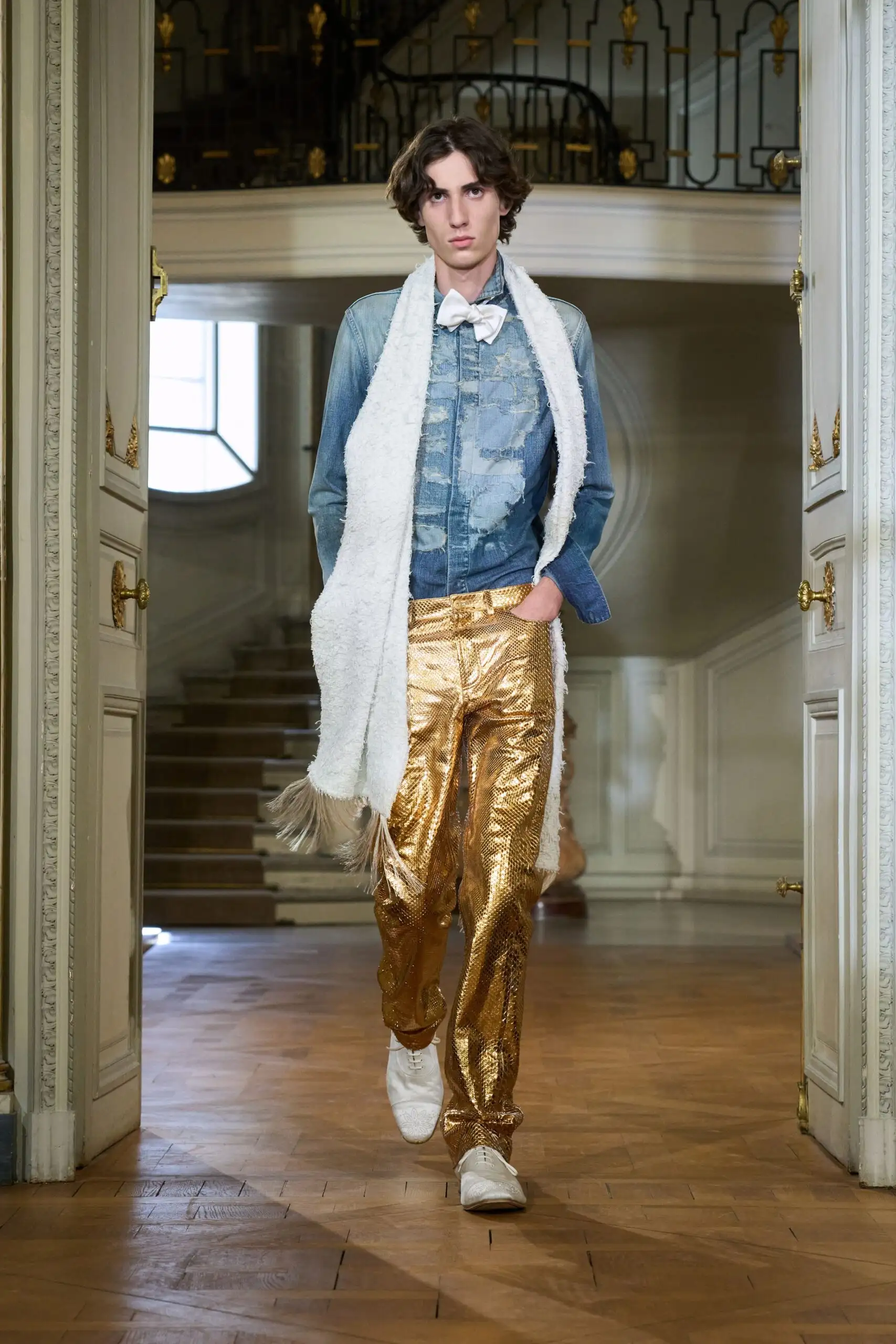
Just as audiences thought they had acclimatised to the Paris heat, Dior rescheduled its 2pm show to 9:30 that same morning, offering a brief reprieve. The collection marked Jonathan Anderson’s third menswear outing for the house and clarified exactly where the Dior man currently stands. Rooted in contradiction, Anderson offered a collection imbued with tension. Suits were interrupted with undone knitwear and oversized beach bags, collapsing the distance between formality and leisure. Colour arrived with a heightened sense of exuberance—joyful stripes and graphic patterns moved across trousers and shirting alike, resisting any sense of restraint. Anderson leaned heavily into the tropes of a summer wardrobe, though never without disruption. Shirts were left deliberately unbuttoned, jackets were lightened and relaxed, and tailoring was consistently softened at the edges, destabilising the rigidity traditionally associated with Dior’s menswear codes.
Louis Vuitton
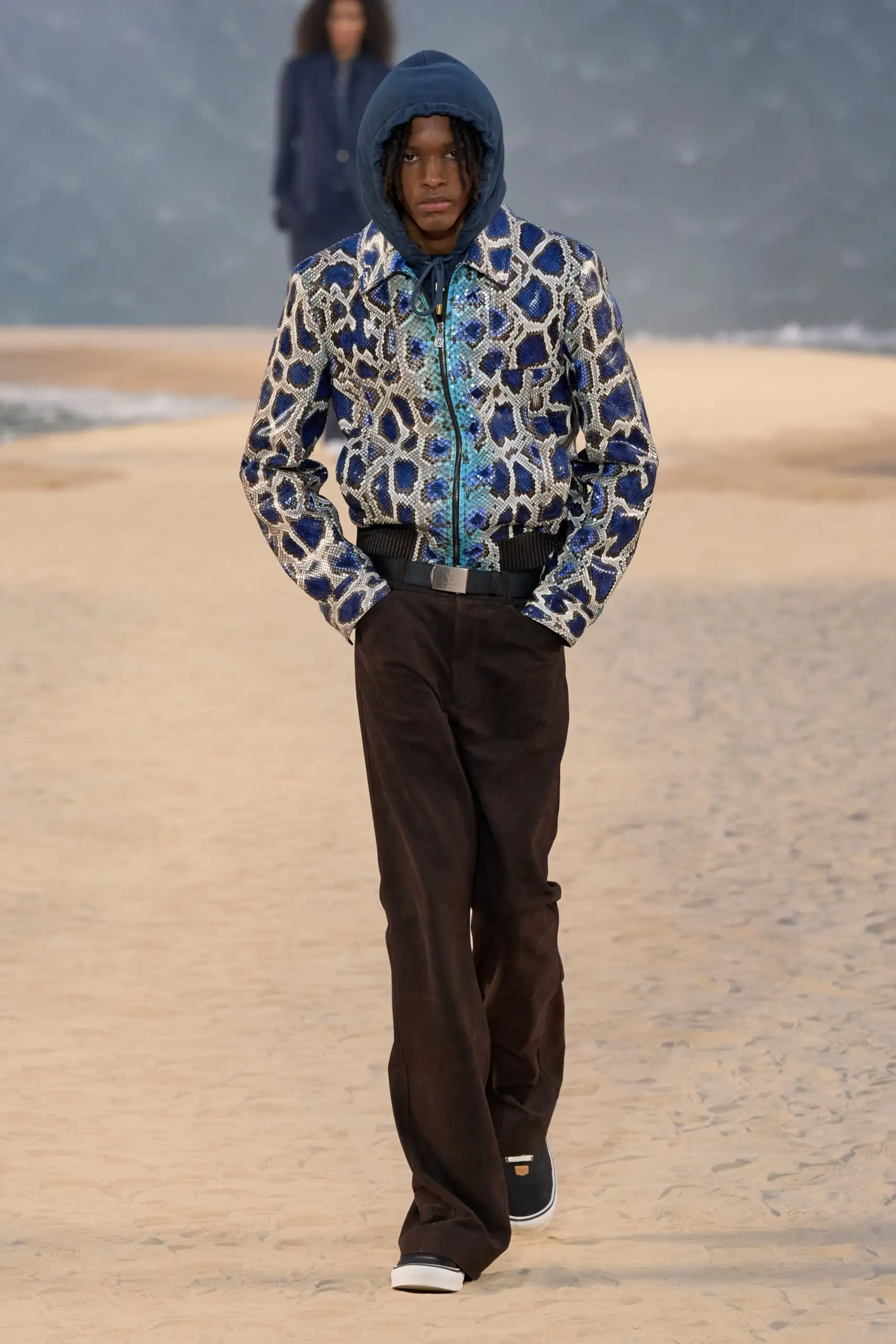
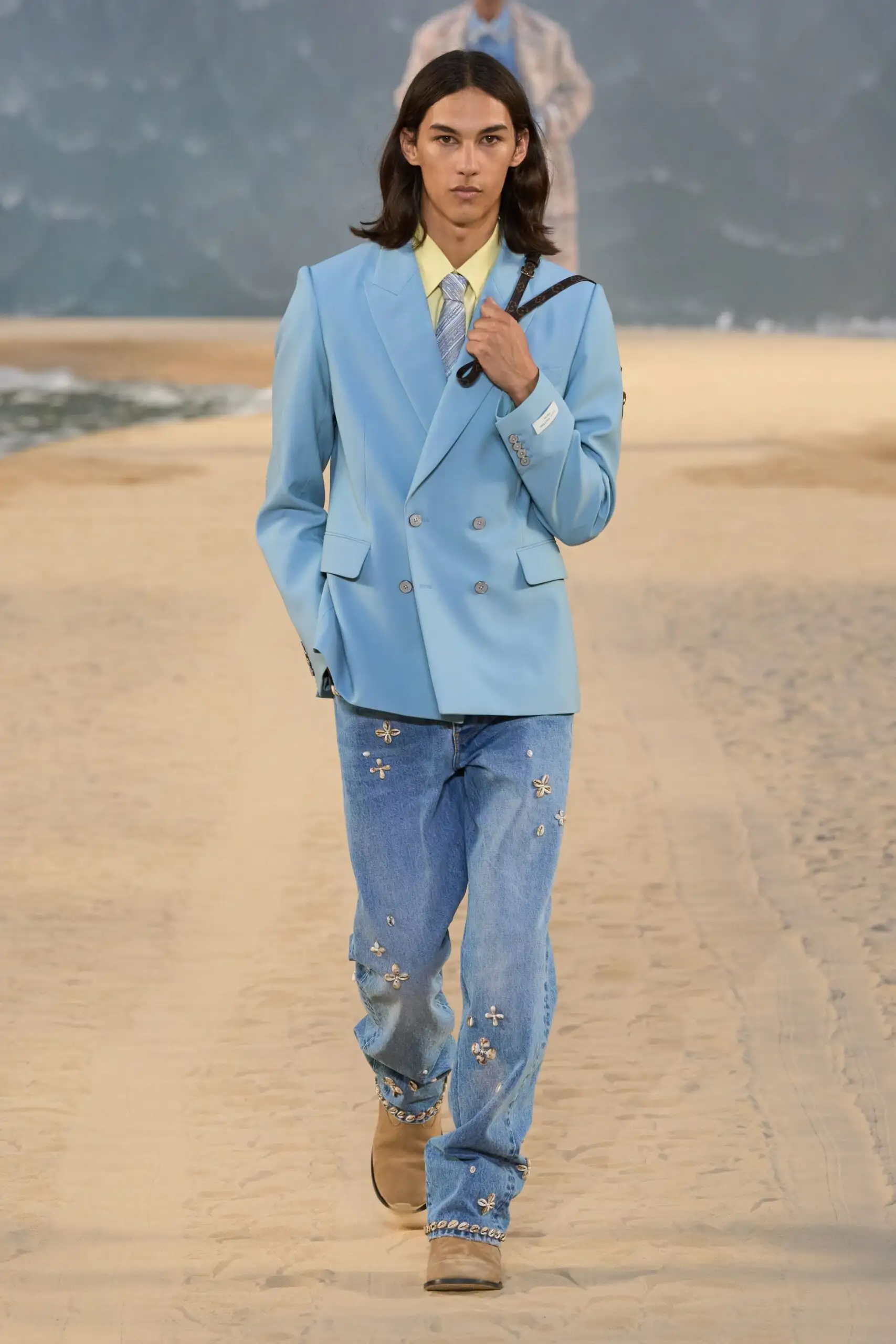
Encapsulating the idea of a summer wardrobe, Louis Vuitton transformed the Cité Internationale Universitaire de Paris into a literal beachscape, complete with a ten-metre-high wave structure and a shoreline of sand. The staging set the tone for a collection rooted in leisure, spectacle, and escapism. Within it, a subtle sense of dandyism emerged—one that Pharrell Williams has steadily made synonymous with his tenure at the house. For Pharrell, there is no singular Vuitton man, but rather a multiplicity of selves, each expressed through shifting codes of dress and attitude. Surfboards, beach trunks and relaxed tailoring anchored the offering, while accessories and silhouettes leaned into an unforced summer ease, framing luxury through the language of holiday uniform rather than formal dress.