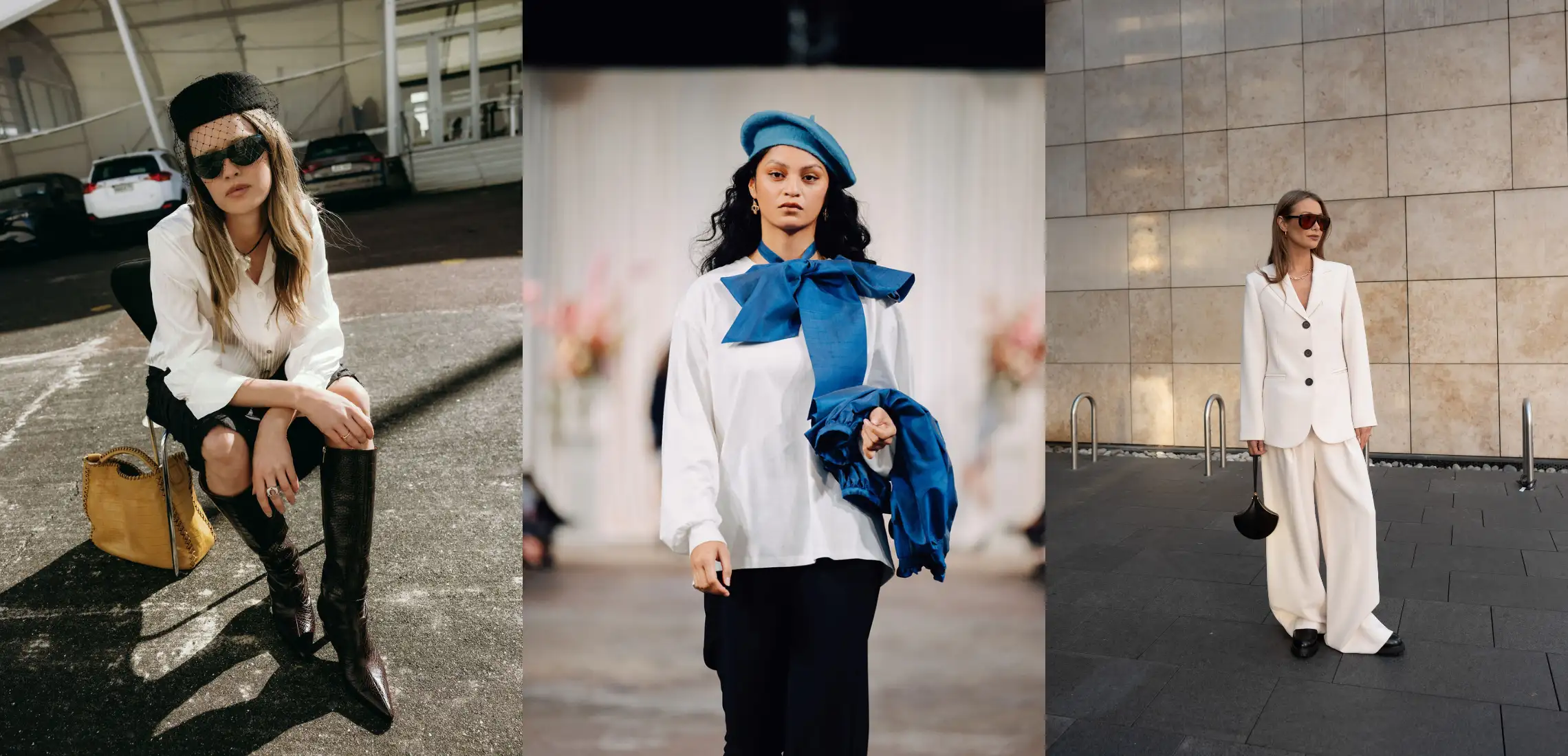
The Styling Lessons We’re Taking From New Zealand Fashion Week
Against the grain
By Kiri Johnston | 20th August 2026On the ground at New Zealand Fashion Week 2026, fashion creator Rosalie Burns is seeing clashing prints, unexpected shoes, and a new approach to getting dressed. Here’s what Australia could take from it.
Across the ditch, New Zealand Fashion Week is in full swing, and while we’ve been keeping a close eye on the runways, some of the most interesting takeaways are happening beyond the clothes themselves.
This year marks a significant moment for New Zealand fashion, with Dan Ahwa stepping in as Creative Director and a program celebrating both the history and future of fashion in Aotearoa.
But what does it look like on the ground? New Zealand-based fashion creator Rosalie Burns has spent the week in Auckland attending shows and events with Bared Footwear, giving us a front-row read on the looks, styling tricks and details catching her eye.
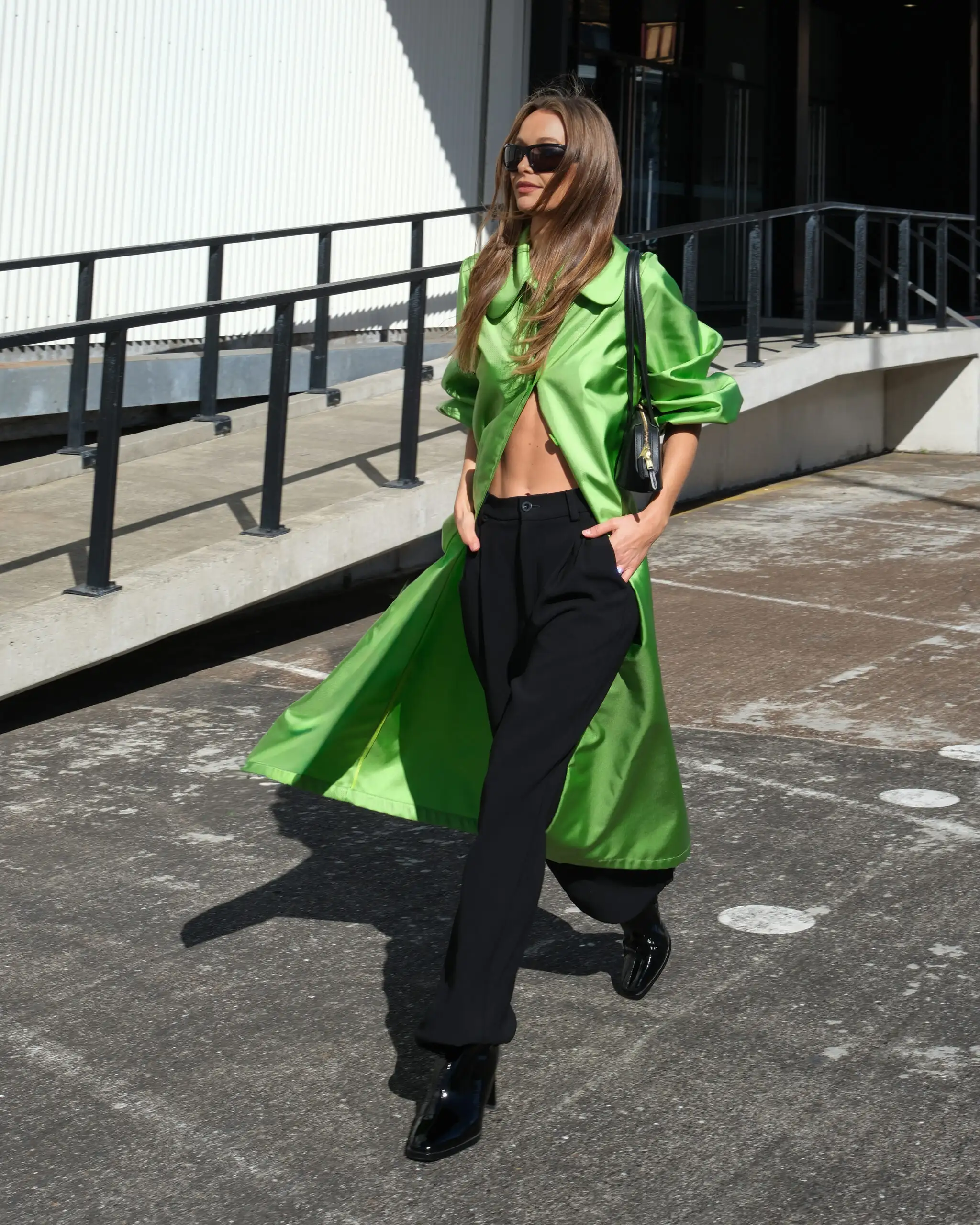
Rosalie Burns at NZFW. Photography by Hope Patterson.
And according to Rosalie, New Zealand fashion is doing something particularly well right now: embracing the unexpected.
The art of the mismatch
“I think NZFW has mastered the art of mismatch,” Rosalie tells Style.
It’s one of her biggest observations from the week – and something she believes separates the way New Zealanders are getting dressed from what we’re seeing back home.
“Mixing patterns, fabrics and colours that feel like they shouldn’t work together, but somehow do,” she says. “There’s a confidence in things being slightly ‘off’ – a contrasting coloured shoe, clashing prints, unexpected textures. It feels brave. I don’t feel like I see that as much in Australia.”
Instead of building an outfit around pieces that neatly complement one another, there’s a willingness to introduce contrast. A shoe can be a completely different colour. Prints don’t have to agree. Texture is layered over texture. The result are outfits that make you double-take.
The shows Rosalie can’t stop thinking about
Among a packed schedule, two shows have stood out to Rosalie: Claudia Li and Juliette Hogan. New Zealand-born, New York-based designer Claudia Li returned to NZFW this year, while Auckland designer Juliette Hogan has been a mainstay of New Zealand fashion for more than two decades, establishing her eponymous label in 2004 and first showing at NZFW in 2006.
“Both Claudia Li and Juliette Hogan had this really interesting contrast between seriousness and calm,” Rosalie says. “The shows felt formal, but there was this softness and ease to them.”
Sheer fabrics, soft layers, beading, tassels, brooches and almost-bridal details appeared alongside stronger silhouettes, creating a balance between delicate and structured. “There was something quite precious about the detailing, but there were strong silhouettes alongside it,” Rosalie says. “And despite some of those almost-bridal references, it still felt very wearable on the street, which I loved.”
It’s a combination that’s been recurring throughout the week so far: pieces can be detailed without becoming overly polished, and dressed-up elements are being worked into clothes that still belong outside the runway.
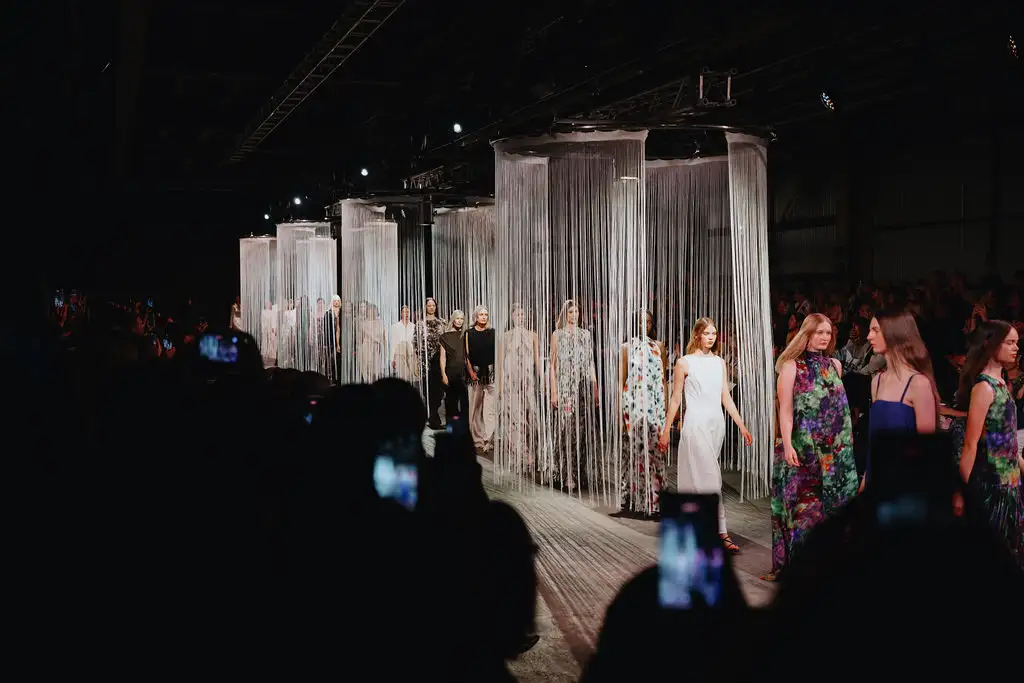
Juliette Hogan. Photography by Hope Patterson.
The shoe doesn’t have to match anymore
One of the easiest NZFW styling tricks to take home? Stop trying to match your shoes to the rest of your outfit.
Colourful and contrasting footwear has been everywhere, and Rosalie has been embracing the look herself in Bared Footwear throughout the week. “The shoe doesn’t need to match the outfit anymore — or how we once thought it needed to,” she says.
“There’s this sense of freedom with styling here. It’s beautiful.” From colour to texture, shoes are being treated as another opportunity to disrupt a look instead of simply finishing it.
Bared Footwear’s Head of PR and Communications, Ally Deacon, has noticed the same thing on the ground. “Shoes were having their own moment, with fun pops of colour, feathers and unexpected textures adding personality from the ground up,” she says.
Accessories are no longer an afterthought
And it’s not only the shoes. “Accessories are major,” Rosalie says. Huge bows around the neck, beaded bags, interesting belts, scarves and brooches are turning up across both the runways and street style.
Rather than adding an accessory because an outfit needs something extra, the accessory is increasingly becoming the point. “Rather than accessories simply completing a look, they’re deliberately interrupting it,” Rosalie says.
That interruption is exactly what makes the styling interesting. A bow can be oversized. A bag can be heavily beaded. A scarf can introduce another pattern entirely. There’s less concern with whether everything technically “goes”.
Texture is everywhere
Fringing, tassels, feathers, beading, sheer layers and embellishment have also become recurring details throughout the week. Ally points to fringing in particular, appearing everywhere from Juliette Hogan’s set design to scarves and handbags.
“The way it draped and moved brought a dramatic but delicate energy, creating flow through each look and making silhouettes feel longer and more elegant,” she says.
Rosalie has similarly clocked tassels, beading and sheer layers as some of the week’s biggest trends, suggesting the move towards texture isn’t confined to one designer or collection. Even the simplest silhouettes are being given another dimension through movement and detail.
Knee-high boots are going beyond winter
Another piece refusing to stay in its traditional lane is the knee-high boot.
Once firmly associated with colder months, Ally has seen them styled throughout NZFW with everything from mini skirts to flowing dresses. “What once felt like a winter-only staple is now a year-round wow piece,” she says.
The takeaway is less about one particular boot and more about ignoring the old seasonal rules around how pieces are supposed to be worn.
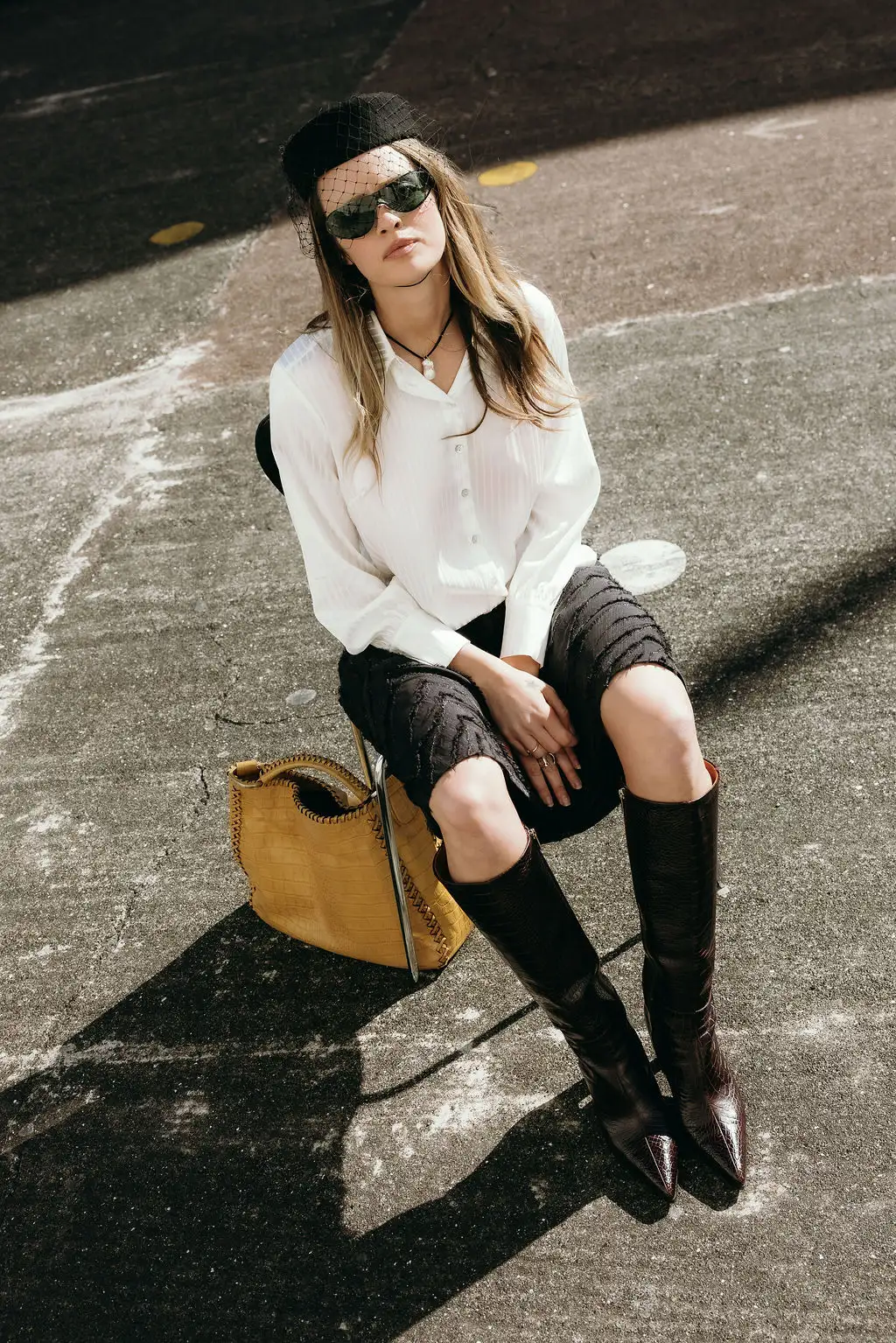
Estelle Pandion. Photography by Hope Patterson.
A fashion week grounded in Aotearoa
There’s another element to New Zealand Fashion Week that can’t be distilled into a trend report. “You can feel how connected this fashion community is with each other and their country,” Ally says.
“Every location, soundtrack and set created its own little world, with fashion, art and culture all woven together.” Dan Ahwa’s opening night set the tone for the week, bringing together decades of New Zealand fashion alongside art and performance.
For Ally, the presence of Māori culture throughout the week has been particularly significant. “Māori culture is so intrinsic to Aotearoa, and seeing that spirit come through in the fashion felt really beautiful and grounding,” she says.
It’s a reminder that what makes NZFW interesting isn’t simply what might become the next trend. There’s a strong sense of place behind what’s being presented and how it’s being worn.
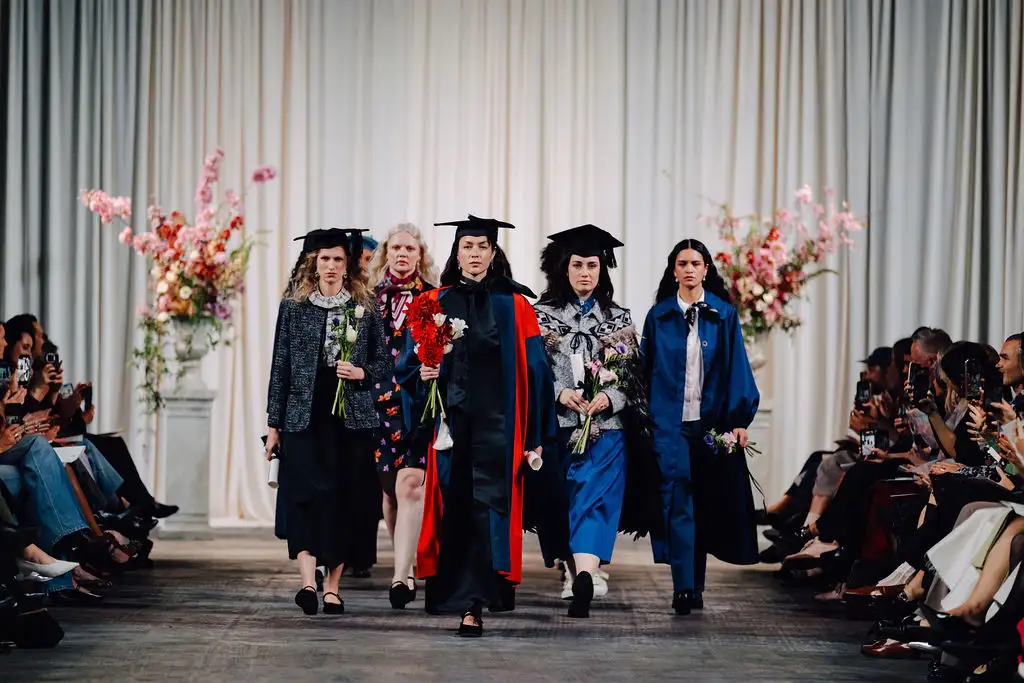
Twenty Seven Names. Photography by Hope Patterson.
So, what are we taking home?
Contrasting coloured shoes. Huge bows. Pattern on pattern. Sheer layers. Tassels. Beading. Brooches. Fringing. Knee-high boots. Unexpected textures. But Rosalie’s biggest takeaway might be the one worth stealing first. Let things clash.
New Zealand Fashion Week is making a strong case for loosening the rules around getting dressed – wearing the shoe that technically doesn’t match, mixing the prints you’d normally keep apart and adding the accessory that might be just a little too much – sometimes that makes the outfit.
Rosalie Burns attended New Zealand Fashion Week with Bared Footwear. Imagery: Photography by Hope Patterson.