My Experience Dining At Brisbane’s New $450 Japanese Omakase
masters of precision
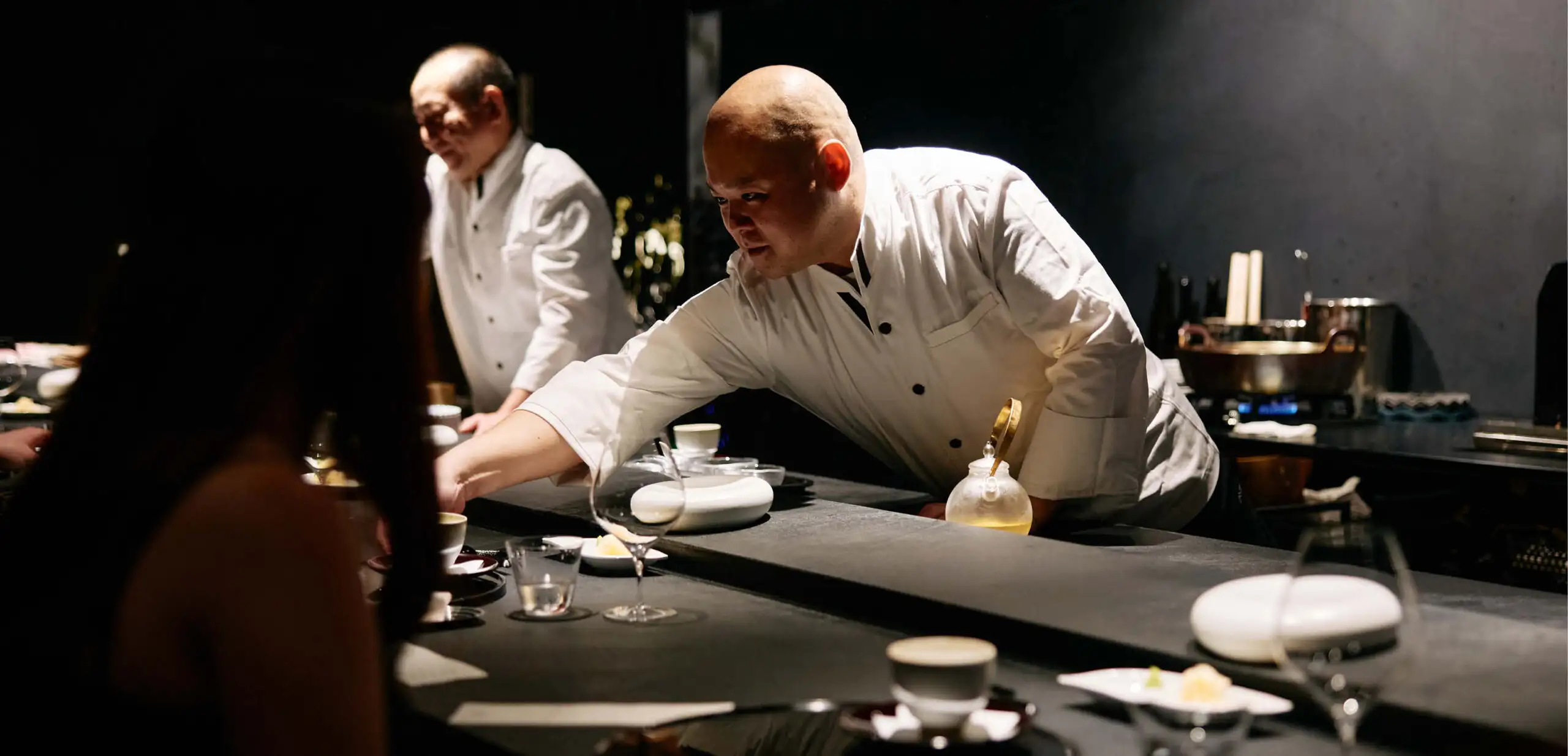
By Natalie McGowan | 10th March 2026Raw. Refined. Restrained. That’s +81 Sushi Kappo — a newly opened, intimate 12-seat restaurant helmed by Michelin-trained Tokyo chef Ikuo Kobayashi and located on Montague Road. Rooted in the Japanese kappo tradition, the $450-per-person omakase happens at the counter before you, with every movement and detail meticulously considered – from the choreography of service to the placement of each piece of nigiri, subtly adjusted depending on whether you are right or left-handed.
Talking from my experience dining here, the experience unfolds like a play, transitioning from room to room. The night began with a drink at the adjoining, award-winning Aizome Bar, which recently took home Gourmet Traveller’s “Bar of the Year” award in 2025. A blue-hued playground for lovers of innovative cocktails, the chic 10-seat space invites guests to sip on a specialty drink while watching master mixologist Tony Huang at work behind the bar, artfully shaking, stirring, and garnishing each creative concoction with intent. Tony is the co-creator of the “neo cocktail” concept: a complex cocktail served in a wine glass that requires five days of preparation.
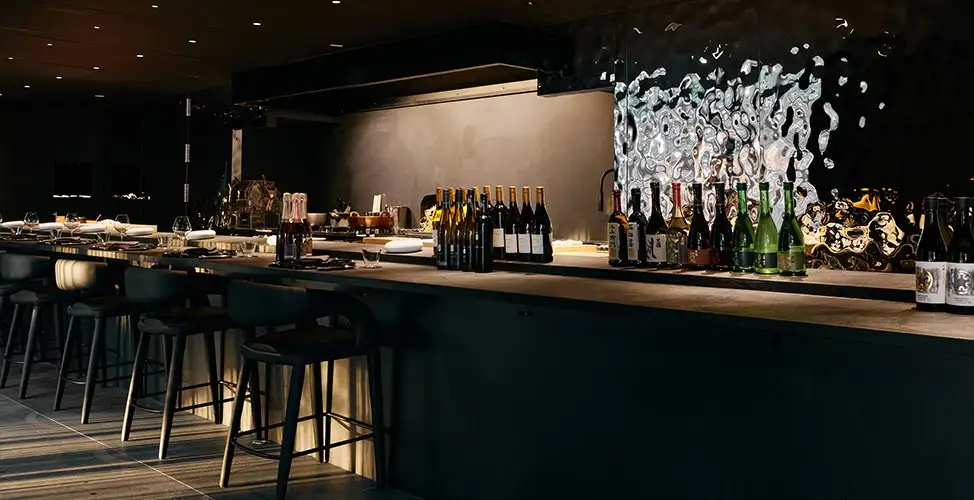
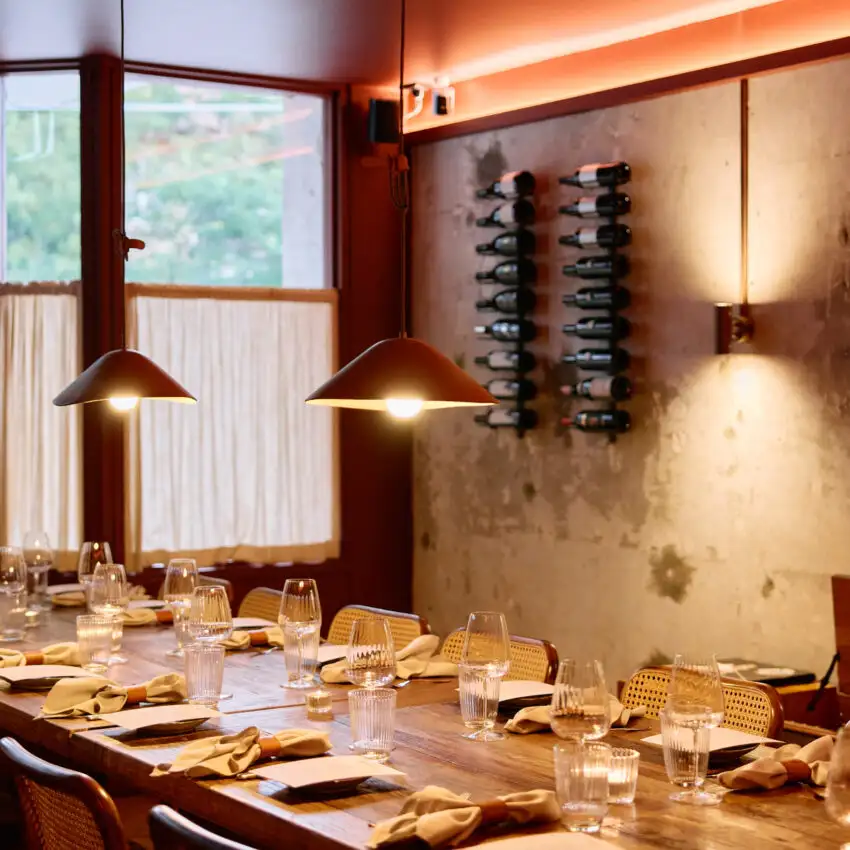
The dining counter at +81 Sushi Kappo
Once drinks had been consumed (and raved about), we were ushered into +81 Sushi Kappo for the main event: a multi-course, seafood-led omakase guided by Chef Kobayashi. Set within a dimly lit, minimalist room centred around a single long counter shared by guests, the chef, and his sous chef, the experience feels immersive – a place where the woes and worries of reality are left at the door, and all you have is the present moment, where you could easily believe you’d been transported straight to an upscale sushi bar in Ginza.
Seated just metres from the chefs, the performance begins quietly. There’s an almost meditative quality to watching the chefs before you – the deliberate knife slicing the fish, the gentle brush of soy on a piece of nigiri, the shaping of the rice that appears as second nature. With the help of an interpreter, we were guided through the ingredients and techniques behind each dish, ensuring not a single detail went unnoticed.
Throughout the evening, Chef Kobayashi and his sous chef prepare a procession of dishes, from delicate nigiri to comforting bowls of takikomi gohan. The meal is complemented by an expertly curated beverage program featuring artisanal sake, rare Japanese whisky, Champagne, and a thoughtful selection of Australian and international wines.
After dinner, should the evening still feel young, guests can retreat to the lounge for the third and final act. A quiet space dedicated to Japanese whisky, liqueurs, reflection, and digestion, it invites you to settle in, embrace the smooth sound emanating from the spinning record player, and let the experience linger just a little longer.
At the centre of it all is Chef Kobayashi – a calm, deliberate, and quietly commanding force behind the counter. But what drives this level of precision? What philosophies shape his approach to kappo? And what does it take to recreate a slice of Ginza in Australia? With the help of a translator, I spoke with Chef Kobayashi to find out more.
Firstly, welcome to Brisbane. How have you been settling in?
Did you imagine your career would take you outside of Japan one day?
What initially drew you to the world of cooking, sushi, and kappo dining?
Sushi looks simple, but it’s one of the most technically challenging cuisines. What part of the process takes the longest to master, in your opinion?
For me, nigiri — especially the folding and shaping of the sushi — is the most difficult. Even now, I don’t think I am perfect. It’s something I continue to practice and improve every single day.
You’ve worked alongside some of the most respected sushi masters in Japan. Was there a particular lesson or philosophy from that time that continues to guide you today?
During your self-led culinary pilgrimage across Japan, were there any regions, meals, or moments that left a lasting impression on you?
Hokkaido left a particularly strong impression on me, especially my time working in Rusutsu. The region is home to incredible ingredients — tuna, wagyu, seafood, and produce — and that experience has left a permanent mark on how I think about food and seasonality.
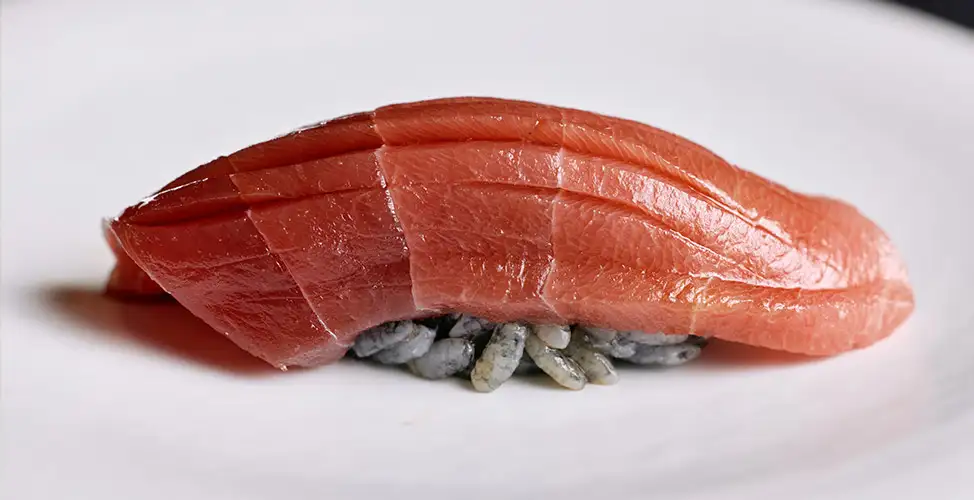
Nigiri featuring Chef Kobayashi’s Refined Black Charcoal Rice – rebuilt without sugar, mirin, or salt as part of his signature approach to sushi rice
Your signature sushi shari is part of the menu at +81. How much experimentation did it take to perfect?
What else can we expect to be on the menu at +81?
At +81, how do you approach sourcing ingredients? Are there ingredients you feel must come from Japan, and what do you prefer to source locally?
Can you describe the experience of cooking in a kappo setting, where the process is fully visible and you have a direct relationship with diners?
In Tokyo, this style is standard, so I don’t feel any stress about it. For some chefs, exposing everything to the diners may feel difficult, as there is nowhere to hide. However, I believe that when guests can clearly see that no shortcuts are being taken, it makes things easier for me. I also enjoy the opportunity for diners to experience in more detail the craftsmanship and intentional care that goes into each dish.