How Does The Wrong Skincare Affect Your Hormones? An Expert Reveals Beauty Industry Secrets
"perfume is the next tobacco"
By Victoria Lewis | 24th April 2026As much as we love our daily perfume spritz, those fragranced body lotions, and the daily makeup routine we cannot live without, sometimes these products can affect our hormones, and it’s more common than you think.
How do I know if a beauty product is causing a hormonal imbalance? Which ingredients should we avoid? To get to the bottom of how hidden ingredients are secretly undermining our health, we chat to Mukti, the founder of conscious beauty brand Mukti Organics and author of the book Truth In Beauty, to help uncover these beauty industry secrets.
How can the wrong beauty products affect your hormones?
Endocrine-disrupting chemicals (EDCs) are commonly found in skincare, makeup, fragrances, and personal care products. Many of these invisible chemicals bio-accumulate over time, even when exposed in low amounts daily, building up in our tissues and can have long-term effects on fertility, thyroid health, and skin function. The average woman uses 12-15 products per day, meaning exposure to around 150+ unique and potentially harmful chemicals that all interact with each other in unknown ways. They can be inhaled, ingested and absorbed by the skin.
Any ingredients to avoid when it comes to taking care of your hormones?
Key endocrine disruptors to watch for include phthalates, often hidden in fragrances and nail polish; parabens found in moisturisers and shampoos; triclosan in antibacterial soaps and body washes; and UV filters such as oxybenzone in sunscreens and SPF products. Parabens are known to mimic the effect of oestrogen, and research shows they are readily absorbed through the skin. Constant exposure across multiple products increases your toxic burden, and the impact of daily use as well as the interaction of ingredients, is relatively unknown and untested.
After 25 years in the industry, how should people be reading the labels of scented skincare products?
Fragrance is the ingredient I keep coming back to. I believe perfume is the next tobacco. Phthalates in perfumes help fragrance adhere to the skin, but most people aren’t even aware of that, and yet they’ve got headaches, nausea, and respiratory problems. While the words ‘fragrance’ or ‘parfum’ on a label sound harmless, they could contain anywhere between 10 and 300 potentially neurotoxic and carcinogenic chemicals from a pool of thousands.
My advice when reading a label is to ignore the packaging – brands’ feature trending ingredients there to attract consumers, but these are often included in negligible quantities. Turn it over and look for ‘parfum’ or ‘fragrance’ and treat that as a red flag.
Tell me more about the ingredient transparency gap in fine fragrance. What’s in the bottle vs what’s on the label?
Fragrances are made up of hundreds of various synthetic compounds, yet they are not required to be listed as individual ingredients. They fall under the guise of trade secrets to protect intellectual property, meaning brands don’t have to stipulate individual components in a parfum or fragrance. There could be up to 300 chemical constituents in one ingredient, with thousands of chemical interactions happening. A typical perfume label only shows a fraction of the real ingredients, with allergens like Limonene, Linalool, Coumarin, and Citral disclosed only because they are required to be disclosed for the EU market.
Is fragrance in skincare always necessarily bad?
Not all fragrances are created equal. Instead of synthetic fragrance, the better option is essential oils, always used in moderation with discretion. At Mukti Organics, we use minimal percentages of essential oils chosen specifically for their therapeutic benefits, while some of our products have transitioned to fragrance-free due to sensitivities. The key distinction is transparency: knowing exactly what’s creating the scent, and why it’s there.
How can fragrance in skincare cause accelerated ageing over time?
Fragrance allergies are becoming more common, with symptoms including headaches, nausea, dizziness, and, in more extreme cases, anaphylaxis after contact. Some chemicals act as endocrine disruptors, interfering with the delicate balance of hormones and affecting everything from metabolism to reproductive health. When combined with other pollutants, the cumulative effect can’t be ignored. Repeated daily exposure to synthetic fragrance also weakens the skin’s barrier response over time, triggering low-grade inflammation that accelerates collagen breakdown and visible ageing.
What are the connections between these ingredients and hormonal imbalances and other chronic conditions, including PCOS?
Phthalates are known endocrine disruptors and respiratory toxicants that may cause birth defects, male infertility, and allergies associated with the skin, eyes, and lungs. Bio-monitoring studies have found that cosmetic ingredients such as parabens, triclosan, synthetic musks, and sunscreens are commonly found pollutants in the bodies of women, men, and children.
Studies have found that fragrances and sunscreen chemicals have been proven to be endocrine disruptors that can interfere with hormone regulation, increase the risk of feminisation of the male reproductive system, affect sperm count, and contribute to low birth weight and learning disabilities. For conditions like PCOS, where hormonal balance is already fragile, ongoing daily exposure to these toxins through skincare and fragrance only compounds the body’s hormonal burden.
What are the regulations around what beauty brands do/ do not disclose about fragrances in their products?
It’s a very unregulated industry, and brands are allowed to omit some chemical ingredients, such as nano materials and fragrance components, from their labels. Consumers assume that if it’s being sold in a supermarket, pharmacy, or health store, it must be safe, and that’s not correct.
In Australia, unless approved by the Therapeutic Goods Administration and classified as having a therapeutic effect, most products and ingredients are not reviewed before going to market. The only fragrance-related disclosures currently required (and only in the EU) are specific known allergens, which barely scratch the surface of what a full fragrance compound actually contains.
What would a full ingredient disclosure for a mainstream fragrance actually look like?
Brands are legally permitted to list hundreds of fragrance chemicals under a single word, “parfum”, and are not required to disclose what’s inside it. Tests of fragrance ingredients have found an average of 14 hidden compounds per formulation.
How do you navigate the beauty industry and formulate fragranced products more consciously?
As a consumer, become familiar with labels, read the INCI (ingredient list), and opt for fragrance-free products and brands with organic certification from COSMOS and ACO. At Mukti Organics, we take a precautionary approach to formulation, excluding not only irritants but also ingredients under scrutiny for their potential hormone-disrupting effects, such as triclosan, phthalates, and parabens. When scent is used, it should serve a therapeutic purpose, and every component should be something you can name, trace, and stand behind.
What is the Mukti Organics difference?
As a certified organic brand, our products are always free from parabens, SLS, phthalates, phenoxyethanol, PEGs, propylene glycol, artificial colours, synthetic fragrances, talc, and dimethicone. We formulate, test, and evaluate every product in our own facility, and we pride ourselves on transparency, always ready to provide information about our ingredients and processes. Our vision is to create skincare that supports skin health and aligns with a more mindful way of living, with every product a targeted treatment backed by clinical data and free of questionable ingredients.
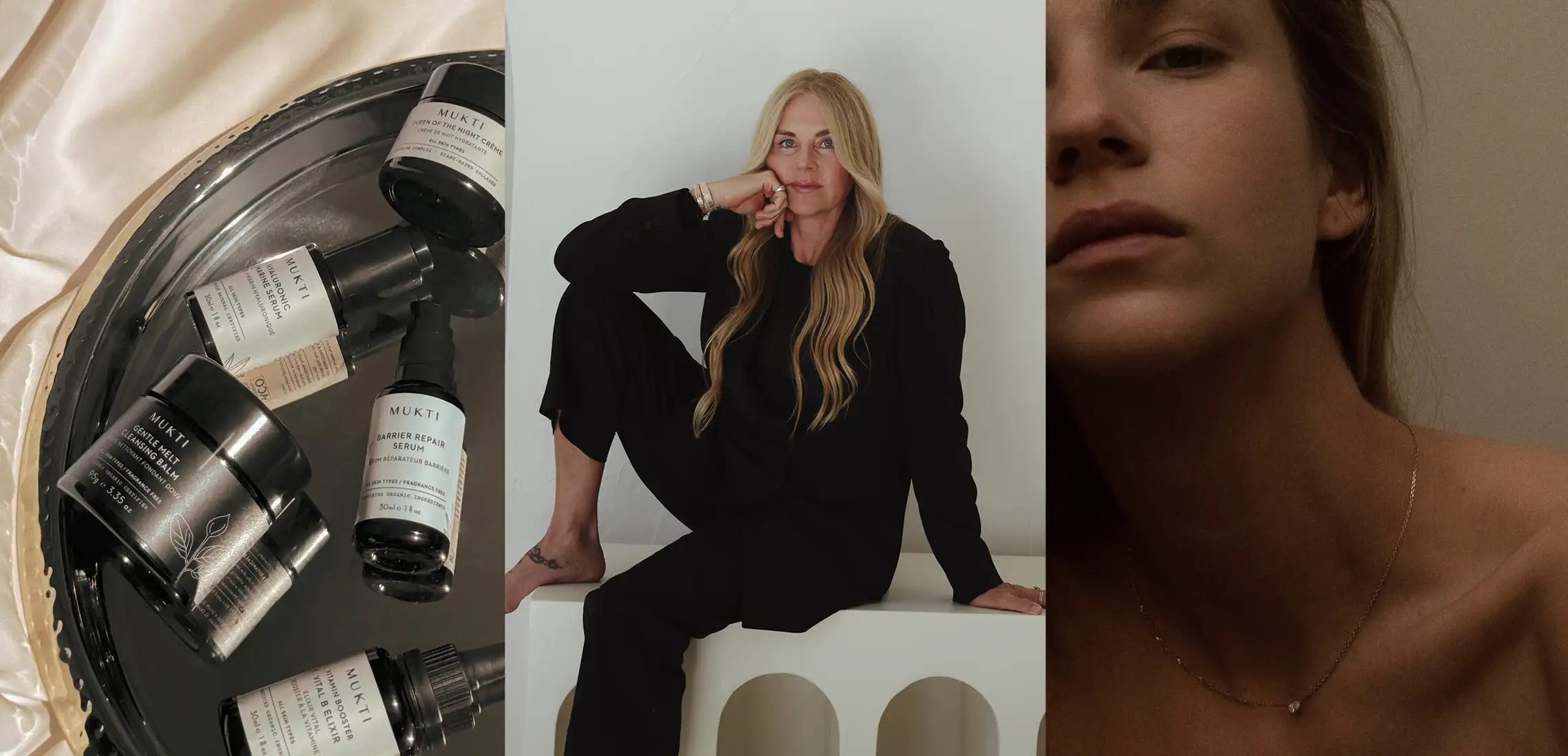
Imagery: @muktiorganics / @serenaawardell